Sometimes, staying hydrated is easier said than done. You wake up after a long night, a red-eye flight, or a punishing summer workout, and water just isn’t cutting it. The headache won’t quit, your energy is gone, and your stomach isn’t cooperating. That’s when most people start wondering whether IV hydration actually works, and whether it will get them back on their feet before the day slips away.
Key Takeaways
- IV hydration delivers fluids, electrolytes, and vitamins directly into the bloodstream, bypassing digestion for near-100% absorption.
- Most sessions take 30–60 minutes, with many patients feeling relief before the drip finishes.
- Benefits typically last 1–3 days for hydration; vitamin and electrolyte effects can hold for several days longer.
- IV hydration works best when oral fluids aren’t enough, such as during vomiting, severe dehydration, or time-sensitive recovery.
IV hydration delivers a sterile saline solution, often combined with electrolytes, vitamins, and sometimes medications, directly into a vein while bypassing the digestive system entirely. This article covers what IV hydration is, how it works, what’s inside a standard drip, how long the benefits last, and who it’s right for.
1. What IV Hydration Actually Is?
Wellness IV hydration uses the same clinical-grade fluids found in hospitals, but the context is completely different. Rather than emergency care, it’s an elective service for recovery, performance, and relief, given by a licensed registered nurse under physician supervision, at a clinic or at your location.
Also known as intravenous hydration therapy or a hydration IV, the treatment involves administering a saline solution infused with electrolytes, vitamins, and sometimes medications directly into a vein. By bypassing the digestive system, IV hydration allows nutrients to be absorbed quickly and efficiently. A small catheter goes into a vein, usually in the hand or inner arm, and fluid enters the bloodstream directly. When you’re nauseated, vomiting, or seriously depleted, drinking and waiting for fluids to absorb through the gut is too slow and too unreliable. IV hydration removes that barrier entirely.
Once in the bloodstream, the fluid expands circulating blood volume. This restores blood pressure, improves circulation, and gets oxygen and nutrients to every organ and cell. Dizziness, headache, and weakness are direct consequences of low circulating volume, which is why restoring it brings such rapid symptom relief.Hospitals use IV therapy for emergencies: severe dehydration, shock, sepsis, and surgery. Wellness IV works in a different lane, covering hangover recovery, post-flight fatigue, sports recovery, immune support, and rehydration when drinking just hasn’t been enough. The fluids are clinically identical. What differs is the setting, the purpose, and how the drip is customized. A reputable mobile IV provider will always have a physician overseeing the protocol, a registered nurse administering the drip, and a health screening completed before anything is ordered.
2. What’s Inside an IV Hydration Drip?
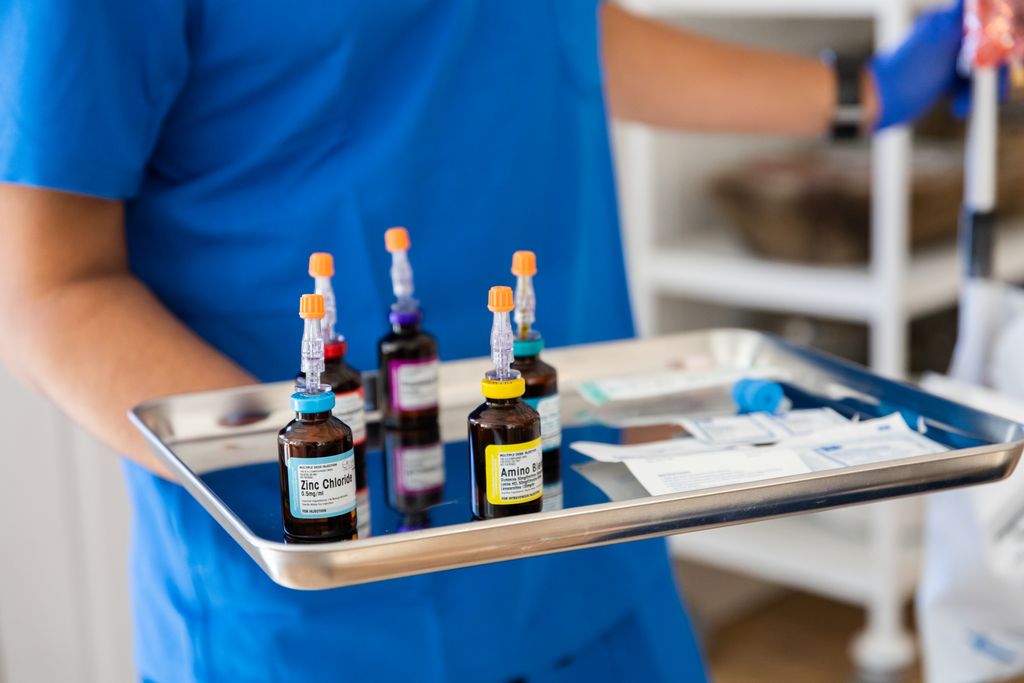
The base fluid is standardized and clinically vetted. Everything added to it depends on what a licensed provider determines the patient needs.
The Base Fluid
Most IV fluid hydration sessions use 1 of 2 base solutions.
- Normal saline, a 0.9% sodium chloride solution, is the most widely used IV fluid in the world. It’s isotonic, meaning its concentration closely matches plasma, so it doesn’t cause cells to swell or shrink. That makes it the go-to choice for restoring circulating volume and correcting dehydration.
- Lactated Ringer’s solution contains sodium, potassium, calcium, chloride, and lactate, a mix that mirrors plasma more closely than saline does. The liver converts lactate to bicarbonate, which buffers acidity and supports acid-base balance. Studies link Lactated Ringer’s to fewer kidney-related side effects and better clinical outcomes, making it the preferred choice in many hospital settings.
- Both are isotonic and serve the same core purpose: restoring blood volume, supporting blood pressure, and replenishing electrolytes.
Common Add-Ins and What They Do?
What separates a basic hydration drip from a recovery or immune drip is what gets layered into the base fluid. Each ingredient targets a specific gap the body needs to fill:
- Electrolytes (potassium, magnesium, calcium) manage fluid balance, nerve signals, muscle function, and heart rhythm. IV delivery replaces what’s lost through sweat, illness, or alcohol without the absorption limits of oral intake.
- B-Vitamins (B1, B2, B3, B5, B6) drive cellular energy production and support the nervous system. Oral absorption tops out around 50% due to digestion, while IV delivery achieves near-100%.
- Vitamin B12 supports red blood cell production, nerve health, and energy. Oral supplements from a high dose absorb at only about 1.3%, making IV the far more effective route for depleted patients.
- Vitamin C is a key antioxidant for immune function and tissue repair. IV doses reach plasma concentrations 10–50 times higher than oral supplementation, which plateaus regardless of dose.
- Glutathione, the body’s master antioxidant, has oral bioavailability below 1% due to gut enzyme breakdown. IV is the only reliable delivery method for therapeutic concentrations.
- Ondansetron (Zofran) stops the brain’s vomiting response within 10–30 minutes, where medically appropriate and ordered by a provider.
- Ketorolac (Toradol) delivers non-opioid pain relief without the delays of an oral dose, under provider order only.
How Formulas Are Customized?
Depending on individual needs, IV drips may include additional nutrients such as vitamins for energy production and immune support, amino acids for muscle repair and recovery, and antioxidants to combat oxidative stress and support cellular health. A physician or licensed pharmacist designs each formula around the patient’s symptoms, health history, and goals.
A hydration drip may contain only saline and electrolytes. A recovery drip adds B-Vitamins and Vitamin C for post-exertion repair. A hangover drip covers fluids, electrolytes, B-Vitamins, and anti-nausea medication, hitting every mechanism of alcohol’s effects at once. For example, the Myers’ Cocktail is one of the most popular IV drips because it combines a variety of vitamins to offer benefits like immediate full-body hydration, improved mood and energy levels, reduced stress and fatigue, and a stronger immune system.
Patients should always know every ingredient in their drip and receive it under licensed supervision. Any credible provider answers questions about formula sourcing directly and without hesitation.
3. What IV Hydration Is Used For?
The cases where IV hydration therapy has the clearest advantage all share the same problem: the body needs more fluid, electrolytes, or nutrients than drinking can deliver in time. Hydration IVs are used across a range of situations:
- Athletic recovery. After intense workouts or sports events, IV hydration aids athletes in recovering faster by replenishing lost fluids and electrolytes.
- Hangover relief. Alcohol depletes fluids, electrolytes, and B-Vitamins all at once. IV addresses all 3 simultaneously at near-100% absorption, versus 20–30% from oral supplements taken while nauseous.
- Illness recovery. Hydration IVs support recovery from illnesses that cause fluid loss, such as gastrointestinal infections or fever, especially when nausea or vomiting makes oral intake impractical.
- Travel fatigue and jet lag. Air travel is significantly dehydrating, and restoring blood volume improves brain circulation, cutting through headaches and mental fog within minutes.
- Heat exposure. IV achieves in 1–2 hours what drinking may take 4–6 hours to accomplish.
For mild dehydration in people who can keep fluids down, water and electrolyte drinks are usually sufficient. IV shows its clearest edge in moderate to severe dehydration, where oral absorption can’t keep pace with the body’s deficit, and whenever active vomiting makes drinking impossible. NIH research found IV rehydration cut recovery time by 24 hours compared to oral rehydration in gastroenteritis patients. IV hydration complements but does not replace ongoing medical care for serious conditions, and when symptoms are severe, emergency care comes first.
| The widely cited claim that 75% of Americans are chronically dehydrated has no peer-reviewed support. According to NIH StatPearls, documented dehydration affects 17–28% of older US adults. Mild underhydration is common and often goes unrecognized — but clinical chronic dehydration in healthy adults is significantly overstated. |
4. How Long IV Hydration Lasts and What Affects It?
How long you feel the effects of IV hydration depends on 3 things: what was in the drip, what caused the depletion, and what you do in the hours after. There’s no single answer — but there is a clear pattern.
During and Right After the Drip
A standard IV hydration session runs 30–60 minutes depending on bag size and infusion rate. Specialty drips like NAD+ require slower delivery and can take 2–4 hours. Most patients notice relief well before the bag finishes, often within 15–30 minutes, as fluid expands blood volume and circulation improves. Headache, dizziness, and weakness typically ease first, with fuller recovery building over the following hours.
How Long the Fluid and Benefits Last?
While the fluids themselves typically remain in the body for a few hours after absorption, the benefits of the nutrients, minerals, and medications infused can last significantly longer, potentially days or even weeks. The duration largely depends on various biological factors and the specific type of IV infusion received.
Kidneys begin clearing excess fluid within hours of the drip ending, keeping only what the body needs to restore hydration balance. Most people urinate more frequently in the 2–4 hours after a session, which is a normal sign the kidneys are doing their job. What remains isn’t the fluid volume itself. It’s restored hydration status.
How long does IV hydration last in terms of how you feel? It tracks closely with what the drip contained:
| Drip Type | How Long Benefits Typically Last |
| Hydration (saline + electrolytes) | 1–3 days of symptom relief |
| Electrolyte balance | About 24–48 hours |
| B-vitamins and B12 | 3–7 days of improved energy |
| Vitamin C and immune blends | Up to 1 week |
| Glutathione and NAD+ | 1–4 weeks depending on health status |
3 biological factors shape how long these effects hold:
- Hydration level at the time of treatment plays a significant role. A well-hydrated body tends to excrete excess fluids more quickly, while a depleted one retains more of the infusion to replenish reserves. That’s why severely depleted patients often feel a stronger initial response, even if the benefit window is shorter.
- Active illness changes the equation too. Conditions that cause rapid fluid loss, such as gastrointestinal infections, fever, or excessive sweating, cause the body to retain IV fluids more effectively. Even during illness, the nutrients delivered via IV continue supporting recovery well after the drip ends.
- Metabolic rate is the third factor. Individuals with higher metabolic rates tend to absorb nutrients from IV fluids more efficiently but may also eliminate those fluids more rapidly than older adults or people with certain medical conditions. Because of this variability, personalized hydration strategies matter far more than a one-size-fits-all approach.
| IV benefit duration is tiered by ingredient, not session length. Hydration relief lasts 1–3 days. Electrolyte effects hold for 24–48 hours. B-vitamin energy boosts persist 3–7 days. Immune blends with vitamin C and zinc support up to 1 week. Glutathione and NAD+ effects can last 1–4 weeks. |
What You Do After the Drip Matters Most
Most articles stop at the session itself. What happens in the following hours is actually the biggest factor in how long a hydration IV lasts in practice. A few habits either protect or quickly undermine the benefit:
- Alcohol after a drip rapidly undoes the hydration, since it’s a diuretic that causes immediate fluid and electrolyte loss.
- Intense exercise or heat depletes the restored fluids and electrolytes through sweat, shortening the benefit window.
- Skipping water limits results too. The drip restores baseline, but ongoing oral intake is what sustains it.
- Rest allows B-Vitamins, minerals, and Vitamin C to be fully absorbed at the cellular level. Recovery nutrients work best when the body isn’t under physical stress.
- Balanced meals with protein extend the benefit of recovery-focused drips.
Most people feel the full effect within 2–4 hours post-session, with improved energy and reduced symptoms lasting several days when post-drip habits support it.

5. Who IV Hydration Is Right For?
IV hydration is safe for most healthy adults, but it’s not right for everyone in every situation. Knowing who benefits, who should get medical clearance, and when to seek emergency care instead is part of making a sound decision.
Adults with moderate dehydration from illness, heat, exercise, or alcohol are strong candidates. People who can’t keep fluids down are ideal candidates, since oral rehydration fails precisely when IV hydration succeeds. Athletes and travelers who need to recover fast benefit directly from the speed advantage. People with malabsorption conditions like Crohn’s disease, bariatric surgery history, or short bowel syndrome often absorb oral nutrients poorly, making IV delivery especially useful.
Some conditions require physician clearance or make IV inadvisable. People with congestive heart failure have trouble managing fluid balance, and large IV volumes can cause fluid overload that strains the heart and lungs. Kidney disease or renal failure reduces the body’s ability to clear excess fluid and minerals, especially potassium and magnesium, which can build to dangerous levels. Pregnancy requires OB/GYN clearance before any elective drip. G6PD deficiency and kidney stone history both contraindicate high-dose Vitamin C. Anyone on a complex medication regimen should disclose all medications at intake for interaction screening. A credible IV service screens for all of these before administering anything. Skipping that step is a significant red flag.
Some symptoms mean a mobile drip is the wrong response entirely. The following require emergency care, not a wellness booking:
- Confusion or altered consciousness
- Fainting or loss of consciousness
- Chest pain or difficulty breathing alongside dehydration symptoms
- No urination for 8 or more hours
- Fever above 104°F combined with dehydration
- Signs of sepsis, including high fever, chills, rapid heart rate, and confusion together
- Severe vomiting or diarrhea lasting more than 24 hours without improvement
- Dehydration in an infant
If any of these are present, call 911 or go to the nearest ER immediately.
6. What to Expect During an IV Hydration Session
The process is simpler than most first-timers expect, whether at a clinic or at home. Here’s what the experience looks like from start to finish.
Before the session, you’ll complete a medical intake form covering symptoms, health history, medications, and allergies. A licensed clinician reviews and approves the formula before a registered nurse is dispatched. Drink 16–24 oz of water 2–3 hours beforehand, since hydrated veins are easier to access, and have a light snack to reduce the risk of lightheadedness.
During the session, the nurse confirms your identity and checks blood pressure, heart rate, and oxygen saturation before placing the IV. The catheter goes into the hand or inner arm with a mild pinch. After that, most patients feel only mild coolness in the arm as the drip runs. The infusion takes 30–60 minutes, so feel free to rest, read, watch TV, or work on a laptop. The nurse monitors vitals and the site throughout. Burning, sharp pain, or swelling at the insertion site isn’t normal, so alert the nurse right away if that happens.
After the session, the nurse removes the catheter, checks the site, and provides aftercare instructions before leaving with all supplies.
What makes mobile IV hydration especially practical is the lack of any commute or waiting room. Sessions happen at your home, hotel, or office, anywhere within our mobile IV service areas, using the same clinical-grade fluids and licensed registered nurses as any in-clinic setting. A comfortable chair or bed, water nearby, and a 60-minute window is all that’s needed. Mobile sessions are particularly useful after a rough night, during illness, after a long flight, or when getting somewhere isn’t an option. Cost typically runs $149–$399 per session depending on formula and provider – see a full breakdown of IV drip treatments, packages, and costs. Standard wellness IV drips don’t usually qualify for insurance coverage, though some may qualify for HSA or FSA reimbursement with a Letter of Medical Necessity.
After the session, keep drinking water throughout the day, since the drip restores baseline hydration and ongoing intake sustains it. Skip alcohol immediately after, as it reverses the benefit fast. Hold off on intense exercise to let the body absorb the delivered nutrients. Mild bruising or soreness at the insertion site is normal and clears in 1–2 days. Reach out to your provider if redness, warmth, pus, or red streaking spreads from the site, as those are signs of possible phlebitis or infection. Shortness of breath, chest pain, facial or throat swelling, sudden weakness, or rapid weight gain with leg swelling after the session all warrant immediate emergency care.
Most people feel noticeably better within an hour. For illness-related dehydration, improvement may keep building over 12–24 hours.Understanding how IV hydration works, including how your body holds onto fluids and absorbs nutrients, is key to getting the most out of your treatment. Whether you’re bouncing back from a workout, recovering from illness, or simply running on empty, IV hydration delivers real, fast-acting relief. Benefits last 1–3 days or longer depending on the drip and post-session habits. When you’re ready to recover fast, Mobile IV Medics brings licensed nurses and clinical-grade IV hydration therapy directly to you, with no clinic visit required.
References: