
Key Takeaways
- Dehydration progresses from mild to life‑threatening, damaging the heart, kidneys, brain, and other organs if not corrected early
- Heat exhaustion and heat stroke usually arise when dehydration and heat stress combine, overwhelming the body’s cooling systems
- Watch urine color, symptoms, and risk factors; seek prompt care or IV hydration before compensation fails
Dehydration and heat exhaustion together account for thousands of preventable emergency visits each year, yet most people do not recognize the early signs until the damage has already begun. The common myth that 75% of Americans are chronically dehydrated has no scientific support, but the reality is still significant: dehydration is one of the leading causes of hospital admissions, particularly among older adults, and its effects on the body go far deeper than thirst and a dry mouth.
Dehydration occurs when your body loses more fluid than it takes in, disrupting the balance needed for healthy organ function. When that fluid deficit meets sustained heat stress, the result can be heat exhaustion—and, if left untreated, heat stroke. This guide examines how dehydration develops at a physiological level, how it damages organs over time, and where heat exhaustion fits into that progression.
What Is Dehydration Medically Speaking?
Dehydration is a condition with consequences that extend far beyond feeling thirsty. To understand why it affects so many systems in the body, you need to understand what water actually does inside you. The human body is composed of 55 to 65% water. Two-thirds of that water sits inside your cells, where it participates in every chemical reaction that keeps you alive. The remaining third circulates outside cells—in your blood, between tissues, and in the fluid surrounding your organs. When the balance between these compartments shifts due to fluid loss, the body initiates a sophisticated but ultimately limited set of responses to hold itself together.
The 3 Stages of Severity
The staging of dehydration is based on how much body weight has been lost to fluid, and each stage represents a meaningful shift in how aggressively the body must compensate. At a glance, the progression looks like this:
- Mild: 3–5% of body weight lost
- Moderate: 6–10% of body weight lost
- Severe: greater than 10% of body weight lost
But the numbers alone do not capture what is actually happening inside the body at each threshold.
- Mild dehydration produces thirst, dry lips, and slightly darker urine. These feel like minor inconveniences, but they are the body’s first signal that its fluid reserves are running low. The kidneys have already begun concentrating urine to conserve water, and the thirst mechanism has fired because osmoreceptors in the hypothalamus detected a rise in the concentration of the blood. The system is responding—but the deficit is real.
- Moderate dehydration marks the point where compensatory mechanisms become visible from the outside. Heart rate increases—tachycardia is typically the first abnormal vital sign—because the heart is pumping a reduced volume of blood and must beat faster to maintain circulation. Headaches, dizziness, and difficulty concentrating appear as the brain begins receiving less blood flow. Urine output drops noticeably, and the color darkens to amber. At this stage, the body is working hard behind the scenes to keep blood pressure stable, but the system is under real strain. Recognizing dehydration symptoms you should watch for early in this progression can prevent the condition from advancing to a more dangerous stage.
- Severe dehydration, exceeding a 10% loss, is a medical emergency. The compensatory mechanisms that held blood pressure steady at earlier stages have failed. Blood pressure falls, the pulse becomes rapid and weak, and confusion or altered mental status can emerge as the brain is deprived of adequate perfusion. Without immediate intravenous rehydration, severe dehydration can progress to hypovolemic shock—a state in which organ blood flow is so compromised that multiple organs begin to fail simultaneously.
The 3 Medical Types of Dehydration
Severity alone does not tell the full story. The type of dehydration—determined by the ratio of water to sodium lost—dictates which organs are most at risk and what kind of treatment is needed.
- Isotonic dehydration occurs when water and sodium are lost in roughly equal amounts, as happens with vomiting or diarrhea. The result is a straightforward reduction in blood volume: less fluid circulating, lower blood pressure, organs receiving less flow.
- Hypertonic dehydration is more insidious. When water loss outpaces sodium loss—common during heavy sweating without electrolyte replacement—the concentration of sodium in the blood rises. This elevated concentration pulls water out of cells through osmosis. Brain cells are particularly vulnerable to this shrinkage. Even moderate hypertonic dehydration can produce confusion, and severe cases risk seizures and coma as brain tissue contracts away from the skull.
- Hypotonic dehydration works in the opposite direction. When sodium loss exceeds water loss, cells absorb water and swell. In the brain, this swelling raises intracranial pressure and can cause cerebral edema—a dangerous, potentially fatal condition. This type is seen with certain diuretic medications and in cases where someone drinks large amounts of plain water without replacing lost electrolytes.
The Most Common Causes of Fluid Loss
The body loses water constantly through four primary routes: the skin via sweat, the lungs through exhaled moisture, the kidneys through urine, and the gastrointestinal tract through stool. Under normal conditions, intake balances these losses. Dehydration develops when that balance tips—either because loss increases or intake falls short, or both. The most common triggers include:
- Prolonged sweating during exercise or heat exposure
- Vomiting or diarrhea from gastrointestinal illness
- Inadequate fluid intake, which is more common than people assume—particularly in older adults whose thirst sensation has dulled with age
- Chronic medical conditions like diabetes, which accelerate fluid loss through increased urination
- Medications—especially diuretics, laxatives, and certain antihypertensive drugs
- Stress, which disrupts normal drinking habits while cortisol-driven sweating quietly increases fluid loss
Many diseases that cause dehydration in adults create compounding risk by both increasing fluid loss and impairing the body’s ability to respond appropriately to that loss.
Nighttime dehydration occurs because the body continues losing water through respiration and minimal perspiration during sleep while fluid intake stops. Many people lose a noticeable amount of fluid overnight, and factors such as mouth breathing, sleep apnea, and alcohol before bed can increase this loss, so understanding overnight dehydration can help you adjust evening hydration habits without excessively disrupting sleep with bathroom trips.
How Is Dehydration Diagnosed?
Dehydration is diagnosed primarily by a clinician’s physical exam, supported by blood and urine tests that show how concentrated your fluids are and how your kidneys are functioning. Clinicians look for dry mucous membranes, reduced skin elasticity, sunken eyes, and an elevated heart rate. Blood tests measure electrolyte levels, kidney function markers like the ratio of blood urea nitrogen to creatinine, and serum osmolality—a measure of blood concentration. A BUN-to-creatinine ratio above 20 to 1 suggests reduced kidney perfusion, a hallmark of dehydration.
Urine concentration also provides useful information: a specific gravity above 1.020 and urine osmolality exceeding 450 indicates the kidneys are working hard to conserve water. The simplest real-world indicator remains urine color—pale yellow signals adequate hydration, while dark amber is a clear warning.
Thirst is only one of several signals the body uses, and it often lags behind your true fluid status. Older adults, children, people taking certain medications (like diuretics), and those who are very focused on work or exercise may lose a significant amount of fluid before they notice they’re thirsty. Early dehydration is more likely to show up as fatigue, headache, irritability, poor concentration, darker urine, or urinating less often—even before you feel very thirsty.
How Dehydration Damages Your Organs?
Dehydration does not harm the body uniformly. Each organ system has its own threshold for when fluid loss becomes damaging, its own set of compensatory responses, and its own timeline for recovery—or permanent injury. The distinction between acute damage and chronic, progressive harm is critical, because the most dangerous effects of dehydration are often the ones that accumulate silently over time.
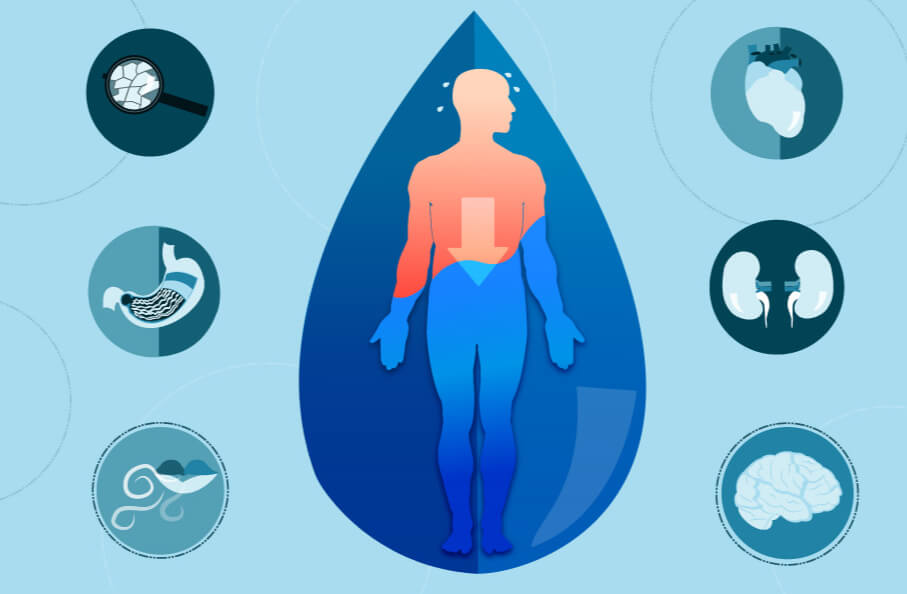
Effects on the Cardiovascular System
The heart feels the impact of dehydration before almost any other organ. When blood volume drops, the heart must pump faster to deliver the same amount of oxygen to tissues—a response called tachycardia. Simultaneously, blood vessels constrict to redirect flow away from non-essential tissues like skin and muscle toward the brain, heart, and kidneys. This redistribution preserves function temporarily, but it comes at a cost.
When fluid loss reaches approximately 20 to 25% of blood volume, these compensatory mechanisms can no longer maintain blood pressure. The body enters hypovolemic shock—a state of critically inadequate tissue perfusion that progresses through three distinct phases:
- Initial phase: The body maintains blood pressure through increased heart rate and vasoconstriction, but organs are already receiving less blood than they need. No clinical signs of shock are apparent yet, which is precisely why this stage is dangerous—the deficit is real but invisible.
- Shock phase: Blood pressure falls and end-organ dysfunction becomes clinically apparent. The heart, kidneys, and brain all begin showing signs of inadequate perfusion.
- End-organ dysfunction phase: Without aggressive fluid resuscitation, this phase involves irreversible organ damage across multiple systems, and death becomes a significant risk.
The long-term cardiovascular consequences of repeated dehydration are less dramatic but equally concerning. Research has documented that chronic fluid deficit causes a reduction in stroke volume—the amount of blood the heart pumps per beat—along with structural changes in ventricular anatomy and decreased venous return. These alterations raise the risk of coronary pathology developing over years, not just during acute episodes. Dehydration also allows cholesterol to accumulate more readily in arteries by reducing blood flow velocity, further compounding cardiovascular risk over time. Understanding the long-term effects of chronic dehydration on the cardiovascular system is essential for appreciating why prevention matters so much.
Effects on the Kidneys
The kidneys are the organs most directly threatened by dehydration, because their entire function depends on adequate blood flow. When blood volume drops, renal perfusion pressure falls, and the kidneys begin filtering less blood. This state is called prerenal azotemia—not kidney damage yet, but a functional slowdown caused by insufficient flow. If fluid is restored promptly, kidney function returns to normal.
The danger lies in how quickly prerenal azotemia can become actual kidney injury. Prolonged or severe reduction in blood flow causes ischemia—oxygen deprivation—to the kidney’s tubular cells. Cellular energy stores deplete, an inflammation cascade activates, and tubular tissue begins to die. This is acute kidney injury, and recovery depends on how long the ischemia lasted and how severe it was.
Chronic dehydration adds a layer of risk that does not require any single dramatic episode to do damage. The National Kidney Foundation documents that ongoing mild fluid deficit reduces urine volume, which concentrates stone-forming minerals and promotes kidney stone formation. Research also links chronic dehydration to increased oxidative stress within the kidneys, where the activation of the renin-angiotensin-aldosterone system compounds the damage by sustaining elevated blood pressure within the renal vasculature. Over time, the cumulative effect can include:
- Kidney stones, particularly calcium oxalate and uric acid types
- Recurrent urinary tract infections
- Progressive chronic kidney disease, especially in people with diabetes or hypertension
- Sustained oxidative damage that accelerates renal aging
Effects on the Brain and Cognition
The brain is approximately 73% water, and its sensitivity to fluid loss is measurable at remarkably low thresholds. Research demonstrates that a body water loss of just 1% can reduce cognitive performance by approximately 5%. At 2% dehydration, short-term memory and the ability to concentrate begin to decline noticeably. These are not trivial effects—they represent the brain working harder to achieve the same output with less blood flow and less optimal cellular hydration.
The mechanism behind this decline involves multiple pathways. Hypertonic dehydration draws water out of brain cells through osmosis, causing them to physically shrink. Imaging studies have documented increased ventricular volume—the fluid-filled spaces inside the brain expand as the surrounding tissue contracts. Separately, dehydration impairs the brain’s ability to regulate its own blood flow. Under normal conditions, the brain increases blood flow to regions that are active—a process called functional hyperemia. Dehydration disrupts this process, meaning active brain regions receive less oxygen and glucose than they need. Can dehydration cause slurred speech? Yes. In moderate to severe cases, reduced cerebral perfusion impairs both neural signaling and the fine motor coordination required for speech.
Chronic dehydration poses a longer-term threat to brain health. Studies have found that cognitive impairment caused by repeated fluid deficit may not fully reverse even after rehydration, particularly in older adults. Age-related declines in nitric oxide synthase activity—an enzyme involved in regulating blood vessel dilation—blunt the brain’s compensatory responses to dehydration, making the elderly especially vulnerable to cumulative cognitive damage.
Effects on the Liver
The liver is an organ where chronic dehydration’s effects are only beginning to be understood, but the emerging picture is significant. Research has linked suboptimal hydration to an increased risk of metabolic fatty liver disease—a condition in which fat accumulates in liver cells and impairs their ability to function. Studies examining the relationship between hydration status and liver health have found that prolonged dehydration correlates with a reduced capacity to synthesize urea, one of the liver’s core detoxification processes, along with structural alterations visible on imaging that suggest progressive but silent hepatocellular stress.
Hypovolemia-induced hypoperfusion also plays a direct role. When blood volume is low, the liver receives less blood flow, impairing its ability to metabolize toxins and process nutrients. In people who already have liver disease, even mild dehydration can meaningfully worsen hepatic dysfunction. The liver’s vulnerability to chronic fluid deficit represents an area where public health awareness has not yet caught up with the clinical evidence.
Electrolyte Imbalances and Their Consequences
Fluid loss does not happen in isolation—electrolytes leave the body alongside water, and the consequences of that loss extend well beyond hydration status. Sodium, potassium, calcium, and magnesium are all essential for muscle contraction, nerve transmission, and cardiac rhythm. When dehydration disrupts this balance, the effects can range from muscle cramps and weakness to life-threatening cardiac arrhythmias.
Hypokalemia—low potassium—is one of the most common electrolyte disturbances in dehydration, particularly after diarrhea or prolonged diuretic use. It weakens muscles, impairs nerve function, and in severe cases disrupts the electrical conduction system of the heart. Hyperkalemia—elevated potassium—can occur in dehydrated patients with kidney impairment or adrenal insufficiency and carries its own cardiac risks. Correcting these imbalances requires not just fluid replacement but targeted electrolyte supplementation, and in severe cases, intravenous administration with continuous heart monitoring.
Dehydration in Common Scenarios
Dehydration occurs routinely in situations that most people never think to connect with meaningful fluid loss. Recognizing these everyday triggers is one of the most practical steps you can take to protect your health.
Hangover-Related Dehydration
Alcohol is a diuretic—it suppresses the hormone that tells the kidneys to conserve water, causing the body to produce more urine and lose fluid faster than it would otherwise. A night of heavy drinking can leave the body significantly dehydrated by morning. The classic hangover symptoms of headache, nausea, fatigue, and difficulty concentrating are largely driven by this fluid and electrolyte deficit. Replacing fluids with an electrolyte-containing solution addresses the root cause far more effectively than plain water, because the sodium lost through alcohol-driven diuresis must also be replenished for the kidneys to retain the water you drink.
Post-Workout Dehydration
During intense physical activity, especially in warm conditions, sweat output can reach one to two liters per hour. The body prioritizes cooling over hydration during exertion, which means fluid loss accumulates faster than most people realize. Post-workout dehydration impairs muscle recovery, slows cognitive function in the hours that follow, and—if it becomes a recurring pattern—increases the risk of kidney stones and chronic kidney injury over time. For athletes and active individuals, IV hydration therapy for athletes offers a faster, more complete recovery path than oral rehydration alone, delivering fluids and electrolytes directly where the body needs them most.
The World Health Organization’s oral rehydration formula harnesses glucose–sodium co‑transport, a physiological mechanism where glucose and sodium absorbed together draw water into the bloodstream more effectively than plain water alone. This helps explain why staying hydrated during prolonged exertion is better supported by electrolyte‑containing solutions, not just increased water intake.
Travel and Jet Lag Dehydration
Aircraft cabin air is exceptionally dry, and passengers typically drink far less during flights than they would on the ground. This combination creates cumulative fluid loss that compounds jet lag symptoms and delays recovery after landing. Sun dehydration—fluid loss from prolonged exposure to direct sunlight without adequate intake—adds another dimension for anyone spending extended time outdoors in hot or unfamiliar climates.
Dehydration During Illness
Fever increases the body’s metabolic rate and fluid demands. Congestion and reduced appetite during a cold or flu further reduce intake. The body’s immune response itself consumes water as part of the inflammatory process. Many people underestimate how much hydration support is needed during even a mild illness, and the resulting fluid deficit slows recovery, worsens symptoms, and in vulnerable populations can tip into moderate dehydration that requires medical intervention.
Food Poisoning and Gastrointestinal Issues
Vomiting and diarrhea are among the fastest routes to significant dehydration. Food poisoning can deplete fluids and electrolytes within hours, and the resulting nausea frequently makes oral rehydration difficult or impossible. This is one of the clearest situations where intravenous fluid administration becomes necessary—not as a convenience, but because the gastrointestinal tract cannot absorb fluids quickly enough to restore balance while it is simultaneously losing them.
The Critical Link Between Dehydration and Heat Illness
Heat and dehydration do not simply coexist—they create a feedback loop where each condition makes the other worse. Dehydration reduces the body’s ability to cool itself, and heat stress accelerates fluid loss. Understanding how dehydration and heat exhaustion interact is essential because heat illness rarely develops in a well-hydrated person under moderate conditions. It emerges when the body is already compromised.

Heat Exhaustion: The Body’s First Warning Signal
Heat exhaustion develops when sweating and increased skin blood flow—the body’s two primary cooling mechanisms—can no longer keep core temperature stable. This happens when fluid and electrolyte losses from sweating exceed replacement, creating a state where the cardiovascular system must simultaneously deliver blood to the skin for cooling and to vital organs for function. It cannot do both adequately with a reduced blood volume.
The characteristic signs of heat exhaustion include heavy sweating, pale and clammy skin, weakness, headache, dizziness, nausea, and a fast but weak pulse. Core temperature typically rises between 101 and 104 degrees Fahrenheit. Two features distinguish heat exhaustion from the more dangerous condition it can become: the person is still sweating, and mental status remains mostly intact. Overheated symptoms like these—particularly sun exhaustion caused by prolonged direct sun exposure—respond well to cooling, shade, and oral rehydration when caught early. But without intervention, the progression to heat stroke can happen within minutes, not hours.
Heat Stroke: A Life-Threatening Medical Emergency
Heat stroke is defined by a core temperature above 104 degrees Fahrenheit combined with altered mental status—confusion, seizures, or loss of consciousness. At this threshold, the body’s temperature regulation system has failed entirely, and the effects become systemic. Proteins in cells begin to denature. Cell membranes destabilize. The brain, heart, kidneys, liver, and muscles all begin to sustain damage simultaneously.
Does dehydration increase body temperature? Yes—when fluid levels drop, both sweating output and skin blood flow diminish, removing the body’s two primary heat-shedding mechanisms. Can dehydration make you hot? Directly and measurably so, because the body cannot cool itself without adequate fluid to circulate and evaporate.
Heat stroke requires immediate emergency medical intervention. Every minute of delayed cooling increases the risk of permanent organ damage. The gold standard treatment is cold-water immersion, which achieves cooling rates approximately five times faster than external cooling methods. Intravenous fluids are administered simultaneously to restore blood volume. Antipyretics like acetaminophen or ibuprofen have no role in heat stroke treatment—they are designed to lower fever caused by immune-mediated inflammation, not to reduce temperature caused by failed thermoregulation.
Who Is at the Highest Risk for Dehydration
Vulnerability to dehydration is not evenly distributed. Physiological aging, chronic illness, and medication use create compounding layers of risk that make some populations dramatically more susceptible than others. The groups facing the greatest exposure include:
- Older adults, who are 20 to 30% more prone to dehydration than younger populations. The thirst mechanism becomes less sensitive with age, kidney function declines, and polypharmacy—the use of multiple medications—is common. Diuretics, laxatives, and certain antihypertensive drugs all accelerate fluid loss, while mobility limitations and cognitive impairment further reduce access to fluids.
- Infants and young children, who lose fluid more rapidly relative to their body size due to higher metabolic rates and less developed thermoregulation.
- People with diabetes, who face compounded risk because elevated blood sugar drives osmotic diuresis—the kidneys excrete more water in an attempt to flush excess glucose.
- Individuals with heart disease or kidney disease, who must balance fluid intake carefully because both conditions impair the body’s ability to handle excess or deficit without complications.
- Anyone working or exercising outdoors in heat—construction workers, athletes, military personnel—who loses fluid at rates that can overwhelm even healthy compensatory mechanisms if hydration is not actively maintained.
The risk profile for older adults deserves particular emphasis. Beyond the physiological changes listed above, older adults in institutional settings face compounded barriers: diminished cognition, dependence on caregivers for fluid access, and inadequate staffing that may limit monitoring of hydration status. Dehydration in this population is also a leading cause of readmission after hospitalization, which underscores the need for sustained prevention strategies—not just acute treatment.
How to Prevent Dehydration and Heat Illness
Prevention requires consistent attention rather than reactive responses. The most reliable guide to hydration status is urine color: pale yellow indicates adequate fluid levels, while dark amber signals a deficit that needs addressing before it compounds. A general target of 2 to 3 liters of fluid per day provides a reasonable baseline, though actual needs increase with physical activity, heat exposure, illness, and altitude.
During exercise or heat exposure, the strategy shifts from passive intake to active replacement. Drinking to thirst during moderate activity is generally sufficient, but during prolonged or intense exertion in heat, electrolyte-containing beverages become important because sweat contains sodium that plain water does not replace. Allowing the body to gradually adjust to heat—a process called acclimatization—significantly reduces the cardiovascular and thermal strain of hot-weather activity. Even three sessions of 90 minutes of moderate exertion in heat over the course of a week can reduce physiologic heat strain by approximately 20%.
Translating these principles into daily practice comes down to a few consistent habits for avoiding dehydration:
- Monitor urine color throughout the day as your primary hydration indicator
- Choose electrolyte-containing drinks over plain water during prolonged activity or heat exposure
- Schedule outdoor physical activity during cooler hours—before 10 AM or after 4 PM
- Avoid alcohol and caffeine during heat exposure, as both act as diuretics
- Allow gradual acclimatization before increasing activity intensity in hot conditions
- Monitor the heat index, which accounts for both temperature and humidity, rather than temperature alone
When to Seek Immediate Medical Attention
The line between manageable dehydration and a medical emergency can shift quickly, and recognizing which side you are on matters enormously for outcomes.
Call 911 immediately if anyone shows:
- Confusion or altered mental status
- Seizures
- Core temperature above 104 degrees Fahrenheit
- Inability to stand
- Signs of shock—rapid pulse, cool and clammy skin, or a mottled appearance
These are signs that compensatory mechanisms have failed and the body needs emergency intervention.
Contact a healthcare provider promptly if:
- Vomiting is preventing fluid intake
- Urination has stopped for eight or more hours
- Fever reaches 102 degrees Fahrenheit or higher
- Symptoms of moderate dehydration—persistent headache, fatigue, dizziness—are not improving within one hour of oral rehydration
Hospitalized patients with severe dehydration face a mortality rate of 5 – 15%, which underscores why early recognition and timely treatment are so critical. The sooner dehydration is identified and addressed, the better the outcome.
IV Therapy: Way to Reverse Dehydration
When dehydration moves past the mild stage—or when the gastrointestinal tract is too compromised to absorb fluids reliably—intravenous hydration becomes one of the most effective tools available. The mechanism is straightforward but the clinical advantage is significant: IV fluids enter the bloodstream directly, bypassing the stomach and intestines entirely.
Why IV Hydration Works Faster Than Drinking Water
Oral fluids must travel through the esophagus, be absorbed through the stomach and intestinal lining, and then enter the bloodstream—a process that takes time under ideal conditions and is significantly impaired by nausea, vomiting, or gastrointestinal inflammation. IV fluids skip this step entirely. Blood volume begins to restore within minutes of administration, and electrolytes reach tissues almost immediately. For moderate to severe dehydration, this speed difference is clinically meaningful: it can determine whether someone recovers the same day or requires hospitalization for continued monitoring.
The choice of IV fluid also matters:
- Isotonic crystalloids like normal saline are the standard first-line treatment for most dehydration.
- Lactated Ringer’s solution contains bicarbonate precursors and is preferred when metabolic acidosis is present, as in cases of severe diarrhea.
- For hypertonic dehydration with elevated sodium, hypotonic fluids are used—but carefully, because correcting sodium too quickly risks cerebral edema.
Proper fluid selection and administration rate require clinical judgment, which is why medically supervised IV therapy is the appropriate standard.
When to Choose Mobile IV Therapy Over the Emergency Room
Mobile IV therapy provides a practical middle ground for individuals who need medical-grade rehydration but do not require emergency-level care. If you are experiencing persistent symptoms of moderate dehydration—headache, fatigue, dizziness, and reduced urination—but are not showing signs of shock or altered mental status, a mobile IV appointment delivers treatment at home without emergency room wait times or the associated costs. This is particularly valuable after intense physical exertion, travel-related dehydration, or gastrointestinal illness where oral intake has been difficult but the situation has not reached the severity of a true emergency.
Dehydration and heat exhaustion are conditions that progress from subtle warning signs to serious medical emergencies, often faster than people expect. Understanding the physiological mechanisms behind fluid loss—how the body compensates, where those compensations fail, and which organs bear the greatest consequence—gives you the ability to recognize danger early. When hydration needs exceed what oral intake can address, Mobile IV Medics delivers fast, medically supervised IV therapy directly to you, restoring balance before complications take hold.
Frequently Asked Questions about Dehydration and Heat Exhaustion
How long does it take to reverse dehydration?
Mild dehydration can improve within a few hours with steady fluids and electrolytes. Moderate cases may take most of the day. With IV hydration, many people feel noticeably better within 30–90 minutes, though full recovery depends on how depleted you were and why.
How serious is severe dehydration from alcohol?
Severe alcohol‑related dehydration is dangerous because alcohol increases fluid loss and often makes drinking water harder. Confusion, very little urine, rapid weak pulse, or trouble standing after heavy drinking are red‑flag signs that need urgent medical care and usually IV fluids.
What are common symptoms of dehydration in women?
Women share core symptoms—thirst, dry mouth, dark urine, fatigue, dizziness, headache, and less urination—but may also notice worse exercise tolerance, brain fog, irritability, or palpitations. Hormonal factors (periods, pregnancy, breastfeeding, perimenopause) can make them feel symptoms sooner at lower fluid loss.
What is the best drink for dehydration?
For mild dehydration, water plus some electrolytes works best. With heavier fluid loss from sweating, illness, or hangovers, oral rehydration solutions or electrolyte drinks beat plain water because sodium and glucose help pull water into the bloodstream. Very sugary drinks and energy drinks are less ideal.