

Key Takeaways
- A cold and flu drip is a hydration and vitamin bag plus one addition: Toradol, a prescription anti-inflammatory. That single ingredient is what changes how you feel during the session.
- The fluid is the part with the strongest clinical footing, and only when fever, sweating, or vomiting have left you unable to keep oral fluids down.
- Zinc and vitamin C have real roles in immune function, but the cold research is oral and modest, and vitamin C started after symptoms begin shows no consistent benefit.
- Nothing in a wellness drip acts on the influenza virus. If you are 65 or older, pregnant, or managing a chronic condition, call a physician about antivirals first.
- A history of ulcers, kidney disease, a bleeding disorder, an NSAID allergy, or recent NSAID use such as ibuprofen means the clinical team decides whether Toradol is appropriate for you.
Day 3 of the flu, 2 a.m., fever back up, half a glass of water kept down since yesterday, and you are reading IV menus on your phone. Every provider sells IV therapy for cold and flu. None of the menus tell you which ingredient is doing what.
“Cold and flu IV” is a menu label, not a standardized formula, so two bags sold under the same name can hold different fluids, nutrients, and medications. This article walks through one published formula ingredient by ingredient and says where the evidence is solid, where it is oral-only, and what to ask before IV therapy for cold and flu is worth your money.
What Does Flu Do to Your Body?
Fever pulls water out through sweat. Vomiting and poor appetite stop it coming back in. Two days of fever, sweating, vomiting, or poor fluid intake can lead to dehydration and electrolyte losses, the mechanism behind every “IV fluids for flu” search and the one problem an IV addresses directly.
Whether your symptoms point to a cold or the flu, the aches, headache, and exhaustion belong to a different category. Fever and body aches especially are driven in part by the body’s inflammatory response to the infection, which is why symptom-relief medication can target them more directly than the vitamins in a wellness IV. An IV can act on the fluid deficit, the aches, and a few hours of fever, not on how long the infection lasts.
Does an IV Actually Help With the Flu?
It depends on which symptom you are trying to fix. Two facts sit side by side, and most IV marketing quotes one.
Rehydration Works When You Can’t Keep Fluids Down
Two days of fever, a couple of episodes of vomiting, and almost nothing kept down by mouth add up to a fluid deficit, and a bag of saline corrects it quickly. That is the reason “do IV drips help with colds” gets a yes at all.
The same fact cuts the other way. If you can drink and keep fluids down, IV fluids may offer less benefit than they do for someone with significant fluid loss or persistent vomiting, and whether IV hydration is appropriate depends on the degree of dehydration and a clinical assessment. What separates a cold and flu drip from a plain hydration drip is one prescription medication, aimed at the aches and fever.
No Drip Shortens a Cold or Flu on Its Own
Antivirals such as oseltamivir and baloxavir are the only prescription treatments that act on the influenza virus itself. In healthy adults, they shorten uncomplicated flu by about a day when started within 48 hours, and the CDC recommends them as soon as possible for anyone hospitalized, getting worse, or at higher risk. None of them appear in any wellness IV.
| For uncomplicated flu, oral baloxavir is a single dose and oral oseltamivir is 5 days of twice-daily tablets, both FDA-approved to start within 2 days of symptoms. People at higher risk should contact a provider promptly; CDC supports treatment beyond 48 hours in severe, progressive, or hospitalized cases. |
So “will an IV help with the flu” splits in two. Will it correct dehydration and dull the aches? Often, yes. Will it end the illness sooner? No study tests this combination in healthy adults, and the zinc and vitamin C research quoted in its favor used oral products. A generic IV for sickness is a weaker request than “I have a fever and cannot keep fluids down.”
What’s in a Cold and Flu IV Drip?
Mobile IV Medics publishes both of its sick-day formulas, which makes the comparison easy. Six of the seven components in the Cold & Flu IV are the same six in the Immune Boost IV. The Cold & Flu bag adds Toradol.
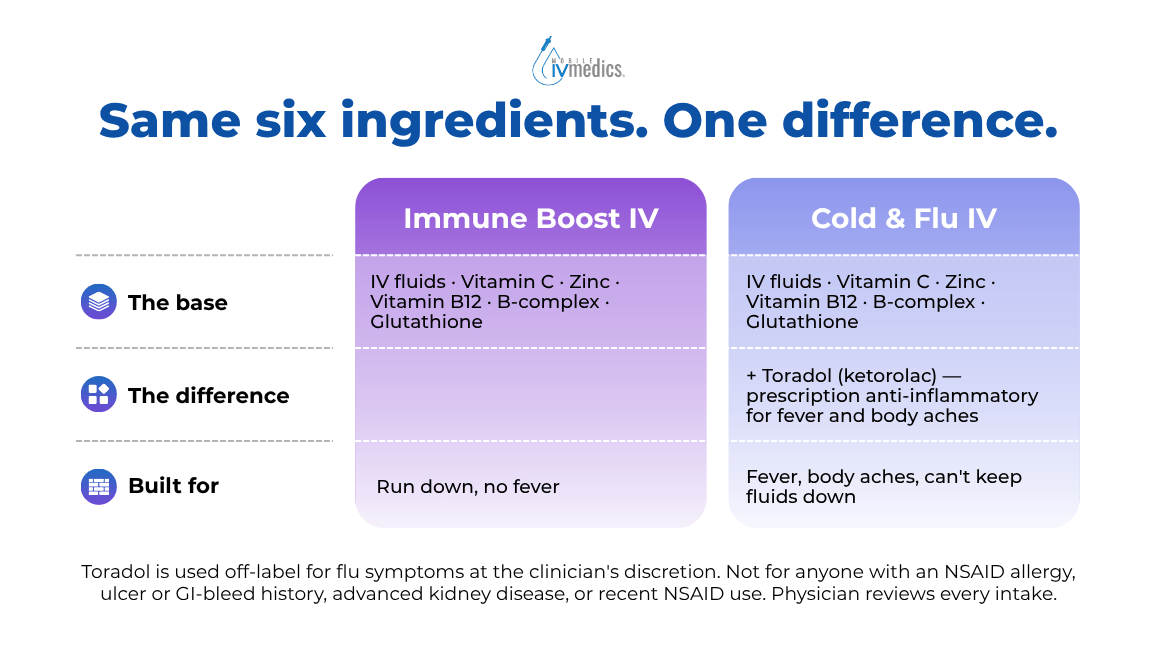
If you searched for an immunity IV drip or an immune booster IV drip because you keep getting sick without a fever, the Immune Boost IV serves that profile and is published on its own page. The best IV for flu matches the symptoms you actually have, so here is what each of the seven does.
IV Fluids Replace What Fever and Sweating Take Out
Sterile saline restores the volume that fever and vomiting removed and carries every other ingredient into circulation. Most menus, this one included, list “IV fluids” without naming the solution, volume, or infusion rate, so ask rather than assume.
The fluid also has a safety job. Toradol’s label says fluid deficits should be corrected before the drug is given, because a dehydrated patient carries a higher kidney risk from it.
Toradol Handles the Fever and Body Aches
Toradol is the brand name for ketorolac, a prescription NSAID given by IV or intramuscular injection. Like other NSAIDs it works mainly by blocking prostaglandin synthesis, the same pathway ibuprofen uses, at prescription strength. Relief begins in about 30 minutes, peaks at 1–2 hours, and lasts 4–6 hours. Nothing about it happens within minutes.
Its FDA approval covers short-term treatment of moderately severe acute pain, usually after surgery, and the label states it is not indicated for minor painful conditions. Using it for flu aches and fever is an off-label decision the reviewing physician and your nurse make from your intake form.
One line from the label matters most at home: ketorolac should not be used together with aspirin or other NSAIDs. Tell the clinician if you have recently taken ibuprofen, naproxen, or aspirin, and let the clinical team decide whether it is appropriate for you. The full list of who should check first sits in the last section.
| Ketorolac is intended for short-term use only. FDA labeling limits total treatment to no more than 5 days by any route, with lower doses used for some older adults and people with certain kidney or body-weight considerations. It is not indicated for anyone under 17. |
Zinc and Vitamin C Have Evidence, Mostly Oral
Zinc’s strongest case is deficiency, since low zinc impairs lymphocyte formation and activation. The cold research is murkier. Pooled across 34 trials, zinc made little or no difference to the risk of catching a cold, and for a cold already underway it may shorten the illness by around 2 days, on low-certainty evidence and with more minor side effects. Almost all of that data came from lozenges, not IV, and the zinc dose in this bag is not published, so ask.
Vitamin C tells a similar story with one twist that matters for a cold and flu IV. Across more than 11,000 people, regular daily supplementation did not reduce how often anyone caught a cold, and it shortened colds by about 8% in adults only when they were already taking it daily, the kind of habit that belongs to preparing for cold and flu season, not to a day-3 drip. Started after symptoms appeared, it showed no consistent effect. IV administration can produce much higher circulating vitamin C concentrations than oral supplementation, but that does not by itself demonstrate better cold or flu outcomes.
Glutathione and B Vitamins Round Out the Bag
B-complex and vitamin B12 act as coenzymes in energy metabolism, a cellular process and a different claim from saying extra B vitamins will make you feel less exhausted. The benefit is clearest when levels are low, which is more common in vegans, long-term metformin users, and people with absorption disorders.
Glutathione is the body’s main intracellular antioxidant, and immune cells draw on it directly. The mechanism is real; the clinical translation to fewer or shorter colds is not established. In late August 2026, the FDA reported at least 30 patients with fever, chills, signs of shock, and in some cases, hospitalization after IV glutathione compounded from a dietary-supplement-grade ingredient, and as of September 15, 2026, the CDC investigation is still open, with more than 25 cases across 4 states. Ask any provider which pharmacy makes their glutathione and whether it is on a recall list.
When Does Flu Need a Doctor Instead?
Some symptoms are reasons to go to the ER instead of an IV. Any one of the CDC’s adult emergency signs for flu means urgent care, not an appointment:
- Difficulty breathing
- Persistent chest or abdominal pain or pressure
- Persistent dizziness or confusion
- Not urinating
- Severe weakness
- A fever or cough that improves, then returns or worsens

A second group should call a physician before booking regardless of how they feel, because antivirals work best starting early: anyone 65 or older, anyone pregnant, and anyone with asthma, COPD, diabetes, heart, kidney, or liver disease, or a weakened immune system.
Then there are the people who should talk with the clinical team before this specific IV.
Ketorolac may not be appropriate if you:
- Have an active or past ulcer or GI bleed
- Have advanced kidney disease
- Have a bleeding disorder, or an allergy to aspirin or other NSAIDs
- Are in late pregnancy or labor
- Have recently taken another NSAID
- Are under 17, since ketorolac is not indicated for children
Additional review may be needed if you:
- Take blood thinners
- Have heart failure or a prescribed fluid restriction
- Are 65 or older
- Have G6PD deficiency, oxalate stones, or hemochromatosis, which affect high-dose vitamin C
Answer the intake form completely rather than optimistically.
A drip lowers a fever for a few hours through Toradol. A fever that keeps climbing, or returns after it broke, needs a diagnosis, not a second IV for fever.
If you clear every item above, the Mobile IV Medics Cold & Flu IV is built for this situation: the fluid, the Toradol, and Zofran as an option when nausea makes it hard to keep fluids down. A physician reviews your intake first, and a registered nurse administers it at home.
Conclusion
Pull your symptoms against the list once more. Fever, aches, and no fluids staying down, with nothing on the “check first” list, point to IV therapy for cold and flu and to telling the nurse every medication you took recently. An emergency sign or a higher-risk condition points to a physician first. Run down with no fever points toward keeping your immune system strong year-round rather than a drip, and a provider worth booking will say so.


