You’ve probably heard it hundreds of times: drink eight glasses of water a day. It’s printed on wellness blogs, quoted by doctors, and repeated so often it feels like established fact. But the “8×8” rule traces back to a 1945 dietary recommendation that explicitly noted most of the body’s water needs are met through food — a nuance that got quietly dropped as the advice spread. The truth is that your body doesn’t run on a fixed quota. It runs on a dynamic balancing act it has been performing, without your input, every minute of your life.
Key Takeaways
- Actual water needs vary by body size, activity level, age, and environment.
- Your body uses a precise hormonal system to detect and correct water imbalances before you’re ever in danger.
- Plain water is the most efficient hydration vehicle, but many beverages and high-water foods count meaningfully toward your daily total.
Water is the most abundant molecule in the human body and the least understood from a daily-living perspective. This article isn’t a list of hydration tips. It’s a framework for understanding how the body manages water, why those needs shift across individuals and life stages, and how to make beverage choices that actually support the system your body already has in place.
1. How the Body Manages Water?
Most hydration advice skips the most important part: your body already has a sophisticated water-management system, and staying well hydrated means working with that system, not around it.
Two Compartments, One Balancing Act
Your total body water is divided into two main spaces:
- Intracellular fluid — roughly two-thirds of your total body water, held inside your cells, regulated primarily by potassium and organic phosphates
- Extracellular fluid — the remaining third, circulating in your blood plasma and surrounding tissues, regulated primarily by sodium
Water moves freely between these two compartments through channel proteins called aquaporins, always flowing toward wherever dissolved particles are most concentrated. When one compartment becomes more concentrated than the other — through sweating, breathing, or urination — water shifts to rebalance it.
Your Brain Detects a Deficit
When you lose fluid, the concentration of dissolved particles in your blood rises. Your body responds through a two-step detection system:
- Osmoreceptors in the hypothalamus sense shifts as small as 1-2% in plasma concentration — roughly a deficit of just a few hundred milliliters. According to a review published in PMC, this triggers two simultaneous responses: thirst and the release of arginine vasopressin, or AVP (also known as antidiuretic hormone).
- Baroreceptors in the heart and major blood vessels monitor blood volume separately. When volume drops sharply — through significant dehydration or blood loss — they can trigger AVP even when concentration is still normal, because maintaining circulation takes priority over osmotic balance.
That’s a detection system far more precise than any hydration formula or daily target.
AVP Tells Your Kidneys What to Do
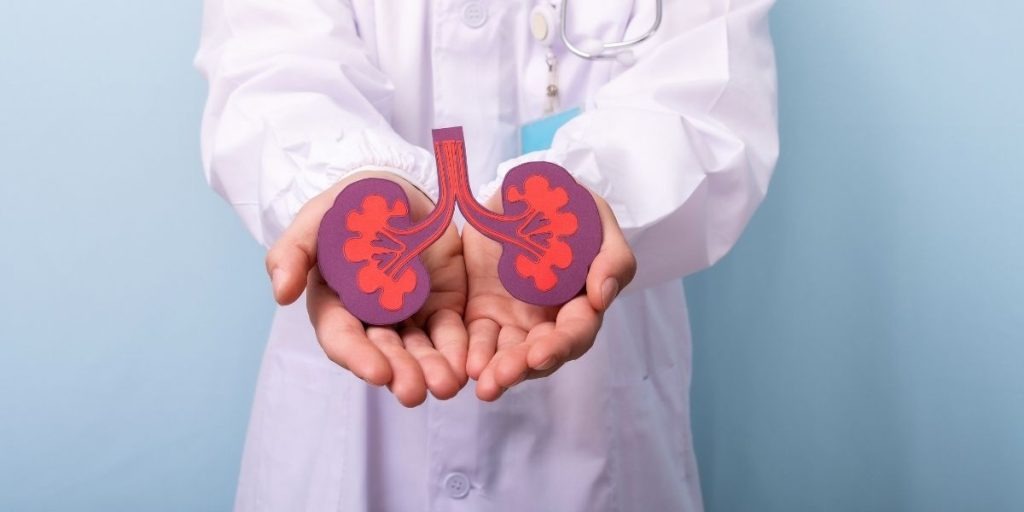
Once released, AVP travels to the kidneys and acts as a real-time dial for urine concentration:
- When AVP is high — water-channel proteins are inserted into the collecting duct walls, allowing the body to pull water back before it’s excreted. The result is small volumes of concentrated, dark urine.
- When AVP is low — those channels retract, the ducts close off, and the kidneys release large volumes of dilute, pale urine.
The research on AVP and renal water handling confirms this is why urine color shifts from pale yellow to deep amber across a day of varying intake — your kidneys are adjusting in real time.
So What “Well Hydrated” Actually Means?
The physiological term for adequate hydration is euhydration — and it describes a range, not a fixed point. The body tolerates small deficits and corrects them continuously without reaching a crisis. For most healthy adults in temperate climates with free access to fluids, thirst is a genuinely reliable guide. The popular claim that feeling thirsty means you’re already significantly dehydrated doesn’t hold up to the physiology — thirst activates well before serious deficits develop.
A review in the Journal of Internal Medicine notes that people with chronically low fluid intake may maintain normal blood markers while sustaining elevated AVP activity — a state emerging research links to long-term metabolic and kidney stress. You can read more about the long-term effects of chronic dehydration and why consistent intake matters beyond just avoiding acute symptoms.
2. When the System Has Limits — Dehydration, Aging, and Sweat
Certain conditions push people past what thirst and hormonal regulation can handle on their own — and knowing where those boundaries sit is one of the most useful facts about staying hydrated.
The performance costs of dehydration set in earlier than most people expect. A fluid loss of just 2% of body weight — about 1.4 kilograms in a 70-kilogram adult — is enough to reduce endurance, raise heart rate, and push core body temperature higher during exercise, especially in heat. Cognitive effects follow a similar pattern: a study in the American Journal of Physiology found that attention, reaction speed, and short-term memory can all suffer at mild deficit levels when dehydration is rapid and combined with physical stress.
At the higher end of that range — five percent or more — the risk of heat exhaustion and heat stroke rises rapidly. Recognizing the early warning signs of dehydration before reaching that threshold is far easier than recovering from it.
Older adults face a compounded problem. With age, the thirst response to rising blood concentration becomes measurably blunted. A review published in PMC on aging and hydration found that in studies comparing older and younger adults after equivalent fluid deprivation, older adults consistently reported less thirst and drank less voluntarily — despite similar increases in blood osmolality. The kidneys also lose concentrating and diluting capacity with age, which narrows the safe range in both directions. Too little fluid and the risk of high blood sodium rises; too much and low blood sodium becomes the concern. For this group, scheduled drinking is a safety strategy, not a preference.
Children carry their own vulnerability. Their higher surface-area-to-mass ratio makes core temperature rise faster during heat exposure, and they tend to underreport thirst while frequently replacing water with sugar-sweetened drinks — a combination that compounds both hydration and metabolic risk.
Life-stage differences in daily fluid requirements are especially significant for women. Pregnancy expands blood volume, produces amniotic fluid, and supports fetal development — all of which increase total water demand. Breastfeeding adds another layer: breast milk is approximately 87% water, and lactation accounts for roughly 700 milliliters of additional daily fluid loss on its own, according to research on hydration in pregnancy and lactation published in PMC. The figures below reflect those real physiological shifts in daily water intake for women across different life stages.
| Group | Adequate intake (total water/day) | Approximate cups/day | Notes |
| Adult women (non-pregnant) | ~2.7 L | ~11 cups | Includes all drinks and food water |
| Adult men | ~3.7 L | ~15–16 cups | Includes all drinks and food water |
| Pregnant women | ~3.0 L | ~12–13 cups | Approximately +0.3 L above non-pregnant baseline |
| Breastfeeding women | ~3.8 L | ~16 cups | Approximately +1.1 L above non-pregnant baseline |
The gap between daily water intake for men and the recommended water intake for a breastfeeding mom reflects genuine differences in physiological demand — not a rounding error. These are population averages, not individual prescriptions, but they give you a meaningful starting range calibrated to your life stage.
| Status | Extra total water vs. non-pregnant baseline | Primary reason |
| Pregnancy | +~300 ml/day | Fetal growth, amniotic fluid, expanded blood volume |
| Breastfeeding | +~700–1,100 ml/day | Approximately 700 ml/day water loss through breast milk |
3. How Much Water Do You Actually Need Per Day
A single daily target was always going to be a poor fit for a system this dynamic. The amount of water per day that’s right for you depends on a few key variables — and once you understand them, a personal range is easier to arrive at than any blanket rule suggests.
Body size is the starting point. A widely used clinical framework puts baseline water needs for sedentary adults in temperate conditions at 30 to 35 milliliters per kilogram of body weight per day — a water intake by weight calculation that scales the recommendation to the individual rather than applying a universal figure. The table below translates that into practical ranges across common body weights. Think of these numbers as a floor to build from, not a ceiling to stay under — heat, activity, pregnancy, and breastfeeding all push needs higher.
| Body weight | Baseline range (30–35 ml/kg/day) | Approximate cups per day |
| 50 kg (110 lb) | 1.5–1.75 L | ~6–7 cups |
| 60 kg (132 lb) | 1.8–2.1 L | ~7–8 cups |
| 70 kg (154 lb) | 2.1–2.45 L | ~8–10 cups |
| 80 kg (176 lb) | 2.4–2.8 L | ~10–11 cups |
| 90 kg (198 lb) | 2.7–3.15 L | ~11–13 cups |
Once you have a baseline, urine color is your most accessible real-time feedback tool. Pale, straw-colored urine signals good hydration. Dark yellow points to a deficit worth correcting. Clear urine suggests you may be drinking more than your kidneys need to process at that moment. A study on urine color as a hydration biomarker published in PMC confirms this visual correlation — as urine osmolality climbs toward the kidney’s maximum concentrating capacity, urochrome pigment becomes increasingly concentrated and urine darkens in a measurable, consistent way.
One practical constraint worth knowing: the kidneys clear water at a maximum rate of roughly 0.7 to 1.0 liter per hour, as outlined in StatPearls’ review of fluid and electrolyte balance. Drinking large volumes in a short window isn’t more effective than spreading intake across the day — and in certain situations, such as prolonged endurance activity without adequate sodium, it can cause dangerous blood sodium dilution known as hyponatremia. Steady distribution across meals and breaks is more useful than trying to hit your target in one sitting.
For anyone working out how to drink more water consistently, the most reliable lever isn’t motivation — it’s visibility. Research on environmental interventions and fluid intake in PMC is clear: when water is in your line of sight and easy to reach, intake rises without conscious effort. Keeping a bottle on your desk, placing a glass by the coffee maker, or pairing water with routine anchors like waking up and lunch are all more durable strategies than tracking apps or rigid daily goals. For those who find it genuinely difficult to meet daily targets through drinking alone, it’s worth knowing that staying hydrated without drinking water is possible through high-water foods and other fluid sources.
4. What Are the Best Drinks for Hydration?
When thinking about the best drinks for hydration, plain water earns its place at the top of the list — zero calories, no metabolic processing required, and no competing effects. But it doesn’t have to carry the full load. Research on beverage consumption patterns in PMC shows that roughly 20 – 22% of daily water intake in a typical adult diet comes from food, not beverages. High-water foods like cucumbers, watermelon, leafy greens, and soups make a real dent in your daily fluid requirements, particularly in diets that emphasize whole foods.
Good hydrating drinks beyond plain water include several options that are both efficient and nutritionally worthwhile. Low-fat milk delivers fluid alongside sodium, potassium, carbohydrate, and protein — a combination that makes it particularly effective for post-exercise rehydration. Herbal teas and unsweetened infusions give people who struggle to drink plain water in volume a low-cost, low-calorie alternative that genuinely counts toward daily totals. Coconut water provides natural electrolytes useful after moderate sweat loss, though its sugar content is worth factoring in for everyday use. When you’re looking for healthy drinks other than water, these options offer real hydration value without significant metabolic trade-offs.
Moderate coffee and tea are net hydrating for regular drinkers — a point that surprises many people. Up to about three to four cups per day, the fluid volume in these beverages outweighs caffeine’s mild diuretic effect, according to Mayo Clinic’s review of caffeinated drinks and hydration. The equation shifts at higher doses or in people who don’t regularly consume caffeine, where the diuretic effect is more pronounced. Alcohol works differently: it directly suppresses AVP release, which increases urine output and can produce a net fluid loss, especially in larger quantities or when combined with heat and exertion, as theNHS guidance on water and drinks notes.

The table below maps common beverages across two dimensions — how efficiently they deliver and retain fluid, and what they cost metabolically. Building a routine around healthy beverage choices means favoring drinks that score well on both.
| Beverage | Hydration efficiency | Approximate metabolic cost (per 240 ml / 8 oz) | Key point |
| Plain water | High | 0 kcal | First-line choice for daily hydration |
| Unsweetened tea or coffee | High | ~2–5 kcal | Net hydrating at typical daily intakes |
| Low-fat milk | High | ~90–120 kcal | Hydrating plus protein and calcium; best post-exercise |
| 100% fruit juice | High | ~110 kcal, high sugar | Hydrating but easy to overconsume |
| Sports drink (typical) | High | ~50–80 kcal, sugar and sodium | Useful for heavy sweat; unnecessary for desk use |
| Coconut water | High | ~45–60 kcal, natural sugars | Useful after moderate fluid loss |
| Energy drink | Moderate | High sugar and high caffeine | Cardiometabolic risk outweighs hydration benefit |
| Sugar-sweetened soda | High | ~100 kcal, sugar only | Hydrates but delivers no nutritional value |
| Alcoholic drinks | Low–moderate | Varies; suppresses AVP, increases urine output | Net dehydrating at higher quantities |
Sugar-sweetened sodas and energy drinks deliver fluid but at a metabolic price — high sugar loads, empty calories, and in the case of energy drinks, caffeine levels that can stress the cardiovascular system, as outlined in research on energy drinks and dehydration. For anyone building a routine around healthy hydration drinks, they’re best treated as an occasional choice rather than a daily default. For a broader look at the benefits of staying hydrated and how fluid choices affect the whole body, it’s worth reviewing what consistent good intake actually does over time.
| Two of the most persistent hydration myths are that coffee dehydrates you and that only liquids count toward your daily fluid intake. Both are wrong. For regular coffee and tea drinkers, moderate intake is net hydrating — the fluid volume exceeds the mild diuretic effect at typical doses. And food contributes roughly 20-22% of total daily water in the average adult diet. Fruits, vegetables, soups, and dairy all add up in ways that lower your actual liquid intake requirement below what the headline guideline numbers suggest. |
5. Small Habits Beat Willpower Every Time
Most hydration advice frames consistent water intake as a matter of discipline. The behavioral research says otherwise — what you drink consistently has far more to do with your environment than your intentions.
Research on hydration interventions in institutional settings published in PMC found that simply placing water jugs on dining tables or scheduling fluid rounds reduced dehydration markers without any education or prompting. Default availability predicts consumption more reliably than motivation.
The practical takeaway is straightforward: lower the friction, and intake follows. A few simple environmental defaults make a measurable difference:
- Keep a water bottle on your desk within arm’s reach
- Place a full glass beside the coffee machine each morning
- Pour a glass of water before every meal
- Pair water with existing anchors — waking up, afternoon breaks, or sitting down at your desk
These aren’t minor conveniences. They’re the behavioral levers that outperform tracking apps and daily goals over the long run. For some groups, passive nudges aren’t sufficient — hydration needs to be an active, structured practice:
- Older adults — blunted thirst response means scheduled drinking is a safety measure, not a preference
- Pregnant and breastfeeding women — elevated physiological demand makes deliberate tracking important
- Competitive athletes — sweat rate, event duration, and recovery windows all require sport-specific hydration strategies that go well beyond thirst
- People in high-heat environments — fluid losses can outpace the body’s ability to self-correct, making hourly intake targets more reliable than reactive drinking
- People with kidney conditions — individual fluid targets set by a healthcare provider take precedence over general guidelines

For everyone else, the core principle holds: understanding why it is important to drink plenty of water is less about hitting a number and more about not creating unnecessary burden on a system that’s already doing the work. Design your environment so responding to thirst is easy, choose beverages with low metabolic cost, and adjust upward when conditions demand it. That approach holds up across climates, activity levels, and life stages in a way that no fixed daily target ever will.
Healthy hydration isn’t compliance with a daily quota — it’s a continuous physiological process your body manages through hormones, osmoreceptors, and kidney function. Understanding that process makes real-world decisions straightforward: scale your daily consumption of water to your body and activity level, use urine color as ongoing feedback, choose beverages with a low metabolic cost, and build your environment so that drinking well becomes the path of least resistance. If you ever need rapid rehydration support — whether recovering from illness, intense exertion, or heat exposure — IV hydration therapy from Mobile IV Medics delivers physician-supervised care directly to you, restoring fluids and electrolytes far faster than drinking alone.