You’re drenched in sweat but feel oddly fine. Or you’re bone-dry and not thirsty at all. Both are warning signs that the link between humidity and dehydration is pulling water from your body in ways your thirst signal can’t keep up with.
Key takeaways
- Humidity above 60% blocks sweat from evaporating and drains fluid fast.
- Humidity below 40% pulls water from skin and airways without triggering thirst.
- Plain water alone can worsen high-humidity dehydration by diluting sodium.
- IV therapy restores fluid faster than oral intake once symptoms appear.
Humidity is the amount of water vapor in the air, and it controls whether your body can shed heat through sweat or hold onto the moisture in your skin and airways. The relationship between humidity and dehydration moves in two opposite directions, which is why summer hydration advice often fails in winter and the other way around.
1. Why does humidity change how your body loses water?
Humidity isn’t background weather. It’s an active variable in how fast you dehydrate. Your body relies on a narrow comfort zone of about 40–60% relative humidity to balance sweating against the moisture it holds in skin and lungs. Step outside that range in either direction and the rules change.
Does humidity dehydrate you in humid heat? Yes, because sweat is your main cooling tool and only works if it can evaporate. Once relative humidity climbs above 60%, the air is already too saturated to absorb more water vapor. Sweat keeps pouring out, but the cooling stops. In dry conditions below 40% relative humidity, the opposite problem takes over. The air actively pulls moisture from your skin and airways with every breath you take.
Both extremes can dehydrate you faster than a typical 80-degree summer day at moderate humidity. The difference is whether you’ll see it coming.
| The CDC and ASHRAE both recognize 40–60% relative humidity as the optimal indoor range for human health. Below that range, viruses survive longer in the air. Above it, mold growth and dust mite reproduction accelerate. Hydration is only one reason this band matters. |
2. What happens to your body in high humidity?
Most readers searching this topic want to know about high humidity effects on the body, and that’s where the danger compounds fastest. High humidity breaks the cooling-by-evaporation system your body depends on, fluid loss accelerates even when you don’t feel like you’re cooling down, and the electrolytes that drain alongside the water can’t be replaced by drinking plain water alone.
Sweat stops evaporating above 60% humidity
Your body’s primary cooling mechanism is sweat. Normally, sweat evaporates off the skin, pulls heat away with it, and lowers your core body temperature. In high-humidity environments, the air is already saturated with moisture, which leaves little room for more water vapor.
According to Sharon Mendez, a certified physician assistant at Houston Methodist, once relative humidity climbs above around 60%, the evaporation rate falls sharply. Your body responds by producing even more sweat to compensate, which accelerates fluid loss without delivering any actual cooling. Core temperature rises faster, heart rate climbs, and perceived exertion spikes. All of this happens while fluids and electrolytes drain away.
Physician Dr. Ajit Jain explains the compounding problem this way. Humid air is already so full of moisture that sweat cannot dry easily on the skin. You may not feel as sweaty as you actually are, but water and electrolytes are leaving your body rapidly the entire time.
Thirst signals get unreliable in humid heat
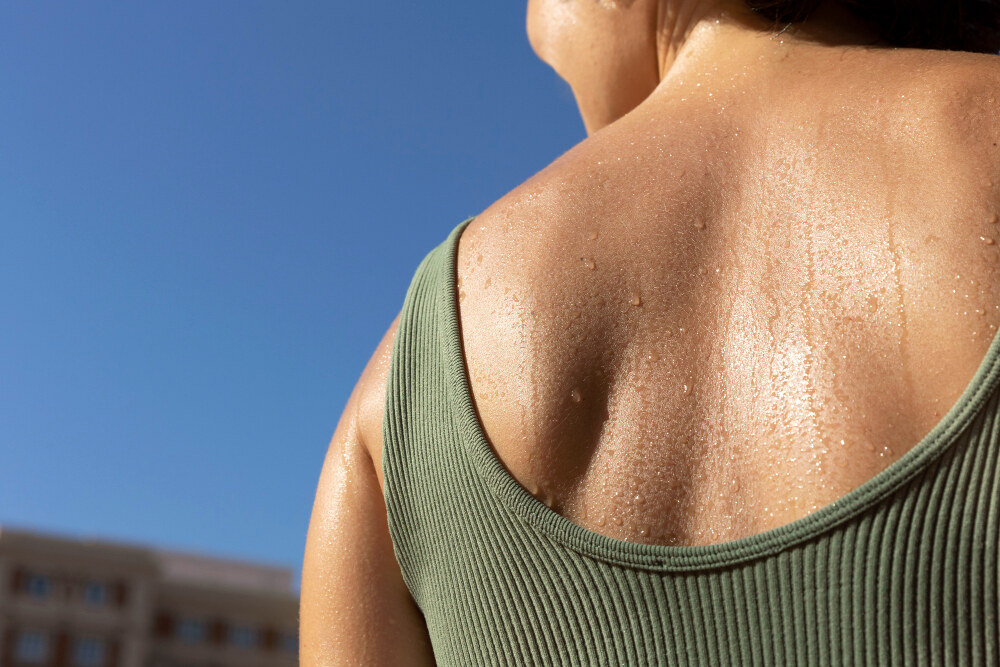
Does humidity cause dehydration even when you don’t feel thirsty? It often does, because one of the most insidious effects of high humidity on the body is a blunted thirst response. Your body may not signal thirst as effectively in humid conditions, which tricks you into believing you’re adequately hydrated when you may already be significantly depleted. Being drenched in non-evaporating sweat creates a false impression of coolness and adequate fluid status.
This lag between actual fluid loss and perceived discomfort is what makes the connection between humidity and dehydration uniquely dangerous. Dehydration is the first threat to your ability to function in heat and humidity. If your cardiovascular system can’t compensate, a progression of increasingly serious heat illnesses follows, from heat exhaustion to life-threatening heat stroke.
You lose 1 to 2 liters of sweat per hour
Sweating in humid heat doesn’t only deplete water. It strips your body of critical minerals at the same time. Research shows that in temperatures above 85°F (29°C), your body can lose 1–2 liters of sweat per hour in hot, humid conditions.
Each liter of sweat carries with it 500–2,000 mg of sodium, plus potassium, magnesium, and calcium. NIH-published research found that average sodium losses over a single work shift in heat can reach 4.8–6 grams of sodium, equivalent to 10–15 grams of salt. Unacclimatized people, including tourists, new arrivals, and indoor workers stepping outside for the first time, lose even more.
Drinking only water can make things worse
Here’s where the standard “just drink more water” advice breaks down. Plain water replaces fluid, but it also dilutes the sodium that’s still in your bloodstream. In severe cases, this can trigger hyponatremia, a dangerously low sodium level that produces cramps, headaches, confusion, and in extreme cases seizures.
Endurance athletes and outdoor workers face the highest risk of over-drinking water without electrolytes. The fix isn’t more hydration in volume terms. It’s replacement of both fluid and electrolytes together, in proportions that match what’s actually being lost.
IV therapy restores fluid and electrolytes together
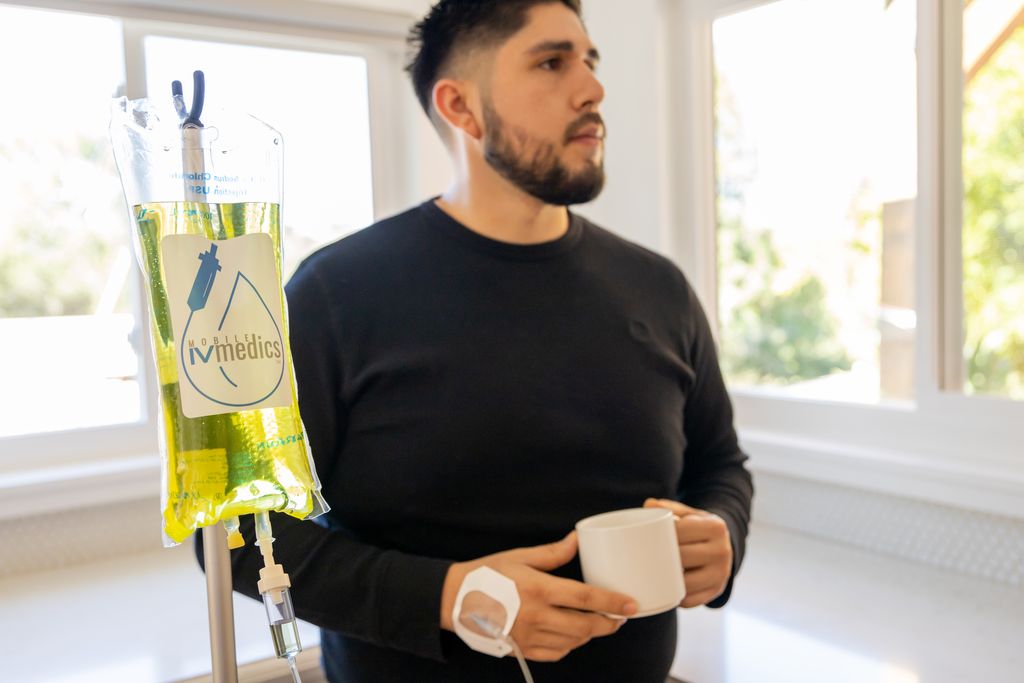
When sweat loss has outpaced what oral hydration can fix in time, IV fluids deliver saline and electrolytes directly into the bloodstream. This becomes relevant after long outdoor work, sustained sports activity, or once heat exhaustion symptoms have already started.
Bypassing the digestive system means full absorption in 30–60 minutes instead of the hours it takes for oral fluids to clear the stomach and reach circulation. Mobile IV Medics provides this service at home, on a job site, or at an event, which removes the urgent care wait. The most appropriate moments to consider it are when symptoms are already present (cramps, headache, dizziness, dark urine) or when fluid loss has been extreme enough that drinking alone won’t catch up before symptoms get worse.
3. How dry air dehydrates you without warning?
Low-humidity dehydration is the quieter and more insidious half of this topic. When relative humidity drops below 40%, the air actively pulls water out of your body through two routes that never stop. Trans-epidermal water loss happens through the skin’s outer layer, and respiratory water loss happens through every breath. Dry air uses moisture from your airway lining to humidify what you inhale, which depletes fluid reserves continuously, even while you sleep.
Indoor heated air in winter often runs at 20–30% relative humidity, which creates chronic low-grade dehydration that compounds over weeks and months. Cold outdoor air contains very little moisture, and when it’s brought inside and heated, the relative humidity drops even further. Thirst rarely kicks in because you’re not hot or sweaty, but your kidneys are already concentrating urine to compensate. Common signs include dry skin, cracked lips, nosebleeds, a dry cough, and persistent fatigue that doesn’t track with how active you’ve been.
| Commercial flight cabins typically hold 10–20% relative humidity, lower than most desert environments. A 6-hour flight can passively pull 1.5–2 liters of fluid from the body through skin and respiratory loss alone, which is why post-flight fatigue often resolves within hours of rehydration on the ground. |
4. Symptoms that signal either type of dehydration
“Why does humidity make me feel sick” is one of the most-searched questions during summer heat waves, and the answer lives in this list of overlapping high humidity symptoms and dry-air symptoms. Universal warning signs include:
- Fatigue and weakness (yes, humidity does make you tired, especially when fluid loss compounds across a hot day)
- Headache and dizziness (humidity can make you dizzy when blood pressure drops from electrolyte loss)
- Dark-colored urine, with pale yellow as the target
- Dry mouth and dry cough
- Muscle cramps from sodium and potassium depletion
- Nausea, since humidity can make you nauseous and even sick to your stomach as core temperature rises
- Rapid heart rate with low blood pressure
- Confusion or delirium in severe cases
The environment shapes how these symptoms present, which is why the same person can miss the signs in one climate that they’d catch immediately in another.
| Condition | Predominant warning signs |
| High humidity | Heavy sweating, overheating, electrolyte cramps, rapid fatigue, nausea |
| Low humidity | Dry skin, cracked lips, nosebleeds, unnoticed fluid loss, respiratory dryness |
That cluster of high humidity health effects is what people often label humidity sickness, and it builds gradually rather than all at once. The body is working harder than usual to thermoregulate without producing the cooling result that should follow, so the experience of humidity makes me feel sick can creep up on someone who’s been sitting still indoors. High humidity sickness rarely announces itself early.
Higher-risk groups need to act on milder symptoms:
- Older adults have a diminished capacity to sweat and detect thirst, which makes them more vulnerable to heat stroke, dizziness, and confusion.
- People with diabetes face nerve and blood vessel damage that can prevent accurate perception of overheating.
- People on certain medications including diuretics, beta-blockers, tricyclic antidepressants, and aspirin have heightened susceptibility.
- Outdoor workers and athletes training above 85°F (29°C) with humidity above 65% are at high risk.
- Infants and young children lose more fluid relative to body mass than adults.
Confusion, rapid heart rate, or low blood pressure means call for medical help, not just drink water.
5. How to stay hydrated in each climate?
The science only matters if it translates into something you can do daily, and the right strategy depends on which humidity environment you’re actually in. In high humidity:
- Drink before you feel thirsty. Aim for about 8 oz of water every 15–20 minutes during physical activity in heat.
- Add 0.5–1 liter to your normal daily intake on humid summer days.
- Replace electrolytes through sports drinks, coconut water, or electrolyte mixes, not just water alone.
- Eat hydrating foods like watermelon, cucumber, oranges, and berries for fluid plus minerals.
- Limit caffeine and alcohol, since both pull fluid out faster.
- Wear breathable, loose clothing to give the air whatever evaporation room it has.
In low humidity, the playbook flips:
- Increase your baseline water intake even when you don’t feel thirsty, because the loss is happening passively whether you notice it or not.
- Run a humidifier indoors to hold relative humidity between 40–60%, especially through winter when heated air drops it lower.
- Use saline nasal sprays to keep mucosal barriers intact and reduce respiratory infection risk.
- Apply moisturizer daily to slow trans-epidermal water loss from the skin surface.
- Consider mobile IV therapy after illness, travel, or prolonged dry-climate exposure has caused extreme fluid loss that days of oral intake won’t catch up to.
The simplest rule is to hydrate for the climate you’re actually in, not the one you grew up assuming. Humidity and dehydration work as a pair in any season, so if you’re already past the warning signs with a pounding headache, cramps, dark urine that won’t clear, or lingering fatigue, oral hydration alone may take longer than you have. On-demand IV therapy from Mobile IV Medics restores fluid and electrolytes in under an hour, with a clinician at your door instead of in an urgent care line.