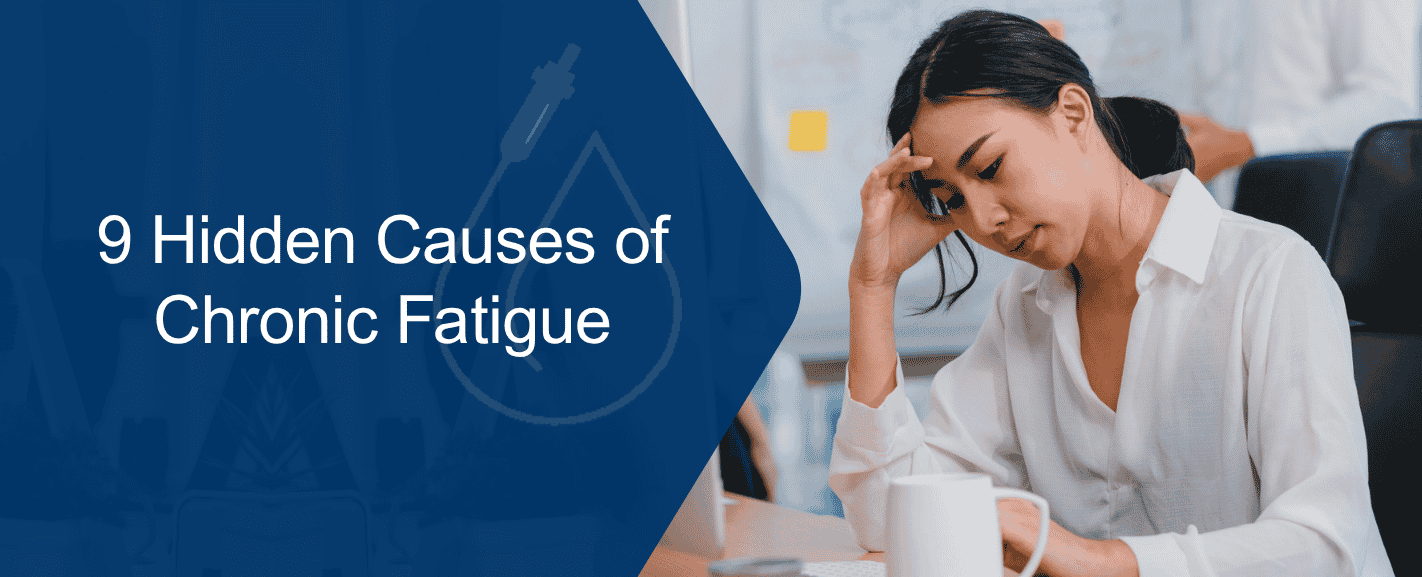
You slept eight hours. You haven’t skipped any meals. You’re not fighting an illness. But you’re still dragging through the day, wondering why you’re always tired no matter what you do. That kind of exhaustion, the kind that doesn’t lift after a full night’s sleep, is rarely about willpower or rest.
Persistent fatigue has dozens of possible causes, and most of them have nothing to do with how late you stayed up. If you’ve been feeling tired all the time without a clear reason, the answer is often something the body is quietly dealing with in the background. Below are the 9 most commonly overlooked fatigue causes, so you can start identifying what’s actually going on.
1. Sleep Apnea and Poor Sleep Quality Rob You of Real Rest
Sleep apnea causes brief, repeated interruptions in breathing throughout the night. Most people who have it don’t know. They sleep for seven or eight hours and wake up feeling like they barely closed their eyes. If you regularly wake up tired, sleep apnea is worth ruling out before blaming anything else.
The classic signs to watch for:
- Snoring loudly or gasping during sleep
- Waking with morning headaches
- Feeling unrefreshed no matter how many hours you logged
Poor sleep quality works the same way, even without apnea. If your sleep cycle keeps getting disrupted before reaching deep or REM sleep, the body doesn’t get the physical restoration it needs. A clock can show eight hours and still miss the fact that none of it was restorative. Sleep apnea is a common but underdiagnosed fatigue cause, and fatigue is often called its “forgotten symptom”, one that gets chalked up to stress or aging before anyone checks for a breathing problem.
2. Anemia Reduces Oxygen Delivery and Leaves You Running on Empty
Anemia means the blood isn’t carrying enough oxygen to the body’s muscles and organs. When tissues get less oxygen than they need, they work harder for the same output, and you feel that as tiredness, low stamina, and difficulty concentrating. Iron-deficiency anemia is the most common type, and fatigue is usually the first symptom, often showing up well before any other sign that something is off.
Anemia links directly to higher rates of low energy and lack of stamina. Women of reproductive age, vegetarians, and people with gastrointestinal conditions that affect iron absorption face a higher risk. What makes anemia easy to miss is that fatigue by itself is nonspecific. Without a blood panel, there is no way to know whether low iron levels are behind it.
3. Chronic Mild Dehydration Drains Stamina Before You Feel Thirsty
Dehydration does not have to be severe to affect how you feel. Research shows that as little as a 1–2% drop in fluid levels can measurably reduce physical stamina and cognitive function. The problem is that the body often does not register mild dehydration as thirst. Instead, it shows up as brain fog, afternoon energy crashes, and difficulty concentrating, which most people never connect to how much they have been drinking.
| A fluid loss of just 1–2% of body weight is enough to measurably reduce physical stamina and cognitive function, often before you feel any thirst at all. For a 150-pound adult, that is less than 1.5 pounds of water. |
You may be at higher risk if any of these apply:
- You live or work in hot weather
- You drink mostly coffee or alcohol during the day
- You are recovering from an illness or infection
- You simply do not think to drink water regularly
For persistent low energy tied to dehydration and nutrient depletion, IV hydration delivers fluids directly into the bloodstream, producing faster and more complete restoration than drinking alone. Mobile IV Medics provides this service at home or on location, without a clinic visit. If dehydration is part of why you have no energy, IV therapy addresses it at the source.
4. Stress, Depression, and Anxiety Are Physical Energy Drains Too
Mental health conditions do not just affect mood. They create real, measurable physical changes in the body that deplete energy on their own.
Depression dysregulates sleep architecture, appetite, and the autonomic nervous system. Each of those disruptions drains physical energy independently of how someone feels emotionally. Fatigue is a residual symptom of depression that often outlasts mood improvement, making it one of the last things to resolve, even with treatment. Chronic stress works differently. It keeps cortisol elevated for prolonged periods, and sustained high cortisol depletes adrenal reserves and disrupts the body’s normal energy regulation. Anxiety adds its own burden: constant low-level muscular tension and cognitive hypervigilance are both physically tiring in ways most people never connect to why they feel exhausted all the time. If there is no clear physical explanation for your tiredness, mental health deserves serious consideration as a root cause.

5. Moving Less Actually Makes You More Tired Over Time
Less movement leads to lower cardiovascular capacity, which means ordinary daily tasks take proportionally more effort. The result is fatigue from activities that should not feel tiring at all. Physical inactivity is among the most common fatigue causes, which surprises most people. Rest feels like it should help, but it does not restore energy the way movement does.
| Research consistently shows that sedentary people report higher fatigue levels than those who exercise moderately, even when their sleep hours are identical. Rest without movement does not reset your energy. It compounds the deficit over time. |
Mobile IV Medics’ own research on sedentary lifestyle confirms the feedback loop: less activity leads to lower stamina, lower stamina makes more activities feel exhausting, and that exhaustion reduces the motivation to move. Breaking the cycle does not require a gym. Consistent light movement, around 20–30 minutes of walking daily, begins improving baseline energy within weeks.
6. Nutrient Deficiencies Quietly Shut Down Your Body’s Energy Output
Low levels of vitamin D, vitamin B12, folate, and magnesium each impair cellular energy production, and deficiencies in all four are common in the general population. Mayo Clinic specifically names vitamin D deficiency as a frequent and often overlooked fatigue cause. Vitamin B12 affects both nerve function and red blood cell production. A B12 deficiency typically produces persistent fatigue paired with brain fog, sometimes months before other symptoms appear.
Those most likely to have a deficiency include:
- Older adults
- People with limited daily sun exposure
- Vegans and vegetarians
- Anyone with celiac disease, Crohn’s, or other conditions that affect nutrient absorption
Nutrient deficiencies are correctable once identified. Without a blood test, supplementation is guesswork. If you do not know why you are always tired, a basic nutrient panel is one of the most practical first steps.
7. Thyroid and Hormone Imbalances Slow Your Entire System Down
The thyroid regulates metabolism, body temperature, and energy output. When it is underactive, a condition called hypothyroidism, those processes slow down across the board. Fatigue sets in gradually, often alongside weight changes, cold sensitivity, or mood shifts. Many people live with undiagnosed hypothyroidism for months or years because the symptoms are easy to attribute to stress or getting older.
Hormonal shifts tied to perimenopause, postpartum recovery, and adrenal dysfunction create similar patterns. The NHS lists hormonal changes as a recognized common cause of tiredness, and thyroid problems in particular are one of the leading reasons for fatigue in females that goes undetected for years. Patients frequently report being told they are just stressed before a TSH test is ever ordered.
| If persistent fatigue is your main complaint and no obvious cause exists, ask your doctor to run a TSH panel alongside a basic blood panel. It is inexpensive, takes one blood draw, and rules in or out one of the most treatable causes of chronic tiredness. |
It is an inexpensive blood test that rules in or out one of the most treatable causes on this list.
8. Past Infections Can Leave Your Immune System Stuck in Overdrive
Post-viral fatigue is one of the least understood entries on this list, but the evidence for it is clear. After infections like COVID-19, mononucleosis, or Lyme disease, fatigue can persist for months or years after the acute illness has resolved. The immune system can keep activating long after the pathogen is gone, holding the body in a low-grade defensive state that continuously costs energy.
Immune dysfunction more broadly, whether from frequent infections, an overactive immune response, or immune deficiency, is a recognized contributor to extreme fatigue. ME/CFS (Myalgic Encephalomyelitis/Chronic Fatigue Syndrome) often begins after a viral trigger and is characterized by post-exertional fatigue that worsens with activity. ME/CFS is a recognized diagnosis with its own clinical criteria, not a vague catch-all for unexplained tiredness.

9. Chronic Illness and Ongoing Inflammation Continuously Deplete Your Energy
Autoimmune and inflammatory conditions, including lupus, rheumatoid arthritis, and inflammatory bowel disease, drive ongoing systemic inflammation even on days that feel manageable. The immune activity required to sustain that inflammation consumes energy constantly, and the fatigue it creates is persistent and real, not a side effect of having a rough week.
Fatigue from autoimmune disease is one of the most undertreated symptoms in these conditions. It often gets dismissed as secondary compared to pain or visible inflammation. Heart disease, liver disease, and other chronic conditions produce the same effect: low energy levels as a direct physiological consequence, not a mood or motivation issue. If you are dealing with chronic illness and persistent exhaustion at the same time, the fatigue itself may need its own treatment plan, separate from managing the underlying condition.
Chronic fatigue rarely comes from a single source. For many people, two or three of these causes are active at the same time. If dehydration and nutrient depletion are part of the picture, Mobile IV Medics can replenish what is missing quickly, at home, without a clinic visit. For causes like thyroid dysfunction, anemia, or sleep apnea, the right next step is a basic blood panel. Most are highly treatable once identified.