Not all IV therapy packages are created equal. If you’re choosing IV fluids from a list of IV drip options, it’s normal to feel unsure which one actually fits your health needs. Prices can range from around $80–$150 for basic hydration up to several hundred dollars for vitamin or NAD+ formulas, and the higher cost does not always mean better or more evidence-based results.
Key Takeaways
- Safe IV therapy selection requires medical screening first—proper physician evaluation determines whether IV delivery is medically necessary or if oral supplementation works equally well
- Verify provider credentials through your state medical board and ensure proper sterile technique, physician oversight, and emergency preparedness before receiving treatment
- Match IV formulas to documented deficiencies based on lab results, not marketing claims—effective treatment addresses what your body genuinely needs
Knowing how to choose IV fluids safely means looking past the menu to evaluate what actually matters for your health and safety. You need to understand the ingredients, evaluate provider qualifications, identify genuine contraindications for your health status, and distinguish between evidence-based benefits and marketing claims. This guide to IV fluids walks through the essential knowledge you need to match the right IV therapy package to your specific situation while prioritizing your safety at every step—from recognizing when IV therapy isn’t appropriate for you, to verifying your provider’s medical credentials, to making cost-effective decisions based on what your body actually needs rather than what wellness marketing promises.
Understanding the Basics of IV Therapy: What Really Makes IV Therapy Packages Different?
Two IV drips with the same name at different providers can contain entirely different ingredients, doses, and medications. There is no industry-wide standard governing what goes inside a wellness drip beyond the fluid base itself — which means the name on the menu is the least useful thing to compare. What actually separates one package from another comes down to 5 variables:
- Fluid base — The liquid carrier in every IV bag, typically normal saline (sodium chloride in sterile water) or lactated Ringer’s (a closer match to the body’s natural fluid composition), which delivers hydration, restores electrolyte balance, and carries all added nutrients and medications directly into the bloodstream; the choice of fluid type and volume is clinically significant — too little leaves you under-hydrated, too much can be dangerous for people with heart or kidney conditions.
- Vitamins and minerals — Micronutrients added on top of the fluid base — most commonly B vitamins (energy metabolism and nervous system function), Vitamin C (immune response and antioxidant protection), magnesium (muscle relaxation, nerve signaling, migraine management), and zinc (immune defense and cellular repair) — which address specific physiological deficiencies and are most effective when matched to your actual health needs rather than a generic formula.
- Added medications — Prescription or clinical-grade drugs sometimes included in IV drips — such as anti-nausea agents, anti-inflammatories, or migraine-specific medications — that can rapidly relieve targeted symptoms but also carry real side effects and drug-interaction risks, meaning their inclusion should always be reviewed against your current medications and health history before treatment.
- Strength and volume — The concentration of each ingredient and the total fluid volume in the bag, which directly affect both the therapeutic impact and the safety of a treatment; higher doses are not universally better — an appropriately dosed formula matched to your body size, health status, and goal consistently outperforms a maximal-dose approach, particularly for anyone with kidney disease, hypertension, or cardiovascular conditions.
- Your health and goals — The single most important factor in selecting any IV package: your medical history (kidney function, heart health, blood pressure, current medications, pregnancy status) and your specific treatment goal (acute rehydration, immune recovery, athletic performance, general wellness) determine which ingredients are safe, which doses are appropriate, and which formulas will actually deliver a measurable benefit for your situation rather than a generic one.
The most effective IV therapy package is not the most expensive or the most comprehensive — it is the one precisely matched to what your body is actually missing and what you are genuinely trying to achieve.
How to Choose The Best IV Therapy For Your Specific Goal
The right IV therapy package depends entirely on what you’re trying to accomplish. Different formulas are designed to address specific health needs, from energy restoration to immune support to athletic recovery.
Best IV for Energy and Fatigue
The Myers’ Cocktail is widely recognized as the best IV drip for energy and fatigue, delivering a concentrated blend of magnesium, B-complex vitamins, vitamin C, and calcium directly into your bloodstream. These core ingredients play essential roles in cellular energy production — B vitamins convert food into usable ATP (your body’s energy currency), while magnesium powers hundreds of enzymatic reactions that generate energy at the cellular level.
The key advantage of IV delivery is bioavailability. When you take B vitamins orally, your digestive system absorbs only a portion of what you consume. IV administration bypasses digestion entirely, ensuring your cells receive the full therapeutic dose.
This formula works best for people experiencing fatigue related to:
- Nutrient depletion from chronic stress or demanding work schedules
- Recovery from an illness that has drained your nutritional reserves
- Inadequate dietary intake due to restrictive eating patterns or food sensitivities
- Increased nutrient demands from physical or mental exertion
The rapid rehydration component also matters. Many people experiencing fatigue are simultaneously dehydrated, which compounds the feeling of exhaustion. The saline base restores fluid balance while delivering nutrients, creating a synergistic effect that addresses both energy depletion and dehydration simultaneously.
Best IV for Immune System Support
High-dose vitamin C IV therapy is considered the best IV therapy for immune system support, and it’s equally effective as the best IV drip for a cold or flu. This formula achieves plasma concentrations up to 100 times higher than oral supplementation can produce, which matters because vitamin C supports immune function by enhancing white blood cell activity, protecting cells from oxidative damage during infection, and supporting the production of antibodies.
Vitamin C is water-soluble, meaning your body uses what it needs and excretes the rest. When you take high doses orally, absorption drops sharply above 200 mg as your intestinal transporters become saturated. IV delivery bypasses this limitation, flooding your system with therapeutic concentrations that your immune cells can immediately access. Immune-focused IV formulas typically combine vitamin C with:
- Zinc to support T-cell function and antibody production
- B vitamins to maintain immune cell energy metabolism
- Antioxidants like glutathione to reduce oxidative stress during immune responses
This approach is particularly effective during:
- The early stages of cold or flu when your immune system needs maximum support
- Recovery periods when your body is rebuilding immune strength after illness
- High-stress periods that temporarily suppress immune function
- Travel or exposure to crowds when infection risk increases
The timing matters. IV immune support works best when administered at the first sign of illness or during high-risk exposure periods, giving your immune system the resources it needs precisely when demand is highest.
Best IV for Athletes and Recovery
The best IV therapy for athletes combines amino acids, B vitamins, electrolytes, and magnesium to address the specific physiological demands of intense physical training. When you push your body through demanding workouts, you create multiple recovery needs simultaneously: muscle protein synthesis requires amino acids, energy metabolism demands B vitamins, and electrolyte balance needs restoration.
Amino acids are the building blocks of muscle protein. IV delivery provides them in free form, meaning they’re immediately available for your muscles to use for repair and growth. This bypasses the digestive breakdown required for dietary protein, accelerating the recovery timeline.
The complete recovery formula addresses:
- Muscle protein synthesis through essential amino acids
- Energy restoration via B-complex vitamins that facilitate ATP production
- Electrolyte rebalancing through sodium, potassium, and magnesium
- Oxidative stress reduction from intense exercise through antioxidant support
- Rapid rehydration to restore plasma volume depleted through sweat loss
The immediate availability of nutrients matters for athletes operating on tight training schedules. While oral nutrition remains essential for daily recovery, IV therapy provides concentrated support when recovery demands exceed what digestion can deliver quickly enough. The anti-inflammatory effects from ingredients like vitamin C and glutathione also help reduce exercise-induced inflammation that can slow recovery.
Best IV for Skin Health and Beauty
The best IV drip for skin combines glutathione, vitamin C, and biotin to support skin health from the cellular level. Glutathione is your body’s master antioxidant, protecting skin cells from oxidative damage caused by UV exposure, pollution, and metabolic processes. It also plays a role in melanin regulation, which influences skin tone and brightness.
Vitamin C supports collagen synthesis — the structural protein that maintains skin firmness and elasticity. While topical vitamin C products face absorption challenges through the skin barrier, IV delivery ensures therapeutic concentrations reach the dermal cells where collagen production occurs. These ingredients work synergistically to address both the appearance and underlying health of your skin.
The mechanism works through:
- Antioxidant protection that reduces cellular damage contributing to premature aging
- Collagen synthesis support that maintains skin structure and reduces fine lines
- Hydration that improves skin texture and appearance
- Reduction of oxidative stress that can contribute to uneven skin tone
The hydration component provides immediate visible effects. Proper hydration at the cellular level improves skin turgor, reduces the appearance of fine lines, and creates a more radiant complexion — effects you can see within hours of treatment.
Best IV for Hangovers and Dehydration
The best IV drip for hangover symptoms — and equally effective as the best IV drip for dehydration — addresses the root cause directly through rapid fluid and electrolyte restoration. Hangover symptoms like headache, nausea, fatigue, and brain fog stem primarily from dehydration and electrolyte imbalance. Alcohol acts as a diuretic, causing your body to excrete more fluid than you consume, creating the cascade of miserable symptoms that define a hangover.
IV hydration therapy restores fluid balance rapidly with a liter of saline solution, while electrolytes (sodium, potassium, chloride, magnesium) reestablish the ionic gradients your cells need to function properly. Anti-nausea medication can be added to provide immediate relief from stomach discomfort.
The formula typically includes key ingredients:
- Saline solution for rapid fluid restoration
- Electrolytes to rebalance sodium, potassium, and chloride levels
- B vitamins to support energy metabolism and liver function
- Anti-nausea medication for immediate symptom relief (when needed)
- Anti-inflammatory support to address headache and body aches
Hangover IV therapy provides rapid dehydration reversal and symptom relief through direct fluid and electrolyte delivery, restoring function far faster than oral rehydration alone.
Best IV for Anti-aging and Brain Function
NAD+ IV therapy delivers nicotinamide adenine dinucleotide, a coenzyme essential for cellular energy production, DNA repair, and activation of longevity-associated proteins called sirtuins. NAD+ levels decline naturally with age, contributing to reduced cellular energy, slower repair processes, and age-related functional decline.
IV NAD+ therapy bypasses the digestive conversion required when taking NAD+ precursors orally (like NR or NMN), delivering the active coenzyme directly to cells. This supports immediate availability for the hundreds of enzymatic reactions that depend on NAD+ for energy metabolism and cellular maintenance.
NAD+ therapy supports:
- Mitochondrial function and cellular ATP production for improved energy
- DNA repair mechanisms that maintain cellular health
- Sirtuin activation is associated with longevity and metabolic health
- Neuronal health and cognitive function through neuroprotective pathways
- Cellular resilience against age-related oxidative stress
The therapy typically requires a slower infusion rate (1-2 hours) because NAD+ can cause temporary flushing or discomfort if administered too rapidly. This extended treatment time allows for comfortable delivery while achieving therapeutic cellular concentrations.

IV for Detoxification and Inflammation
The best IV drip for detox focuses on supporting your body’s natural detoxification pathways through glutathione, alpha-lipoic acid, and vitamin C. Glutathione is the master antioxidant produced by your liver to neutralize toxins and support phase II detoxification — the process that makes toxins water-soluble so they can be eliminated through urine and bile.
Your liver’s detoxification capacity depends on adequate glutathione levels. Factors like alcohol consumption, medication use, environmental exposures, and chronic stress deplete glutathione stores. IV delivery provides concentrated glutathione directly to cells, bypassing the digestive breakdown that limits oral glutathione effectiveness.
This formula is particularly valuable after periods of increased toxic exposure, medication use, or when supporting metabolic health during lifestyle changes. The anti-inflammatory effects from these ingredients also help reduce systemic inflammation that can result from toxic burden.
For people interested in weight loss support, some IV formulas include B vitamins and amino acids that support metabolic function and energy production during calorie restriction. While IV therapy doesn’t directly cause weight loss, it can support energy levels and metabolic function as part of a comprehensive weight management approach.
IV for Mood and Depression Support
For people experiencing low mood or depression-related symptoms, IV formulas with B vitamins, magnesium, and amino acids support neurological function and neurotransmitter production. B vitamins, particularly B12, folate, and B6, serve as cofactors in the synthesis of serotonin, dopamine, and norepinephrine — neurotransmitters that regulate mood, motivation, and emotional well-being.
Magnesium plays a critical role in neurological function, supporting healthy stress responses and nervous system regulation. Deficiency is associated with increased anxiety and low mood. Amino acids like tryptophan and tyrosine serve as precursors to mood-regulating neurotransmitters.
This nutritional support addresses neurotransmitter synthesis through vitamin and amino acid cofactors, nervous system regulation via magnesium, cellular energy for brain function through B-complex vitamins, and reduction of oxidative stress affecting neurological health.
It’s important to understand that IV therapy for mood support works best as complementary care alongside appropriate mental health treatment, not as a replacement for professional psychiatric care or therapy. The nutritional foundation it provides supports brain chemistry, but depression requires comprehensive treatment.When you choose your drip, the most effective IV therapy is the one that matches your specific physiological needs. Different formulas address different recovery demands — energy depletion requires different ingredients than immune support, and athletic recovery has different requirements than skin health optimization.
When IV Makes Sense Vs. When Oral Supplementation Works Better?
For documented deficiencies, malabsorption disorders, and severe dehydration, IV therapy provides clear medical value that oral alternatives cannot match. For general wellness in healthy people with adequate nutrition, IV therapy is an expensive convenience that provides temporary nutrient peaks without evidence of superior long-term health outcomes compared to consistent oral supplementation and proper nutrition.
The safest and most cost-effective approach addresses the root cause of your symptoms through proper medical evaluation, treats documented deficiencies through the most appropriate route (often oral for mild deficiencies, IV for severe or malabsorption cases), and maintains optimal nutrition through diet and targeted supplementation rather than relying on periodic IV therapy to compensate for poor foundational health habits.
IV therapy for general wellness in healthy people costs $100-400 per session, typically recommended monthly. For this investment, you receive periodic nutrient peaks that your body processes and excretes, returning to baseline within days.
Oral supplementation for similar nutrients costs $15-40 monthly in high-quality supplements. Annual cost: $180-480. You maintain steady nutrient levels daily without IV access risks.
For people without documented deficiencies or malabsorption, oral supplementation provides 90% of the potential benefit at 10% of the cost with significantly lower risk.
The speed of IV delivery provides genuine value in specific situations:
- Acute dehydration where you cannot drink enough fluids quickly enough (heat exhaustion, severe hangover with vomiting, gastroenteritis)
- Time-sensitive situations where you need immediate nutrient availability (athlete competing tomorrow with depleted reserves, severe migraine requiring rapid relief, acute illness requiring immediate immune support)
- Medical procedures requiring pre-optimization (surgery patients needing rapid nutritional status improvement)
How to Evaluate IV Therapy Provider Safety
Provider qualifications and safety protocols matter more than the ingredients in your IV bag. Even the most perfectly formulated IV therapy becomes dangerous when administered by unqualified personnel in non-sterile conditions without proper medical oversight.
1. Medical credentials and oversight
Every IV insertion should be performed by a licensed medical professional — registered nurses (RN), nurse practitioners (NP), or physicians. Some states permit licensed practical nurses (LPN) or paramedics to perform IV insertions under RN supervision. The provider administering your IV should have current licensure that you can verify through your state’s medical board website.
Physician oversight is required even when nurses administer treatment. A licensed physician should review protocols, approve treatment plans, and be available for consultation during adverse reactions. Mobile IV services without physician oversight or staffed by unlicensed personnel pose serious safety risks.
2. Sterile technique and infection control
Proper infection control prevents bloodstream infections that can lead to sepsis. Observe whether your provider:
- Washes hands thoroughly or uses hand sanitizer before touching IV equipment
- Wears gloves during IV insertion and throughout the procedure
- Cleans your skin with alcohol or chlorhexidine before needle insertion
- Uses sterile, individually packaged IV equipment opened in your presence
- Never reuses needles, tubing, or saline bags between patients
- Maintains a clean treatment environment free from visible contamination
If you see any violation of sterile technique — reused equipment, ungloved hands touching IV supplies, visibly dirty treatment areas — leave immediately. These are not minor protocol deviations; they are serious infection risks.
3. Pre-treatment screening requirements
Safe providers conduct thorough health screening before administering IV therapy. This should include:
- Comprehensive health history review (chronic conditions, current medications, past adverse reactions)
- Current symptom assessment to determine if IV therapy is appropriate for your presenting complaint
- Medication reconciliation to identify potential drug interactions
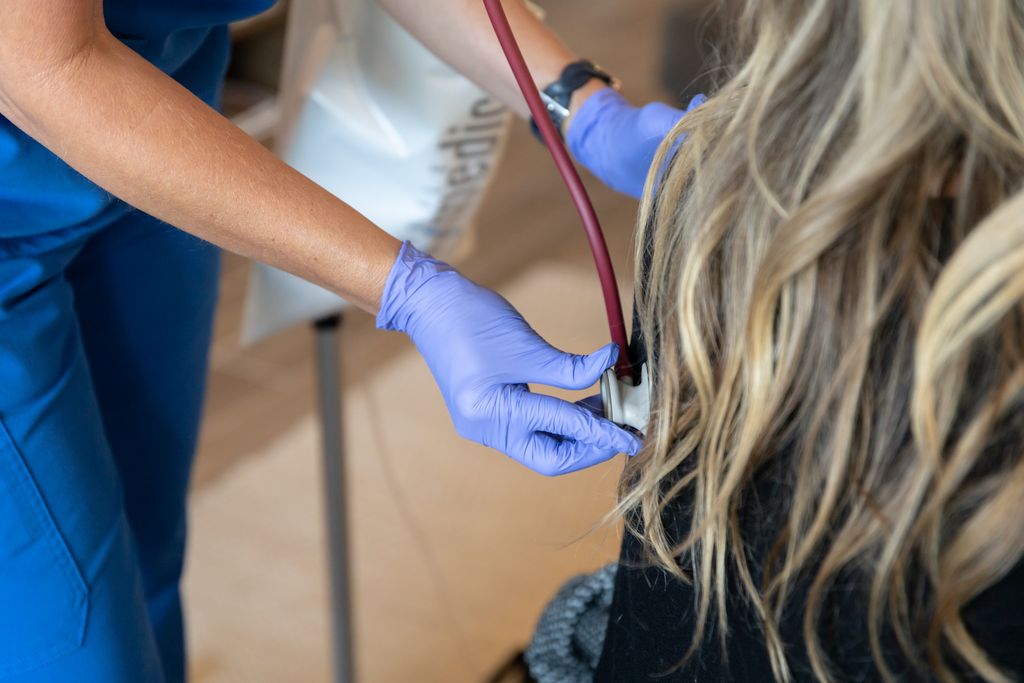
- Vital signs measurement (blood pressure, heart rate, temperature) before treatment begins
- Discussion of contraindications and risk factors specific to your health status
- Written informed consent that explains treatment risks and potential complications
Providers who skip health screening or pressure you to proceed despite contraindications prioritize revenue over your safety.
Step-by-Step of Making a Safe IV Therapy Decision
Following a structured decision process helps you evaluate whether IV therapy is appropriate for your situation and, if so, how to choose the safest provider and most effective formula.
Before browsing IV therapy packages, schedule an appointment with your primary care physician. Discuss your symptoms — whether it’s fatigue, frequent illness, or recovery needs — and ask for relevant bloodwork to identify actual deficiencies. Common tests include vitamin B12, vitamin D, magnesium, iron panel, and a comprehensive metabolic panel to check kidney and liver function.
If you have any chronic health conditions (kidney disease, heart disease, high blood pressure, diabetes), obtain physician clearance before pursuing IV therapy. Your doctor can tell you whether IV therapy is appropriate for your situation or if oral supplementation would work equally well with less risk.
Step 2: Verify your provider’s credentials
Once you have medical clearance, research IV therapy providers in your area. Visit your state medical board website to verify that the nurses and physicians are properly licensed with no disciplinary actions. Call the provider and ask these essential questions:
- “What are the license numbers for your nurses and supervising physician?”
- “What health screening do you require before treatment?”
- “What emergency equipment do you have on-site?”
- “What is your protocol if I have an allergic reaction?”
Legitimate providers welcome these questions and provide direct answers. If a provider becomes defensive or evasive, choose a different provider.
Step 3: Match the formula to your actual needs
Based on your bloodwork results and physician consultation, select an IV formula that addresses your documented deficiencies or acute health needs.
Avoid “kitchen sink” formulas that include everything or exotic ingredients that sound impressive but don’t address your specific health situation.
Step 4: Start with one session, not a package
Book a single treatment session rather than committing to multi-session packages upfront. This allows you to evaluate the provider’s safety protocols, assess how your body responds, and determine whether the benefit justifies the cost before making a larger financial commitment.
During your first visit, observe whether the provider follows proper sterile technique, conducts thorough health screening, and monitors you appropriately during treatment.
Step 5: Evaluate your results honestly
After your first IV therapy session, assess your response objectively:
- How do you feel immediately after treatment compared to before?
- Do you notice sustained improvement over the next few days, or does the effect fade quickly?
- Did you experience any adverse reactions or side effects?
- Does the improvement justify the cost compared to oral supplementation?
If you experienced meaningful, sustained benefit and had no adverse reactions, you might consider additional sessions. If the effect was minimal or temporary, IV therapy may not be addressing your underlying health needs effectively.
Step 6: Monitor and reassess regularly
If you continue with IV therapy, repeat bloodwork every 3-6 months to ensure you’re not developing nutrient toxicity from repeated high-dose treatments and to assess whether ongoing IV therapy remains necessary. Many people can transition to oral supplementation once their levels are restored.
Continue to evaluate whether IV therapy provides genuine value or if lifestyle improvements (better sleep, nutrition, stress management, exercise) might address your health concerns more effectively and sustainably.

The goal is not to create dependence on IV therapy but to use it strategically when medically appropriate, then transition to the most sustainable approach for maintaining optimal health long-term.If you’re ready to choose your drip, begin with thorough medical screening, choose a provider who prioritizes your safety over convenience or profit, start conservatively with well-established formulas, and maintain realistic expectations based on clinical evidence rather than marketing claims. Your health deserves nothing less than the most informed, safest approach to choosing IV therapy possible.