
Key Takeaways
- Las Vegas heat causes fluid loss you can’t feel, not just sweat you can see
- Locals drink on a schedule, shift routines earlier, and treat electrolytes as essential
- Heat exhaustion and heat stroke look different and call for different responses
- IV therapy offers a faster reset when oral fluids fall short
Climate Central puts Las Vegas among the fastest-warming cities in the country, with summer temperatures up more than 6 degrees since 1970. That number alone doesn’t explain why so many people underestimate Las Vegas heat until it catches them. The real problem is the dryness. In under 6% humidity, sweat evaporates the moment it hits the air, so the usual warning sign, a wet shirt or a damp forehead, never shows up. People lose fluid quietly, then wonder why they feel foggy or crampy by midafternoon.
Locals figured this out the hard way. They’ve built habits around it that go well beyond “drink more water.” Living at over 2,000 feet of elevation with about 300 sunny days a year means the sun hits harder, and the risk window stretches longer than most visitors expect. Before getting into what locals actually do differently, it helps to understand why this particular heat behaves the way it does.
Why Is Las Vegas Heat So Hard on Hydration
Ordinary summer heat gives you feedback. You sweat, you feel it, you reach for water. Las Vegas heat skips that step. The dry desert air pulls moisture off your skin almost instantly, a process sometimes called insensible fluid loss, which means you can be significantly dehydrated without ever feeling drenched. That’s part of why locals talk about how hot Las Vegas actually gets in terms of what it does to the body, not just what the thermometer reads.
Elevation adds another layer. At more than 2,000 feet, UV exposure runs stronger than it does at sea level, so outdoor time drains fluid faster than the temperature alone suggests. The valley’s concrete and asphalt hold onto heat well past sunset too, which is why a Las Vegas heat wave can still feel brutal at 9 p.m. Locals have lived through a measurable shift on top of all this. Vegas summers have warmed 6.1–6.2 degrees since 1970, and 2025 ranked as the city’s fifth-warmest year on record. The heat people are adapting to today isn’t the same heat their parents dealt with.
How Do Locals Actually Stay Hydrated in the Heat
There’s no single trick here. Locals layer several habits together, and each one covers a gap the others miss.
They Drink Before They Feel Thirsty
UNLV’s own heat safety guidance is blunt about this: by the time you feel thirsty, you’re already mildly dehydrated. The target for anyone active outdoors is about 4 cups (32 oz) per hour, or about a cup every 15–20 minutes. Locals also skip alcohol and caffeine during peak heat, since both push more fluid out than they put in.
Figuring out how to stay hydrated in hot weather isn’t just about volume, either. A few tactics fill the gaps plain water leaves:
- Reach for an electrolyte drink or coconut water once you’ve been outside more than 30–45 minutes, since plain water alone often isn’t enough by then.
- Eat water-rich foods like cucumber, watermelon, iceberg lettuce, and grapefruit, since hydrating without drinking water works as backup fluid when you’ve hit “water fatigue” and can’t stomach another glass.
- Use a water intake calculator to turn vague advice into an actual number, since hydration needs shift with body weight and activity level.
They Shift Their Whole Day Around the Heat
Local news crews have caught this pattern over and over. Runners and volleyball players show up at parks as early as 5:30 or 6 a.m. so they can finish before temperatures climb past 95 degrees. Construction crews start even earlier, often by 4 a.m., for the same reason. The rule locals repeat to each other is simple: if you’re not outside and moving by 7:30 a.m., wait until evening instead. Peak UV and peak heat overlap from about 10 a.m. to 4 p.m., and controlling that window matters more than any single drink choice.
| Las Vegas sits above 2,000 feet of elevation, where UV radiation is stronger than at sea level. That means outdoor exposure even before 10 a.m. still carries more fluid-loss risk than the same activity would in a lower, sea-level city. |
They Treat Electrolytes as Non-Negotiable
Sweat doesn’t just carry out water. It takes sodium, potassium, and magnesium with it, so replacing water alone can still leave someone cramping or mentally foggy. Research using the Beverage Hydration Index found that several everyday drinks beat plain water for fluid retention over a 2-hour window:
| Beverage | Fluid Retention vs Plain Water |
| Skim milk | Higher |
| Pedialyte (oral rehydration) | Higher |
| Orange juice | Higher |
| Coconut water | Comparable, plus about 600 mg potassium per cup |
| Plain water | Baseline |
Locals lean on some of the best electrolyte drinks for exactly this reason. A local nutritionist’s advice on daily water intake and best drinks sums it up well: swap 1–2 oz of your hourly water for an electrolyte drink instead of just adding more plain water on top.
They Use Cooling Gear and Public Cooling Stations
A cooling towel shows up again and again in interviews with Las Vegas locals, including one parent who called it a lifesaver for her kids during a heat wave. The Strip’s misters and shaded seating exist for the same reason. When temperatures spike, Clark County and the City of Las Vegas open free cooling stations at libraries, community centers, and senior centers, giving anyone without reliable air conditioning somewhere to cool off. Seeking shade isn’t optional here, since pavement keeps radiating stored heat well after the sun goes down.
How Do You Know When Hydration Isn’t Working
Heat Exhaustion Shows Up First
Watch for these heat exhaustion and dehydration symptoms:
- Heavy sweating
- Headache
- Nausea
- Flushed skin
- Muscle cramps
- A faster heart rate
These usually build gradually, and muscle cramps in particular get dismissed as unrelated far too often. If they show up, move to shade or air conditioning right away, sip small amounts of water every 15 minutes, and loosen tight clothing.
Heat Stroke Is A 911 Emergency
Heat stroke symptoms look different and escalate fast:
- Confusion
- Slurred speech
- Hot skin with either heavy sweating or none at all
- A very high body temperature
- Loss of consciousness
Don’t give anything by mouth, including water, to someone who’s confused or unconscious. Call 911 immediately. Once a person is this dehydrated or can’t keep fluids down on their own, oral rehydration alone usually isn’t enough to catch up.
| Oral rehydration absorbs at only about 50% efficiency after digestion, while IV fluids reach close to 100% bioavailability by bypassing the gut entirely. That gap is why severe dehydration cases often need more than water and electrolytes alone. |
When Should You Consider IV Therapy For Vegas Heat
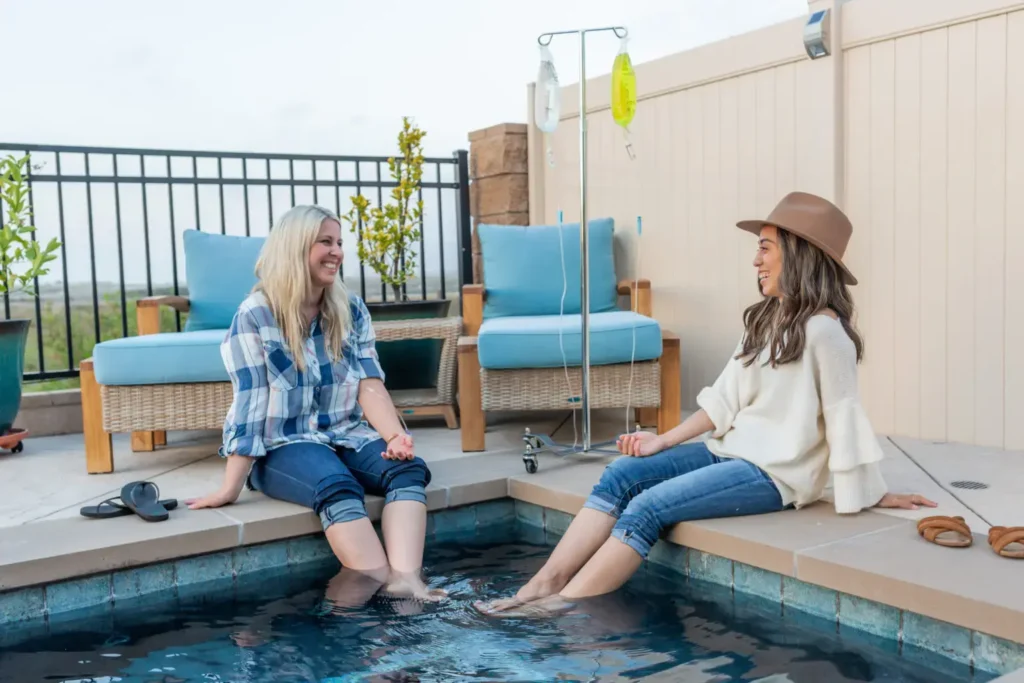
Some locals and frequent visitors don’t wait for symptoms at all. They schedule IV hydration, curious about how IV hydration works and lasts, ahead of a pool day, an outdoor event, or a long day on the Strip. The gut can only absorb about 800 mL of fluid per hour no matter how much someone drinks. IV fluids skip that bottleneck entirely, and IV rehydration beats oral methods in published research, with the numbers making the case:
| Method | Bioavailability | Time to Restore Hydration |
| IV therapy | About 100% | 45–60 minutes |
| Oral rehydration | About 50% | 8–12 hours |
Mobile IV Medics brings a licensed nurse directly to a home, hotel room, or pool day, which fits both the local routine and the way Las Vegas mixes residents with a constant flow of visitors. Think of it as an accelerant for the heaviest heat days, not a replacement for the daily habits that keep most people fine to begin with.
Building Your Own Heat Plan
Las Vegas heat rewards people who plan ahead of it instead of reacting to it, especially once you understand the benefits of staying hydrated day to day. Pick one gap in your own routine, whether that’s drinking on a schedule, shifting your outdoor time earlier, or finally keeping electrolytes on hand, and fix it before the next triple-digit day arrives. If you’re already behind on fluids and feeling it, booking IV hydration services in Las Vegas can close that gap in under an hour.


