If the air in LA smells like smoke right now, your concern is warranted. Los Angeles wildfire smoke — especially from urban fires like the January 2025 Palisades and Eaton fires — is not the same as a bad smog day or a distant brushfire. When homes, cars, and buildings burn, the smoke carries a chemical load far more dangerous than wildland-only fires, and it spreads across the entire LA basin within hours.
Key Takeaways
- LA wildfire smoke contains heavy metals and toxic compounds from burning structures, making it far more dangerous than typical air pollution or smog.
- Smoke effects range from respiratory irritation and fatigue to serious cardiac events, with children and older adults at highest risk.
- Every protective action — filtration, masks, staying indoors — reduces cumulative exposure across fire seasons.
This article covers the health effects of LA wildfire smoke from the ground up: what it actually contains, what it does to your body in the short and long term, and how to protect yourself from wildfire smoke right now and before the next season hits. Whether you’re watching the AQI from your apartment or wondering why it smells like smoke outside days after a fire, the answers are here.
1. Why LA Wildfire Smoke Is More Dangerous?
The January 2025 Palisades and Eaton fires burned through dense neighborhoods where homes, vehicles, insulation, and plastics were consumed alongside vegetation. The smoke that resulted contained heavy metals like lead and arsenic, benzene, polycyclic aromatic hydrocarbons (PAHs), and other carcinogenic compounds that would not appear in a vegetation-only fire. Researchers have called it a “toxic soup,” and scientists have acknowledged they do not yet fully understand the effects of exposing millions of LA residents to smoke enriched with these pollutants.
The primary health threat in any wildfire smoke is PM2.5 — fine particles no larger than 2.5 micrometers. They’re small enough to bypass the nose and throat entirely, penetrate deep into lung tissue, and enter the bloodstream, where they drive inflammation and oxidative stress throughout the body.
The EPA’s 24-hour health standard sits at 35 μg/m³ (an AQI of 100). During the January 2025 LA fires, downtown LA’s monitors recorded daily averages of 101.7 μg/m³. Sensors closer to burn zones exceeded 225 μg/m³. At its peak, a monitor near the Eaton fire recorded 483.7 μg/m³ — roughly equivalent to smoking about 22 cigarettes in a single day.
The AQI scale most Angelenos check on their phones runs from “good” (0–50) through “moderate,” “unhealthy for sensitive groups,” “unhealthy,” “very unhealthy,” and “hazardous” (301+). During the 2025 fires, wide areas of LA County reached “unhealthy” or worse.
What AQI doesn’t capture is ash and coarse debris from structure fires — particles that official monitors can miss entirely, even when the air still smells strongly of smoke. Public health officials urged residents to keep windows closed and wear N95 masks even on days when Los Angeles air quality appeared moderate. Where the wildfire smoke is coming from matters as much as how much of it there is.
| LA already carries some of the highest baseline traffic and industrial particulate pollution in the country. When wildfire smoke arrives, it layers on top of existing ozone and PM2.5 — it does not replace it. During active fire events, residents breathe a combined pollution load from multiple sources simultaneously. |
2. Health Effects of LA Smoke Exposure
Urban wildfire smoke carries long-term risks that go beyond what wildland fires produce. Benzene, formaldehyde, lead, and PAHs have all been detected in California smoke from LA-area fires.
What Happens to Your Lungs and Airways
The airways take the most direct hit. Fine particles inflame the lining of the bronchial tubes, causing increased mucus, cough, wheeze, chest tightness, and in more severe cases, bronchospasm. For healthy adults, these symptoms are uncomfortable but typically resolve when air quality improves.
For people with asthma, the picture changes fast. Smoke event days in California are associated with a 10.3% increase in asthma-related acute care visits on the same day. In the 2 weeks following the 2018 Camp Fire, 76% of children with asthma experienced an attack or flare, and asthma-related ER visits rose 27%. During the January 2025 LA fires, fire-related hospital visits across LA County spiked 16-fold at their peak. For vulnerable groups, this is a genuine medical emergency pattern, not a seasonal inconvenience.
Over time, the damage accumulates. Repeated exposure to fine particulate pollution is linked to accelerated lung function decline in adults, reduced lung development in children, and increased hospitalizations for both asthma and COPD — beyond what non-wildfire pollution alone would predict. One statewide analysis found that failing to account for wildfire-specific PM2.5 toxicity may significantly underestimate fire-related respiratory hospitalizations over a decade or more. The lungs don’t simply reset between seasons.
Eyes, Nose, and Throat
Smoke particles and gases irritate mucous membranes throughout the upper respiratory tract. Many residents notice these symptoms and assume they’re dealing with allergies from wildfire smoke — which is partly accurate, but incomplete. Antihistamines reduce some nasal and eye irritation, but they don’t address the particulate burden in the lower airways. Common upper respiratory symptoms include:
- Itchy, watering eyes
- Runny or congested nose
- Sore or scratchy throat
Treating these as routine seasonal allergies and continuing normal outdoor activity is a common and consequential mistake.
Whole-Body and Systemic Effects
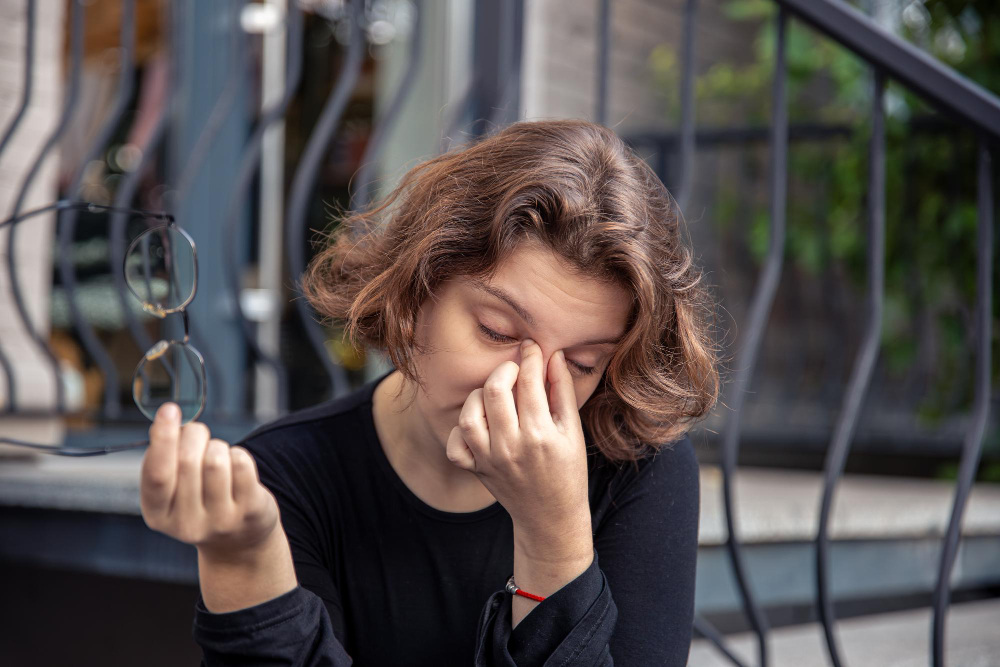
Headache, malaise, fatigue, and cognitive fog are common on heavy smoke days — not simply the result of stress or poor sleep, but a systemic inflammatory response to particulates reaching the bloodstream. Dehydration compounds all of these effects, particularly during hot, dry fire conditions when fluid intake drops while the body is already under stress.
The systemic burden doesn’t stop at short-term discomfort. Wildfire smoke is an established cardiovascular stressor, with elevated risks of heart attack, stroke, heart failure, and arrhythmia documented in connection with wildfire PM2.5 exposure — particularly in adults over 50 and those with pre-existing cardiovascular conditions. Research published in PNAS shows emergency department visits for cardiovascular causes rise non-linearly as wildfire PM2.5 increases. Even short acute exposures — as few as 3–5 days — can raise the likelihood of a cardiac event in older adults.
Early data is also connecting long-term fine particulate exposure to cognitive decline and elevated dementia risk. These findings are preliminary and should not yet be treated as settled, but scientists are taking the question seriously enough to include neurological outcomes as a central focus of the multi-university, 10-year LA Fire HEALTH Study launched after the 2025 fires.
3. What to Do If the Air Smells Like Smoke?
Recognizing why it smells like smoke outside is step one. Acting on it before symptoms appear is step two — and that gap is where health outcomes are made or missed. Why is air quality bad in Los Angeles today varies by event, but the protective response is consistent: reduce exposure immediately and give your body the support it needs to recover.
- Check your local AQI first. Look up LA air quality for your specific zip code, not a regional average. Use the EPA’s AirNow Fire and Smoke Map or PurpleAir sensor data for the most localized reading. Above 100, sensitive individuals should limit outdoor time. Above 150, everyone should stay inside — regardless of how the air looks or smells. If you can smell smoke and the AQI reads moderate, don’t be reassured. Ash and coarse particles from structure fires aren’t fully captured by standard monitoring instruments.
- Seal your home. Close all windows, doors, and fireplace dampers to slow the rate at which outdoor air enters. Running AC with smoke outside is safe — just make sure the system is set to recirculate indoor air, not draw in fresh outdoor air.
- Create a clean air space. If you don’t have central AC, set up a portable HEPA purifier in one room, close the door, and stay there as much as possible during high-AQI periods. Avoid anything that worsens indoor air quality: candles, incense, gas cooking, and standard vacuuming all add pollutants to the air inside.
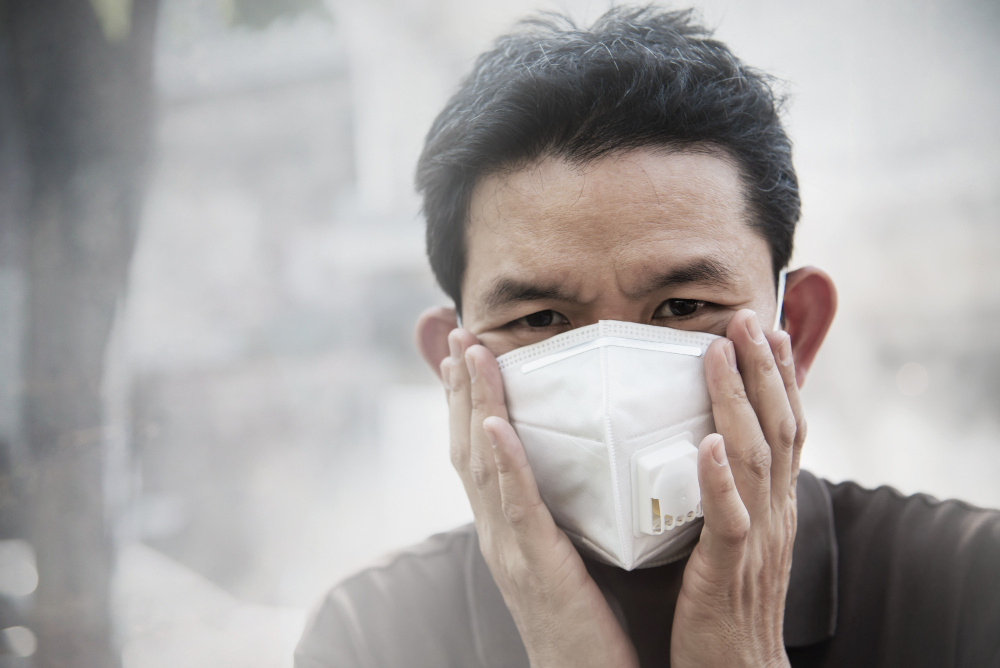
- Wear the right mask if you must go out. A properly fitted N95 or KN95 respirator provides meaningful PM2.5 protection. Surgical and cloth masks do not filter fine wildfire particles and should not be relied upon.
- Follow your medical action plan. Anyone with asthma, COPD, or a heart condition should activate their written action plan, confirm rescue medications are accessible and not expired, and contact their clinician if baseline symptoms worsen.
Beyond protection, recovery matters too. Many LA residents endure days of California smoke exposure and never address what it does to their body — the dehydration, the persistent headaches, the fatigue that lingers even after the air clears. For those who are medically stable and safely indoors, at-home IV therapy is a practical recovery option worth knowing about. Mobile IV Medics delivers nurse-administered IV fluids, electrolytes, vitamin C, and immune-support formulations directly to your home across Los Angeles County, Ventura County, and the San Fernando Valley — so you can recover without stepping outside and adding to your exposure. This is supportive care, not emergency treatment. Anyone experiencing chest pain, difficulty breathing, or other red-flag symptoms should call emergency services first.
4. Preparing Your Home Before the Next Fire Season
The best time to act on wildfire smoke protection is before the smoke arrives. For LA residents asking how to protect yourself from wildfire smoke on an ongoing basis, a few targeted investments made in the off-season dramatically change what your options are when conditions deteriorate.
The single most impactful step is having a CARB-certified portable HEPA air purifier properly sized for the rooms where you spend the most time — one per bedroom and one for the main living area for households with children or anyone with a respiratory condition. Pair that with a MERV-13 HVAC filter upgrade if your system supports it, and replace filters before each fire season starts. California smoke loads filters far faster than ordinary household dust, so monthly checks during active fire periods are worth building into the routine.
A smoke-specific supply kit is also worth assembling separately from a general evacuation bag. Stock it with:
- N95 masks for every household member (enough for at least 2 weeks)
- Extra prescription medications, including inhalers and cardiac drugs
- A portable HEPA air purifier
- Basic symptom support supplies such as electrolytes and pain relief
One assumption worth correcting: coastal neighborhoods are not protected. Pacific Palisades, Santa Monica, and Malibu all received unhealthy air quality advisories during the January 2025 LA wildfire events. Ocean breezes don’t reliably filter PM2.5, and Los Angeles air quality during active fire events has historically reached hazardous levels across the entire county — coast included. The same preparation applies regardless of zip code or proximity to the water.
For Angelenos managing the fatigue, dehydration, and systemic symptoms that follow days of smoke exposure, Mobile IV Medics offers same-day at-home service across LA County and surrounding Southern California communities. Registered nurses deliver customized IV formulations — including immune boost IV drips — without requiring you to leave home and add outdoor exposure during or after a smoke event. Wildfire seasons will continue. The accumulation of smart, consistent protective choices is what determines their long-term impact on your health.