Key Takeaways
- Standard Florida hurricane preparedness protects the structure, but health risk peaks in the days after landfall, when power, air conditioning, and clean water are often still down.
- Broward County sets the working water number at 1 gallon per person per day for 3–5 days, with extra volume needed for food preparation, pets, and hygiene.
- Heat exhaustion involves losing both water and salt, so a kit built on bottled water alone leaves half the deficit unaddressed.
- In a qualifying Florida emergency, early refills or up to a 30-day supply of certain maintenance medications may be available—but eligibility depends on the emergency order, location, medication, and pharmacy assessment.
The shutters go up, the tank gets filled, the pantry fills with canned goods. Florida hurricane preparedness covers the house thoroughly and the people inside it barely at all.
The wind is the part everyone plans for. What follows is 3 days of clearing debris in August humidity, sleeping without air conditioning, and drinking whatever is left in the cooler. That stretch is where Florida hurricane preparedness quietly fails, and it is the part almost no checklist covers.
Hurricane Prep Often Stops at the Supplies
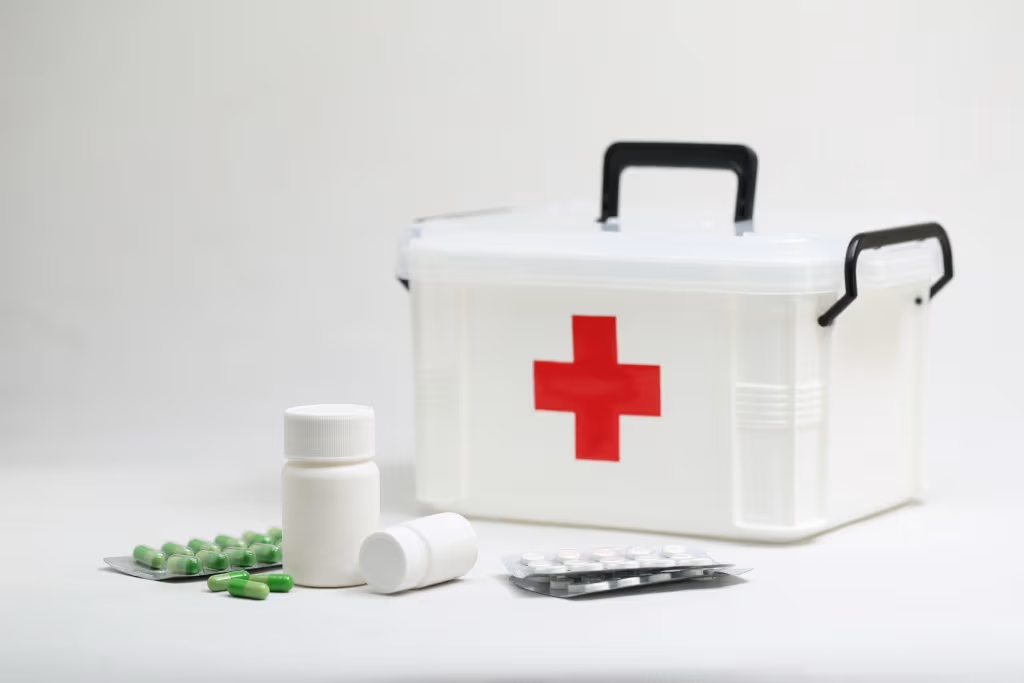
Broward County’s hurricane emergency kit checklist runs to about 17 items. Two touch health directly: drinking water, and a first aid kit with medicines. The rest covers tools, fuel, bedding, hygiene, and pet care. None of that is wrong, and shutters and evacuation zones belong at the top of any hurricane preparedness checklist.
The problem is timing. Property damage happens in hours. Health risk builds across the days that follow, once the wind has passed and the work begins. Red Cross reporting describes South Florida as a region sitting barely above sea level, facing this threat annually, with disasters growing in frequency and intensity.
So run one test on your hurricane supplies this week. The kit specifies gallons of fuel. Does it specify anything at all about the people doing the cleanup?
What Happens to Your Body After a Hurricane?
Storm recovery is physical labor in the worst possible conditions, usually performed by people who do not think of themselves as manual laborers. The body responds accordingly.
Cleanup Work Drives Dehydration Faster Than Expected
Mayo Clinic advises drinking water before, during, and after a day of cleanup, with a baseline of about 2 quarts daily plus additional volume covering what you sweat out. Debris hauling and roof tarping push demand well past that.
The risk is in how quietly it starts. Mayo Clinic emergency physicians note that the first symptom is usually decreased urine output, not thirst. Lightheadedness and the sense that you might pass out arrive later, once the deficit has already built. Someone can work an entire morning without registering a dehydration symptom they would recognize.
| Thirst is a lagging indicator during storm cleanup. Because reduced urine output precedes it, drinking on a fixed schedule outperforms drinking on demand. Set a timer rather than waiting to feel thirsty. |
Heat Illness Escalates Through Recognizable Stages
CDC groups heat-related illness into distinct conditions rather than one continuous slide. Heat rash and heat cramps sit at the mild end, with muscle cramps tracing back to salt depletion in the muscles. Fainting or dizziness after standing up too quickly is heat syncope, a separate condition again.
The effects of heat exhaustion are what most Florida residents actually encounter. CDC lists its signals as:
- Headache
- Nausea
- Dizziness
- Weakness
- Irritability
- Thirst
- Heavy sweating
- Elevated body temperature
- Decreased urine output
A dehydration headache during cleanup is frequently the first thing people notice and the first thing they dismiss.
Heat stroke belongs in a different category. CDC guidance describes body temperature reaching 106°F or higher within 10–15 minutes as the sweating mechanism fails, with confusion, slurred speech, and hot dry skin. That is an emergency call, not a hydration problem.
None of this requires outdoor work. Broward County flags heat exhaustion as a direct consequence of losing air conditioning, since problems develop after several days of high temperatures and inadequate fluid replacement. An older adult sitting inside a powerless house is exposed too.
How Should You Prepare for Hurricane Health Risks?
Knowing how to prepare for a hurricane physically comes down to 5 additions, none of which take much space or money. Most fit inside the kit you already own.
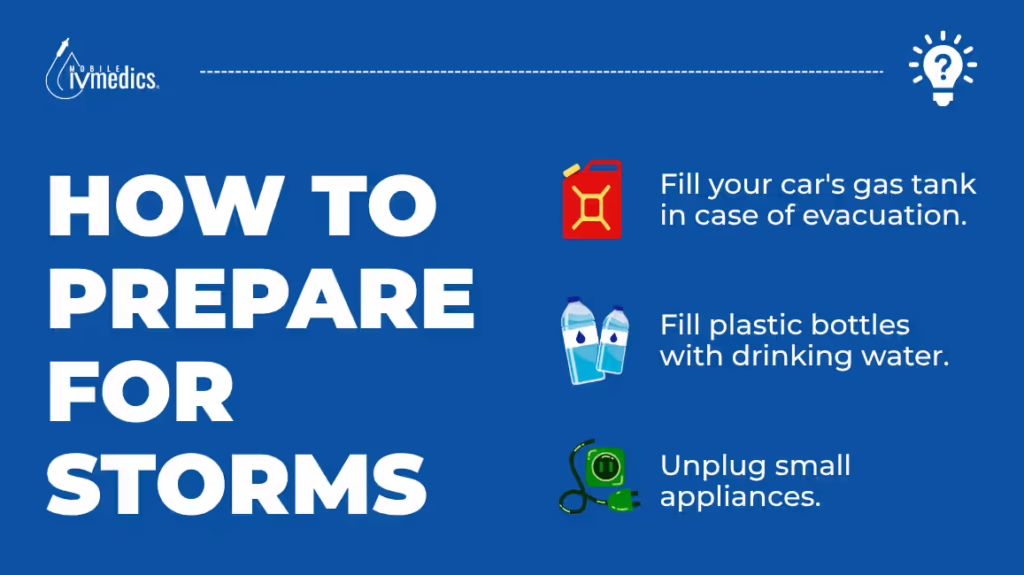
Store 1 Gallon Per Person Each Day
Broward County’s hurricane guide calls for at least 1 gallon of drinking water per person per day for 3–5 days, and it is explicit that the figure covers drinking alone. Food preparation, pets, and hygiene need more on top.
Ready.gov and City of Miami guidance both note that individual needs shift with age, health, activity, diet, and climate. Children, nursing mothers, and sick household members need more than baseline. In very hot temperatures, water needs can double, which describes a Florida August without air conditioning fairly precisely.
| A four-person household needs at least 20 gallons for the five-day minimum. For a prolonged, very hot outage, especially where people are doing cleanup work, caring for children or older adults, or managing medical needs, consider building toward 40 gallons or more. Individual needs vary, and water for pets, cooking, and hygiene is additional. |
Two rules matter more than the arithmetic:
- Never ration emergency drinking water unless authorities instruct you to. Drink what you need today and work on sourcing more for tomorrow.
- Reduce activity and stay cool to lower demand instead of cutting intake.
Store commercially bottled water sealed in its original container somewhere cool and dark, and replace self-filled food-grade containers every 6 months.
Add Electrolytes to Your Water Supply
CDC defines heat exhaustion as the body’s response to excessive loss of water and salt through heavy sweating. That definition is the whole argument for why the relationship between dehydration and electrolytes belongs in your planning. Replacing fluid without replacing sodium addresses half the problem.
Heat cramps make the point directly. They occur when sweating depletes salt in the muscles, and CDC’s guidance during cramping is a drink replacing both carbohydrates and electrolytes every 15–20 minutes, while avoiding salt tablets. Oral rehydration packets and electrolyte drinks weigh almost nothing and keep for months.
There is a subtraction here too. Caffeinated drinks and alcohol pull fluid out and raise the amount of water you need, so neither counts toward supply. Broward County adds one more: skip extremely cold liquids during heat exposure, since they can trigger cramps.
Electrolytes supplement water. They do not replace it, and a kit stocked with sports drinks and no plain water has traded one gap for another.
Medication Continuity Needs a Backup Plan
Florida’s emergency refill law lets you obtain a 30-day medication supply once an emergency is declared, and Broward County recommends people with medical conditions maintain a 30-day supply as standing practice. Pharmacy systems go down with the grid, so a written list of medications, dosages, and prescribing physicians is worth more during an outage than any app.
Temperature-sensitive drugs need a decision made in advance. Ask your pharmacist or prescriber now what to do if refrigeration gets interrupted, and follow the medication’s own label rather than a general rule, because the answer varies by drug and some of those answers carry real consequences.
One interaction deserves attention while you plan. Diuretics, blood pressure medication, and diabetes management all get harder to control in a dehydrated body. Broward County notes that anyone on water pills or a physician-limited fluid intake should ask their doctor specifically how much to drink in hot conditions, since standard advice does not apply cleanly.
Your Most Vulnerable Member Sets the Baseline
Size the plan around whoever tolerates heat and fluid loss worst. That usually means:
- Infants
- Adults over 65
- Pregnant household members
- Anyone managing a chronic condition or limited mobility
Building to the household average leaves that person short.
Caregivers carry the heaviest version. Families supporting home-bound or hospice patients need supply depth, contact lists, and evacuation routes settled earliest, because their margin for improvisation is smallest.
Florida counties also run registries most residents never hear about. Broward operates a Vulnerable Population Registry alongside a Special Needs Registry for people with medical conditions who do not require hospitalization, both open year-round with pre-registration strongly recommended. Registering is a June task. Once a storm has a name, the window has effectively closed.
Treated Water Becomes a Real Need After Flooding
Storm surge can compromise a water supply that was safe the day before. Broward County’s instruction after a hurricane is blunt: do not use tap water until you know it is safe, and that restriction covers pets, washing, cooking, brushing teeth, making ice, and preparing formula. Contaminated water can carry organisms causing dysentery, cholera, typhoid, and hepatitis.
Three methods make suspect water drinkable, and they do not do the same job:
| Method | Kills microbes | Removes metals, salts, chemicals |
| Boiling | Yes | No |
| Chlorination | Yes | No |
| Distillation | Yes | Yes |
Distillation is the only one that handles what surge flooding leaves behind. Get exact ratios and timings from CDC or your county health department and print them for the kit, since these are dosing instructions where precision matters and a phone with no signal is no help. One thing not to do: delay drinking until you are dehydrated while hunting for a perfect source.
What is Your Plan if Symptoms Escalate?
Deciding your thresholds in advance is preparedness, same as the water and the batteries. Nobody researches heat stroke symptoms by flashlight on day 4 of an outage, which is exactly when the question comes up.
Know the Warning Signs Before They Escalate
Mild dehydration symptoms are manageable at home. Escalation looks different, and the line into emergency territory is not a judgment call.
| Tier | Signals | Action |
| Mild | Thirst, mild headache, dark urine, muscle cramps | Rest, shade, fluids containing electrolytes |
| Escalating | Symptoms persisting after rest, elevated heart rate, dropping blood pressure, paleness, fainting, cool moist skin, fast weak pulse, fast shallow breathing, nausea or vomiting | Seek medical help promptly. Keep the person in a cool place and do not leave them alone. |
| Emergency | Confusion, altered mental status, slurred speech, seizures, loss of consciousness, hot dry skin | Call 911 |
Mayo Clinic sets the middle tier; Broward County reaches a similar conclusion for heat exhaustion. Write these tiers down and put the paper in the kit with the flashlight.
Home Hydration is Not Always Enough
Oral fluids handle most mild cases without outside help. The harder situation sits in the middle, where someone cannot keep fluids down, or has been depleted across several days of heat and physical work, and is not improving on water alone.
Decide the fallback before the storm rather than during it. Identify your nearest urgent care, confirm whether you can book a mobile IV visit in your area, and agree on who drives if the affected person cannot. Road conditions and emergency room volume make same-day care harder after a storm, which is why this belongs in an emergency plan for a hurricane instead of a search you run at the time.
Conclusion
Pull the kit out of the closet this week, before the next named storm gives you a reason to. Check it against 5 things: gallons per person, electrolytes, medication depth with a refrigeration answer, a plan built around your most vulnerable household member, and your escalation thresholds written on paper. All of it takes an afternoon in June and becomes impossible to arrange in the 36 hours before landfall.