Key Takeaways
- Muscle cramps have 4 main drivers: electrolyte imbalance, neuromuscular fatigue, medication side effects, or nighttime-specific triggers — each calls for a different fix
- Fastest relief: stretch and dorsiflex the muscle immediately; apply heat, not ice; pickle juice may shorten duration through a neurological reflex, not electrolyte replenishment
- Prevention centers on electrolyte-rich foods, consistent hydration, and progressive training — plain water alone is not enough
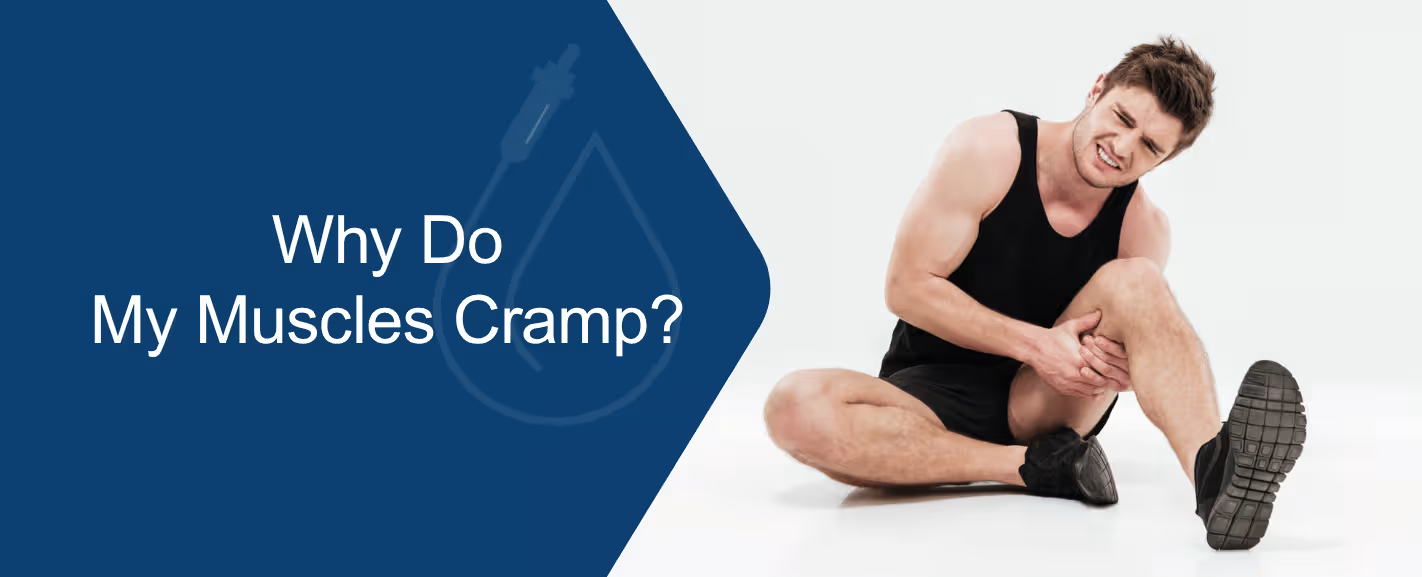
Most people recognize the sensation within the first second. A calf locks up mid-stride, a foot seizes at 3 AM, and for a few brutal seconds, nothing works.
What is actually happening: the nervous system fires a “contract” signal that overwhelms the “relax” signal. Electrolytes such as sodium, potassium, calcium, and magnesium carry these electrical messages across muscle cell membranes. When their balance is disrupted, the muscle gets stuck mid-contraction.
What Does a Muscle Cramp Actually Feel Like?
A cramp is not delayed onset muscle soreness, which surfaces as a diffuse ache 24–72 hours after exercise. It is not restless legs syndrome either, which creates an urge to move without sharp localized pain. A muscle cramp is sudden, localized, the muscle is visibly hard during the event, and it typically lasts seconds to a few minutes. The muscle can stay sore for up to 24 hours after the event.
Muscle cramps, called charley horses when they hit the legs, affect somewhere between 37% and 95% of people at some point. Despite how common they are, most people reach for the wrong fix because they do not know which cause is driving theirs. This article covers the 4 most common causes, the fastest ways to stop a cramp in progress, and what actually keeps them from returning.
What Causes Muscle Cramps Most Often?
Dehydration and Electrolyte Loss Knock Out Muscle Signals
When you sweat, especially in heat, sodium and potassium leave the body with the fluid. Plasma volume shrinks and muscle cell signaling becomes unstable. Even 1–2% of body weight lost to sweat can impair muscle function, and most people do not feel thirsty until dehydration has already progressed past that point.
The problem runs deeper than fluid volume alone, because each electrolyte plays a distinct role in the contraction-relaxation cycle:
| Electrolyte | Role in Muscle Function |
| Sodium | Regulates membrane potential; initiates the electrical signal |
| Potassium | Balances nerve excitability at the cell membrane |
| Magnesium | Supports muscle relaxation and ATP production |
| Calcium | Triggers fiber contraction through the troponin system |
This is why plain water is not an effective fix after significant fluid loss. It dilutes the electrolytes still circulating in the bloodstream and can worsen cramping susceptibility. Replacing fluids with a sodium-chloride and carbohydrate solution more than doubles the time before cramping onset — plain water does not produce the same effect.
| Plain water contains no sodium. During active dehydration, drinking it dilutes the sodium already in circulation, pushing electrolyte levels further out of balance. Electrolyte drinks work differently because they replenish rather than dilute. |
Overworked Muscles Lose Their Built-In Off Switch
A second explanation, increasingly well-supported by research, shifts the focus from chemistry to neurology. Overworked muscle spindles, the stretch sensors embedded in the muscle, become hyperactive and fire excessive excitatory signals. At the same time, the Golgi tendon organs, which serve as the muscle’s built-in inhibitory switch, fatigue and stop sending inhibitory feedback. Alpha motor neurons tip into hyperexcitability, and the muscle locks into a contraction it cannot self-correct.
This explains what dehydration theory cannot: a well-hydrated, conditioned athlete can still cramp. Research comparing cramp-prone and non-prone individuals found that cramp-prone people fire their muscles at approximately 15 Hz versus approximately 25 Hz in non-prone individuals, a structurally lower excitation threshold that makes cramping easier to trigger.
Risk climbs under specific conditions: exercising beyond current conditioning, spiking training load too quickly, competing in heat, and working muscles that cross two joints. Calves and hamstrings are the most common targets because of this. Most researchers now treat electrolyte loss and neuromuscular fatigue as coalescing factors rather than competing theories.
Certain Medications Are a Commonly Missed Trigger
Diuretics, both loop and thiazide types, flush sodium and potassium as a side effect, making them the most commonly implicated drug class for muscle cramps and spasms. Statins, beta-blockers, and beta₂-agonist inhalers can also disturb muscle signaling or reduce peripheral blood flow to the legs.
The most useful diagnostic question is timing: did cramps start or noticeably worsen after beginning a new medication? That pattern is worth raising with a physician. Changes to any prescribed regimen require medical guidance, not self-management.
Nighttime Leg Cramps Follow a Different Pattern
Most nocturnal cramps are idiopathic, meaning no specific cause can be identified. Several factors do raise the risk significantly:
- Being over 60
- Third trimester of pregnancy
- Prolonged sitting or inactivity
- Underlying conditions including kidney disease, diabetes, peripheral artery disease, hypothyroidism, and Parkinson’s disease
Third-trimester pregnancy is a documented case where 3 factors converge at once: magnesium depletion, circulatory changes, and the mechanical load that late pregnancy places on leg muscles.
Nighttime cramps almost always target the calves and feet specifically, and they strike during rest rather than exercise, which sets them apart from exercise-associated cramps in both trigger and pattern. When cramps occur across the whole body rather than in a specific muscle, a systemic driver such as electrolyte imbalance or medication side effect is a more likely explanation.
How Do You Stop a Muscle Cramp Fast?
When a cramp strikes, these steps provide the fastest muscle cramp relief:
- Stretch immediately. For a calf cramp, straighten the leg and pull the foot toward you in a dorsiflexion hold. Maintain for 30–60 seconds and repeat as needed. This activates the Golgi tendon organs to send inhibitory signals back to the motor neurons, directly countering the cramping mechanism.
- Massage the muscle. Manual pressure increases blood flow, works contracted fibers, and stimulates sensory receptors that suppress the cramping signal. Combine with the stretch.
- Apply heat, not ice. A heating pad, warm towel, or warm shower directed at the muscle stimulates thermoreceptors to relay relaxation signals through the central nervous system. Cold causes vascular constriction and can worsen the spasm.
- Hydrate with electrolytes. If dehydration was likely a factor, choose an electrolyte drink over plain water. Plain water dilutes remaining electrolytes, while a sodium-and-potassium solution addresses the imbalance directly.
- Move gently after. Once the cramp releases, light walking or gentle leg cycling restores circulation and reduces the chance of re-cramping.
Pickle juice is an unexpected but evidence-backed option. Studies observed about 37% reduction in cramp duration, and the speed of relief rules out any electrolyte explanation. Acetic acid in the vinegar is thought to trigger a neurological reflex in the throat that inhibits alpha motor neuron firing, stopping the cramp at its source.
| Pickle juice reduces cramp duration by about 37% in studies. Relief appears within seconds of drinking, before any electrolyte has left the stomach. Researchers attribute this to acetic acid activating a neural reflex that quiets the overactive motor neurons driving the cramp. |
What Actually Prevents Muscle Cramps from Coming Back?
Daily Hydration and Electrolyte Intake Set Your Threshold
A practical starting point for daily fluid intake is body weight in pounds multiplied by 0.67, expressed in oz. Add 12 oz per 30 minutes of exercise. Think of this as a floor, not a ceiling.
Food choices matter as much as fluid volume. Avocado contributes about 975 mg of potassium per fruit. Sweet potato, spinach, legumes, salmon, and yogurt offer comparable contributions. The commonly recommended banana provides about 9% of the FDA’s daily value for potassium. It is useful as one part of a varied diet, but not the single-food fix it is often marketed as.
Many people searching for vitamins for muscle cramps find that the clinical evidence points more consistently to minerals, specifically magnesium and potassium, than to any particular vitamin. Magnesium supports the enzymatic process that releases a contracted muscle, and deficiency is closely linked to nighttime cramping. Potassium maintains the sodium balance at the nerve-muscle junction and keeps excitability in check. Getting consistent dietary amounts of both is the most reliable foundation.
For heavy sweaters, athletes in consecutive training days, or anyone recovering from a severe cramping episode, oral replenishment has a real limitation in absorption speed. IV therapy delivers magnesium and electrolytes directly into the bloodstream, bypassing the digestive tract entirely.

Consistent Stretching Lowers the Frequency of Nighttime Cramps
Clinical evidence supports regular calf stretching as a way to reduce how often nocturnal cramps occur. The protocol is 3 sessions per day, holding 2–3 seconds each time. Simple enough to build into a morning routine or just before sleep.
For athletes, training load management matters more than almost any other prevention variable. Abrupt volume spikes overload the neuromuscular system before it has time to adapt, pushing motor pathways past their fatigue threshold. Progressive increases give those pathways the time they need. Always warm up before and cool down after exercise to prime signaling pathways and prevent the sharp onset of neuromuscular fatigue that directly triggers exercise-associated cramps.
On magnesium supplements specifically: they are widely marketed for cramp prevention. In healthy older adults, supplementation shows no meaningful benefit for preventing cramps. A JAMA randomized controlled trial found magnesium oxide no better than placebo for nocturnal cramps. Evidence in pregnancy remains inconclusive. Consistent dietary magnesium from food is the more reliable approach for most people.
When Should Muscle Cramps Send You to a Doctor?
Most cramps are benign and self-resolving. The situations below are the exception, not the rule.
Go to the emergency room if cramps occur alongside any of these:
- Chest or arm pain
- Difficulty breathing
- Leg swelling with warmth and redness (a possible sign of deep vein thrombosis)
- Weakness or numbness that persists after the cramp resolves
- Blue or pale skin in the affected limb
Schedule a non-urgent appointment if any of the following apply:
- Cramps occur multiple times per week with no clear trigger
- Sleep is consistently disrupted by cramps
- Cramps began around the same time as a new medication
- Cramps come with muscle weakness or visible muscle loss
Adults 65 and older experiencing new-onset frequent cramping should raise it with their doctor. For anyone already managing diabetes, kidney disease, or liver disease, recurring muscle cramps are worth mentioning at the next visit because they can point to a deeper systemic imbalance.
Conclusion
Most cramps respond quickly once you identify what is driving them. Dehydration and electrolyte loss, neuromuscular fatigue, medication side effects, and nighttime-specific patterns each have distinct triggers and distinct solutions. Starting from the right cause makes the fix significantly faster.
For cramps that are persistent, severe, or tied to heavy exertion where oral replenishment cannot keep pace, Mobile IV Medics delivers magnesium and electrolyte support directly into the bloodstream. A Registered Nurse comes to your home, office, or hotel, typically within the hour.
Book a recovery drip or magnesium treatment at mobileivmedics.com.
Reference: