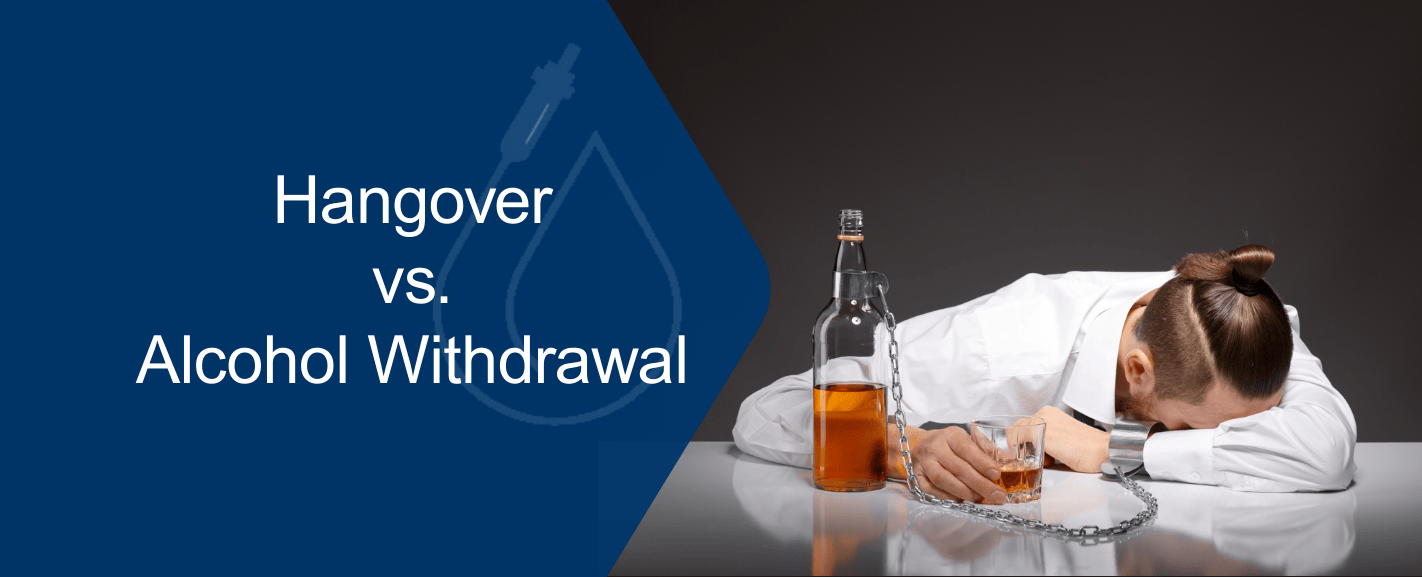
You woke up shaking, sweating, and sick and you don’t know if you just had too much last night or if something is actually wrong. Here’s the question that matters most right now: did your symptoms get better after your first drink this morning? If yes, that’s not your body recovering. That’s your body depending.
A hangover and alcohol withdrawal can feel almost the same in the first few hours. But one gets better on its own. The other can escalate into seizures and become life-threatening within 72 hours. Knowing the difference isn’t just useful, it can keep you safe.
Key Takeaways
- A hangover clears up on its own within 24 hours. Alcohol withdrawal gets worse over 2–3 days and can turn life-threatening.
- If a morning drink makes your symptoms go away fast, that’s not recovery that’s physical dependence.
- Withdrawal can cause seizures, hallucinations, and delirium tremens. These need emergency medical care, not rest and water.
- A hangover responds well to hydration, electrolytes, and time, including mobile IV therapy for faster relief.
Hangover and alcohol withdrawal share a symptom list that would confuse almost anyone: nausea, headache, shaking, sweating, anxiety, and an urge to feel normal again. That overlap is exactly why the distinction matters and why so many people get it wrong. Misreading withdrawal as a hangover isn’t just uncomfortable. It can be dangerous.
1. What Actually Happens During a Hangover?
A hangover is the body’s response to a single night of heavy drinking. It is not a sign of dependence, and it is not a medical emergency. Symptoms typically begin 3–10 hours after the last drink and peak the following morning.
The core symptoms are familiar: fatigue, thirst, headache, nausea, muscle aches, sensitivity to light and sound, sweating, a mild rise in heart rate, and mood disruption — irritability and anxiety that feel worse than the day ahead deserves. Several things drive these symptoms at once. Alcohol pulls water and electrolytes out of the body faster than most people replace them. It irritates the stomach lining, disrupts normal sleep, and triggers a mild inflammatory response. As the body processes alcohol, it produces acetaldehyde — a toxic byproduct that causes nausea and general misery before the body clears it.
What matters most about a hangover is its direction: it improves. Steadily, consistently, on its own. Most hangovers resolve within 24 hours as the body rehydrates and recovers. Hydration speeds things up. Rest helps. Light food settles the stomach. A morning drink does not meaningfully treat a hangover and is not needed for recovery.
If symptoms are still going strong well past 24 hours, the right question isn’t “why is my hangover so bad?” It’s “what is my drinking pattern, and is this actually something else?”
A hangover is a one-night consequence. Alcohol withdrawal is what happens when the body has built itself around daily alcohol and is suddenly denied it.
2. What Alcohol Withdrawal Actually Is?
Alcohol withdrawal is not a worse hangover. It is a different condition, driven by a different cause, with a very different risk level.
When someone drinks heavily every day for weeks, months, or years, the brain adapts. Alcohol slows down the central nervous system, so the brain compensates by ramping up its own excitatory activity to stay balanced. When alcohol is suddenly removed, that compensation doesn’t switch off. The brain is left in a state of unchecked excitation and the symptoms that follow are not the body cleaning up. They are the nervous system misfiring without its chemical anchor.
The timeline follows a clear pattern:
- 6–12 hours after the last drink: tremors, anxiety, sweating, nausea, elevated heart rate, and insomnia — a cluster that looks almost identical to a bad hangover
- 12–48 hours: risk of hallucinations rises; visual, auditory, or physical sensations that feel completely real; anxiety and tremor worsen rather than ease
- 48–72 hours: the most dangerous window, when delirium tremens (DTs) can develop — severe confusion, disorientation, fever, and dangerously high blood pressure and heart rate
Without medical intervention, the mortality rate from DTs is around 37%. With prompt treatment, that drops to 5–15%, and lower still with modern intensive care.
Alcohol withdrawal almost always means physical dependence — not just a history of heavy occasional drinking. Risk factors for severe withdrawal include a long history of daily heavy drinking, prior withdrawal seizures or DTs, older age, and existing medical conditions. A prior DT episode is the strongest single predictor that the next one will also be severe.
Moderate to severe withdrawal is a medical emergency. It requires supervised detox, prescription medications — typically benzodiazepines and clinical monitoring. Rest and fluids are not adequate treatment.
Both conditions can start with the same symptoms in the same time window. What follows is where the distinction becomes actionable.
| Each time a person goes through withdrawal and relapses, the next withdrawal becomes more severe. This “kindling effect” progressively lowers the seizure threshold with every cycle — making unsupervised home detox more dangerous each time, not less. |
3. Hangover vs. Alcohol Withdrawal
The overlap between these 2 conditions is real and genuinely confusing — even for clinicians. There is no blood test that diagnoses alcohol withdrawal syndrome. It is a clinical diagnosis built on drinking history, physical examination, and ruling out other causes. For someone trying to work this out at home, practical signals matter more than medical definitions.
The Symptoms Look the Same — The Causes Are Completely Different
Headache, nausea, sweating, shakiness, anxiety, and irritability appear in both a hangover and alcohol withdrawal. That isn’t carelessness it reflects real overlap at the symptom level, even though the root causes are entirely different.
Hangover symptoms come from a specific set of physical insults after 1 heavy night: dehydration, toxic byproducts, stomach irritation, and sleep disruption. As the body clears them, symptoms clear too. Withdrawal symptoms come from neurological rebound. The brain, deprived of the depressant it has adapted to, becomes overexcited. That process does not self-limit the same way. It escalates.
The most useful signal is what’s sometimes called the “hair of the dog” response. In a hangover, a drink may offer brief psychological comfort but it’s not medically needed and doesn’t produce fast, significant physical relief. In alcohol withdrawal, a drink rapidly and substantially relieves symptoms. That relief — fast, physical, and distinct is the clearest behavioral sign of physical dependence. It is not recovery. It is confirmation that the body now requires alcohol to function.

How to Tell the Difference?
Timing is the first useful marker. Hangover symptoms begin 3–10 hours after drinking stops and typically resolve within 24 hours. Withdrawal symptoms begin 6–24 hours after the last drink and worsen over 2–3 days, with peak seizure risk at 24–36 hours and peak DT risk at 48–72 hours.
Drinking pattern matters just as much. Hangovers follow occasional or isolated heavy nights. Withdrawal occurs in people with daily or near-daily heavy drinking who have stopped or sharply cut back. The body cannot develop physical dependence from a single heavy night.
One more scenario worth separating: acute alcohol poisoning. This happens while drinking is still active or blood alcohol is extremely high — not hours later. Signs include severe confusion, vomiting, seizures, slow or irregular breathing, bluish skin, and inability to rouse. Alcohol poisoning can worsen even after drinking stops, because unabsorbed alcohol keeps entering the bloodstream. This requires emergency services immediately.
| Factor | Hangover | Withdrawal |
| When it starts | 3–10 hrs after last drink | 6–24 hrs after last drink |
| When it peaks | Next morning | 48–72 hrs after last drink |
| Resolves with alcohol? | No — not meaningfully | Yes — fast and significantly |
| Drinking pattern | Occasional or single heavy night | Daily or near-daily heavy use |
| Medical risk | Low | Potentially life-threatening |
| Emergency signs | Rare | Seizure, confusion, high fever |
Is It a Hangover or Withdrawal?
This self-check is educational guidance, not a medical diagnosis. If symptoms are severe or there is any real uncertainty, contact a medical professional now — not after finishing this list.
- Check the timing. Did symptoms start the morning after a single heavy night and begin improving through the day? That points to a hangover. Did they begin 6–24 hours after the last drink and feel like they’re getting worse, not better? That points to withdrawal.
- Look at the drinking pattern honestly. Is drinking happening most days? Has stopping or cutting back caused symptoms before? Is alcohol needed to feel normal, sleep, or get through the workday? Yes answers point to physical dependence — not a rough morning.
- Check for red flags that need emergency care right now. Seizures, hallucinations, extreme confusion, high fever, a very rapid heart rate, very high blood pressure, or inability to wake are not wait-and-see symptoms. Any 1 of these means calling emergency services immediately.
- Watch for softer warning signs. If hangovers regularly last more than 24–48 hours, if a morning drink consistently makes symptoms stop, if cutting back keeps failing, or if drinking is affecting work or close relationships — speak with a doctor or addiction specialist before the next crisis. SAMHSA’s National Helpline (1-800-662-4357) is free, confidential, and available 24 hours a day.
4. What to Do Based on What You’re Experiencing
Not every rough morning after drinking calls for the same response.
For a confirmed hangover without red flags, the approach is straightforward: hydration, electrolyte replenishment, rest, light food, and OTC pain relief used sensibly. These address the root causes — dehydration, gut irritation, mild inflammation — and time does the rest. Most people feel significantly better within 12–24 hours.
When nausea makes it hard to keep fluids down, or recovery needs to happen faster, mobile IV therapy is a practical option. IV hydration delivers fluids, electrolytes, anti-nausea medication, and vitamins directly into the bloodstream — bypassing the gut and working faster than oral intake when nausea is a real obstacle. A mobile service means treatment comes to wherever you are. No waiting room. No driving while feeling sick.
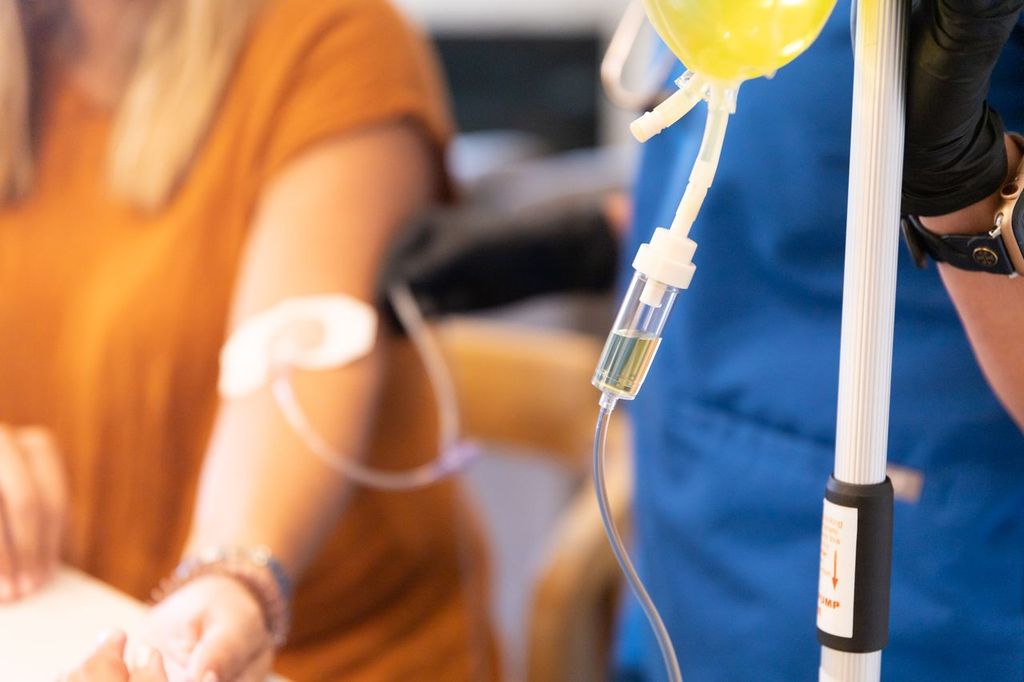
IV hangover therapy is not a treatment for alcohol withdrawal. Withdrawal is a neurological event driven by the brain’s chemical adaptation to alcohol. It requires medically supervised detox, prescription medications, and clinical monitoring. An IV drip does not address the underlying mechanism and should never replace medical care in a withdrawal situation.
For anyone who recognizes themselves in the withdrawal or dependence section, the next step is a medical provider — not managing it at home. Supervised detox sharply reduces the risk of severe complications and is the starting point for longer-term recovery. Fewer than 10% of people with alcohol use disorder receive any treatment at all, according to emergency medicine research — a gap that makes early action even more important. Recognizing that alcohol has become a physical dependency is not a moral failing. It is a medical reality and getting help early makes every outcome better.
A hangover and alcohol withdrawal can start in the same place — the same nausea, the same shaking, the same desperate need to feel normal. But they follow completely different paths. One resolves with rest, fluids, and time. The other escalates. If symptoms are getting worse on day 2, if a drink is what makes them stop, or if this pattern keeps repeating — those are medical signals, not rough mornings. For straightforward hangover recovery, Mobile IV Medics delivers fast, effective hydration treatment wherever you are. For anything that looks like withdrawal, the right call is a medical provider.