
Key Takeaways
- California wildfire season is already active; 2026 has burned 2.4 million acres by mid-June, nearly double the 10-year average, with peak season still ahead
- Wildfire smoke weakens immunity, drives dehydration, and in urban fire zones, carries toxic metals well beyond the fire lines
- Check AQI daily; sensitive groups should stay indoors above 100, and everyone should stay indoors above 150
- IV therapy rebuilds hydration and immune function faster than oral supplements after smoke exposure
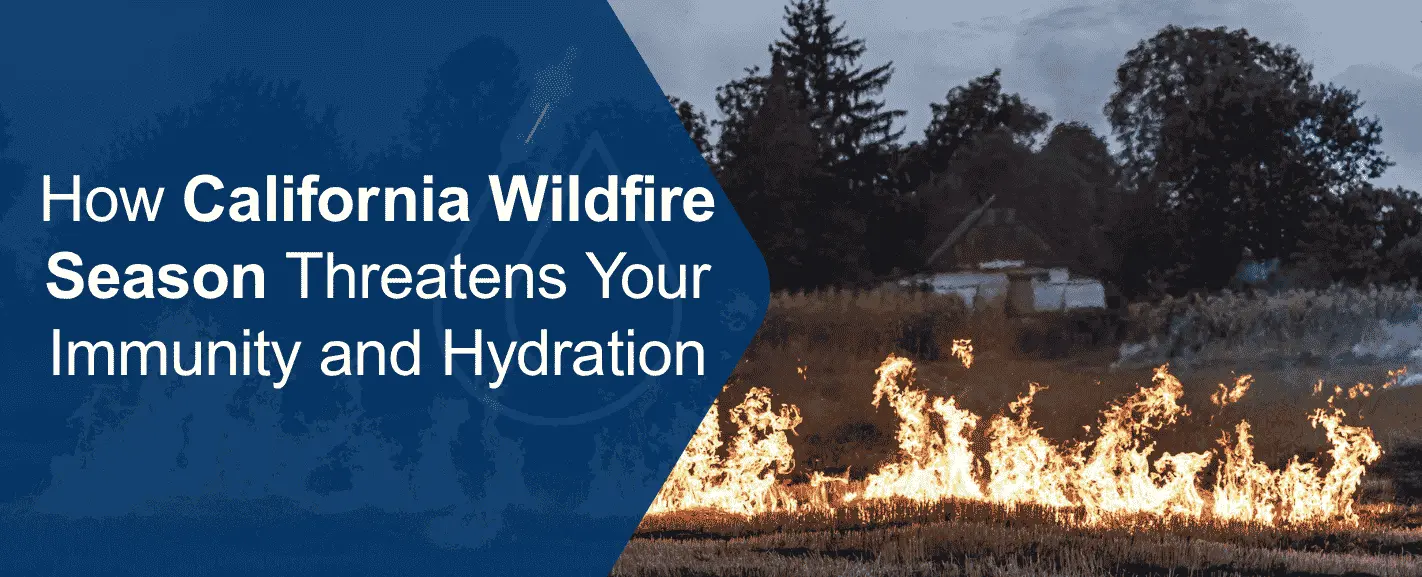
By mid-June 2026, wildfires across the United States had already burned 2.4 million acres, nearly double the 10-year average for this point in the season, according to the National Interagency Fire Center. Smoke from those fires drifted over more than 30 states. CAL FIRE is projecting above-normal fire activity across both Northern and Southern California through July and August, with peak season still ahead. AccuWeather forecasts 5.5 – 8 million total acres burned nationwide before the year ends. California wildfire season is not approaching. It is already here.
Most people across Greater Los Angeles, Orange County, and San Diego don’t think about wildfire smoke until they can smell it. By then, exposure is already well underway. Smoke from large fires travels hundreds of miles, pushing dangerous air quality into neighborhoods with no fire anywhere nearby. This article covers what that smoke does inside the body, specifically to your immune system and your hydration, and what fire smoke inhalation treatment looks like, whether you stay home or call in support. For Southern California residents already familiar with air quality disruptions, you can also read more about how LA smog affects your health year-round.
When Does California’s Wildfire Season Start?
Historically, California wildfire season ran from June through November, with Southern California’s most dangerous conditions tied to the hot, dry Santa Ana and Diablo winds from October through December. That window no longer holds. The 2025 Palisades and Eaton fires proved that January is now fire season in Los Angeles. In 2026, wildfires across the state had burned 2.4 million acres by June, double the historical pace for this period.
The Bay Area Air District issued a formal wildfire preparedness advisory in June 2026, citing dry fuels, developing drought, and near-to-above-normal wildfire potential across Northern California for the remainder of the summer. What the data reflects is a year-round threat, not a seasonal one.
Wind is the primary accelerant. California’s Santa Ana and Diablo winds can push flames up to 14 times faster than they’d travel in calm air, carrying embers more than a mile beyond the fire front and igniting new spot fires well ahead of containment lines. About 84% of wildfires in the United States trace back to human activity: power lines, campfires, and vehicle sparks. The ignition source may be human, but once wind and drought conditions align, the fire’s behavior becomes largely uncontrollable.
What Does Wildfire Smoke Do to Your Body?
The wildfire smoke health effects on the body go deeper than most people realize. For anyone in the Greater Los Angeles area, Los Angeles wildfire smoke from the 2025 fires offered a clear demonstration: the damage isn’t just respiratory. It’s systemic, and in fires that burn through urban areas, the chemical profile of the smoke is considerably more dangerous than anything produced by a wildland fire alone.
Particulate Matter Penetrates the Lungs and Reaches the Bloodstream
The primary health concern from wildfire smoke is PM2.5: particles 2.5 micrometers or smaller in diameter. A human hair runs 50–70 micrometers wide. These particles are small enough to reach the deepest regions of the lungs, and the ultrafine fraction can pass directly through the lung wall into the bloodstream. Understanding the full range of particulate matter health effects starts with that fact.
| PM2.5 particles measure 2.5 micrometers, about 28 times smaller than a human hair. At that scale, they bypass the lung’s filtration layers entirely and enter the bloodstream, where they trigger cardiovascular inflammation independent of any respiratory symptoms. |
What those particles carry matters as much as their size. Wildfire smoke is not simply carbon. It contains metals, organic chemicals, nitrates, sulfates, and allergens. When fires burn through homes, cars, and structures, as in the 2025 Los Angeles wildfires, the composition becomes significantly more toxic. Researchers from Caltech and the Georgia Institute of Technology measured elevated levels of lead and arsenic in the air around downtown Los Angeles during those fires, in neighborhoods far outside the active burn zones. Harvard exposure scientist Joe Allen, studying the same fires, found hexavalent chromium near cleanup sites months after containment, a known carcinogen in particles small enough to penetrate deep into the lungs. Once those particles enter the bloodstream, the body’s response moves far beyond the airways.
Smoke Exposure Weakens Immune Defenses
The body responds to PM2.5 in the bloodstream with systemic inflammation. That response starts in the lung tissue, then spreads as particles circulate. The immune system, now managing inflammation throughout the body, has fewer resources available for its normal defense functions. That’s why periods of heavy smoke exposure create a window of vulnerability to secondary infections that isn’t obvious until after the smoke clears.
The most recognizable wildfire smoke symptoms and smoke inhalation symptoms in otherwise healthy adults include:
- Headaches
- Eye and nasal irritation
- Sore throat
- Persistent coughing
- Excess mucus
- Congestion
For children, whose airways are still developing, and for the elderly, who carry a higher rate of existing cardiac and respiratory conditions, the reaction tends to be more severe. Research on firefighters with repeated wildfire smoke exposure has found elevated long-term cardiovascular risk, and the wildfire smoke health effects long-term extend well beyond the lungs, with evidence of heart strain in populations without pre-existing conditions after sustained exposure. Pregnant women face added risk, as elevated PM2.5 exposure during pregnancy is linked to increased preterm birth risk.
Dehydration Accelerates Every Smoke-Related Symptom
The airway’s first defense against inhaled particles is its mucous membrane lining. This lining traps particles before they can travel deeper into the respiratory tract, but it needs adequate hydration to function. When the body is dehydrated, that barrier thins and more particles reach the lower airways.
Wildfire smoke events accelerate dehydration in 2 ways. Coughing is itself physically demanding, increasing fluid loss. Elevated breathing rate during heavy smoke exposure does the same. Sore throat from smoke inhalation and the dry mouth that often comes with it aren’t just signs of irritation. They’re early markers that the mucous membranes are already losing moisture. At the systemic level, dehydration slows lymphatic function, which reduces the immune system’s ability to route white blood cells to where they’re needed. IV hydration therapy bypasses the gut and restores fluid balance at the cellular level, which is why it works faster than drinking water when the body is already showing symptoms.
How Do You Track Air Quality Near You?
The Air Quality Index is the most practical day-to-day tool for managing California wildfire smoke exposure. California’s Air Resources Board uses a 6-tier scale:
| AQI Range | Air Quality Category | Recommended Action |
| 0–50 | Good | No restrictions; normal outdoor activity |
| 51–100 | Moderate | Most people can proceed normally |
| 101–150 | Unhealthy for Sensitive Groups | Children, the elderly, pregnant women, and those with asthma or heart disease should limit outdoor time |
| 151–200 | Unhealthy | Everyone should reduce outdoor activity |
| 201–300 | Very Unhealthy | Sensitive groups stay indoors; all others avoid outdoor exertion |
| 301–500 | Hazardous | Everyone stays indoors; all outdoor activity stops |
Searching “air quality near me” during a smoke event often surfaces AQI numbers that seem inconsistent with visible conditions. If you’ve also searched “why is the air quality bad today” and found no active fire nearby, the explanation is usually 1 of 2 things: wind-driven smoke from a fire burning 100 or more miles away, or an atmospheric inversion layer trapping PM2.5 close to the ground. Both conditions push AQI into unhealthy territory without any visible smoke. The EPA’s AirNow Fire and Smoke Map at fire.airnow.gov shows real-time AQI by location. The California Smoke Spotter app pairs that data with smoke forecasting and wildfire mapping. Your local California Air District can also issue hyperlocal advisories hours before statewide numbers update, worth checking when conditions are changing fast.
What Helps You Recover from Smoke Inhalation?
Recovery has 2 phases: reducing ongoing exposure before symptoms worsen, and supporting the body once exposure has already happened. Both matter, and neither replaces the other.
Limit Exposure the Moment AQI Rises
Staying indoors is the most effective protective action when wildfire smoke is present. Once you’re inside, these steps reduce exposure meaningfully:
- Close all windows, doors, and vents. Standard window screens filter dust but do nothing against PM2.5.
- Set central air conditioning to recirculate mode so outdoor air isn’t pulled inside.
- Run a CARB-certified air cleaner with a MERV 13 or higher filter rating, which measurably cuts indoor particle concentrations.
- Build a Corsi-Rosenthal box as a low-cost alternative: a standard box fan taped to one or more MERV 13 furnace filters, validated by EPA researchers to reduce indoor PM2.5 by up to 80%.
- Avoid indoor pollution sources during smoke events: gas stoves, candles, incense, and vacuuming all raise particle levels inside the home.
| Many California county health departments and public libraries offer free air purifier loan programs during wildfire smoke advisories. Check your county health department before purchasing. Loaner units are often available within 24 hours of a declared smoke event. |
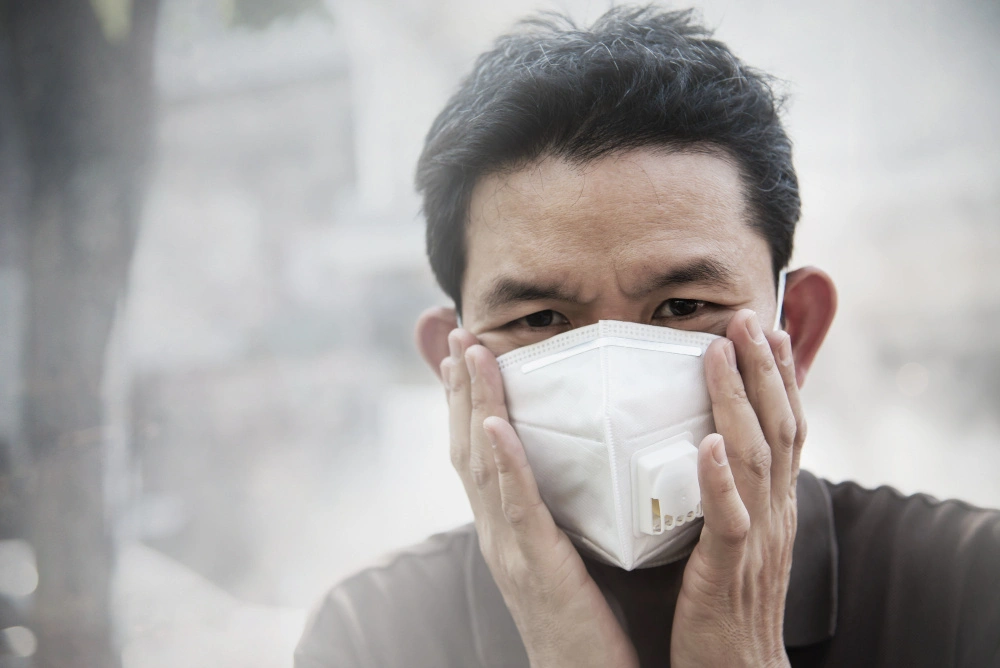
For necessary outdoor time, an N95 mask with NIOSH certification provides meaningful protection when properly fitted. Those with heart or lung conditions should confirm with their doctor before using one, since the added breathing resistance creates real physiological strain. When AQI exceeds 100, vigorous outdoor exercise and Southern California amusement park outings should stop entirely because exertion increases inhalation volume and drives particles deeper into the lungs.
IV Therapy Accelerates Recovery from Wildfire Smoke Exposure
Once smoke exposure has happened and symptoms have set in, the recovery goal is to repair oxidative damage, restore immune function, and rehydrate the body faster than rest alone allows. High-dose Vitamin C IV drips support tissue repair at the cellular level after PM2.5 exposure. Oral Vitamin C is limited by gut absorption rate, and IV delivery bypasses that ceiling, putting a concentrated dose directly into the bloodstream.
Immune-supporting IV drips with zinc, Vitamin D, glutathione, and antioxidants help the immune system rebuild after the inflammation load of smoke exposure. IV hydration addresses both the systemic dehydration and the mucosal dryness that makes sore throat from smoke inhalation treatment so persistent. This is IV therapy for Californians in its most direct form: a registered nurse comes to your location, without any need to go outdoors during poor air quality. Mobile IV Medics serves Greater Los Angeles, Orange County, San Diego, and Southern California broadly. Relevant treatment options include the Migraine and Headache treatment for smoke-triggered head pain, the Hydration package, and the Immune Boost drip for systemic recovery.
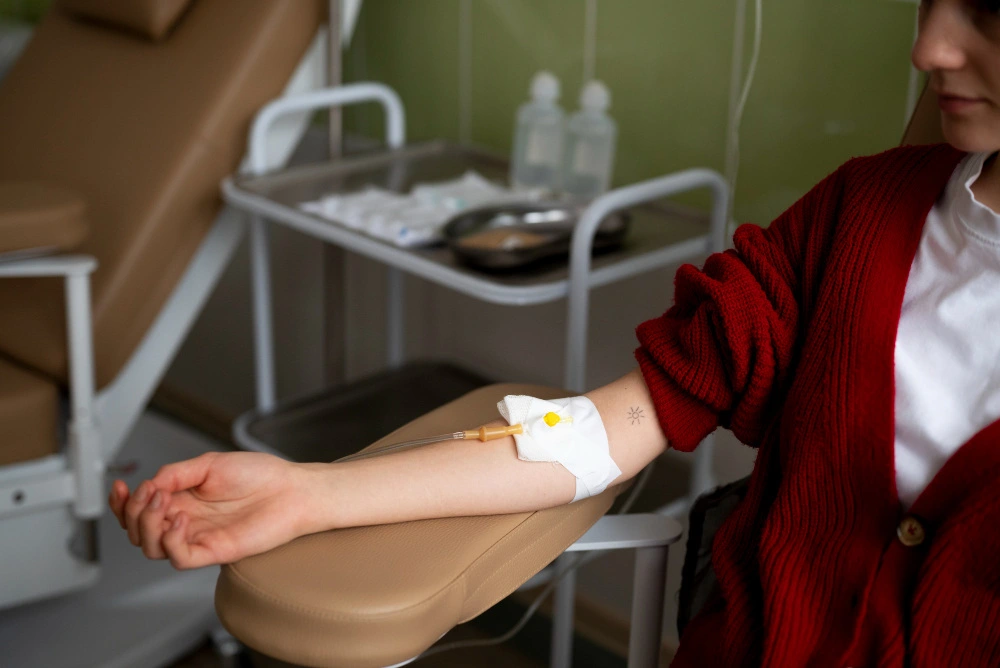
V therapy accelerates recovery from wildfire smoke exposure
Take Action Before Symptoms Worsen
California wildfire season no longer waits for summer. If AQI in your area is climbing, the time to act is before symptoms become difficult to manage. Check the California Smoke Spotter app, close up your home, and if you’re already experiencing headache, sore throat, fatigue, or persistent coughing after smoke exposure, don’t wait it out. Book a Mobile IV Medics appointment and a registered nurse will come to you. No outdoor time required.


