Key Takeaways
- Heat and alcohol can both increase fluid loss, one through sweat and one through urination, which is part of why a few drinks in the sun can leave you feeling worse than the same drinks indoors.
- Alcohol suppresses vasopressin, the hormone that helps your kidneys conserve water, so urination increases while hot weather is already pulling fluid out through sweat.
- A small human study found alcohol lowered skin antioxidant levels and reduced the UV exposure needed to cause redness, which suggests drinking may make skin more vulnerable to sunburn.
- Heat exhaustion and a bad hangover share most of the same symptoms, so timing, body temperature, and sweating are worth checking together rather than relying on any single sign.
- Water is still the baseline for rehydration, with an electrolyte drink or oral rehydration solution as a reasonable addition after heavy sweating.
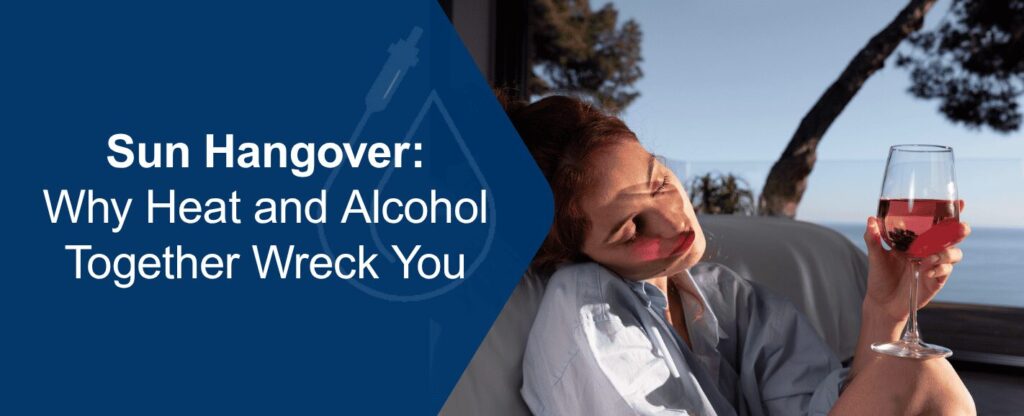
Four beers over 6 hours at the beach, nothing you would think twice about, and the next morning feels worse than any real night out. That gap between what you drank and how wrecked you feel has a name now, and a mechanism behind it.
A sun hangover is not a normal hangover with sunshine layered on top. Heat and alcohol can each increase fluid loss through a different route, and they often do it at the same time, while thirst is a slower warning signal than most people assume. Understanding which system is failing changes what you should do about it, and when you should stop and call someone.
What Does a Sun Hangover Feel Like?
The symptom cluster is oddly flu-like. Deep fatigue, a headache that sits behind the eyes, nausea, and body aches that show up after a long stretch in heat and sun, sometimes with alcohol involved and sometimes without. It sits somewhere between mild dehydration and early heat exhaustion rather than standing on its own as a diagnosis, which is worth keeping in mind, because nothing about the label is clinical.
What makes people search for it is the mismatch. You did not drink much. You feel destroyed anyway. If you want the baseline picture first, here is what causes a hangover before heat enters the equation.
Why Does a Sun Hangover Hit Harder?
The compounding happens across 4 systems, and each one is running while the others are already failing.
Alcohol Shuts Off the Hormone That Conserves Water
Alcohol suppresses vasopressin, the antidiuretic hormone that helps your kidneys conserve water. Urination increases as a result, which is the mechanism behind the mild dehydration that contributes to ordinary hangover symptoms. The more you drink, the more pronounced that effect tends to be.
Now picture where that happens. Poolside, mid-afternoon, in direct sun. Alcohol dehydration is not the whole story on its own, but the setting stacks a second source of fluid loss on top of it.
Heat Drains Fluid and Electrolytes at the Same Time
Sweating is your body cooling itself, and sun exposure raises both skin and core temperature, which pushes the sweat rate higher. Sweat costs sodium and potassium, not just volume. Two independent loss pathways stack into a deficit far larger than either would produce alone.
Thirst will not save you here. It lags behind actual fluid loss under normal conditions, and alcohol has already blunted the hormonal signaling that would otherwise flag the problem. By the time you notice, the deficit is established.
Alcohol Interferes With Temperature Regulation Itself
Alcohol dilates blood vessels and pushes blood toward the skin. Heat does the same thing. Together, that leaves less margin for the body to work with when it needs to cool itself.
Alcohol also changes how your body responds to heat itself, not just how much fluid it holds onto. That can make temperature regulation less reliable during the hours when you most need it to work well.
Alcohol May Make Skin More Vulnerable to Sunburn
The link between alcohol and sunburn is easy to overstate, so here is what the evidence actually shows. Alcohol lowers skin carotenoid levels and lowers the sunburn threshold, the UV exposure needed to cause redness. That finding comes from only 6 participants, so it is better read as evidence of a possible effect than as a precise rule for how quickly alcohol changes burn risk.
Ethanol and UV may also act together rather than simply adding up, with more DNA damage and a weaker skin immune response than either exposure produces alone. The pattern shows up at population scale too. Excessive drinkers in New York are 1.4–1.6 times more likely to report sunburn, even accounting for reduced sunscreen use. If the burn is the bigger problem right now, start with treating too much sun exposure.
Is It a Hangover or Heat Exhaustion?
This is the part where getting it wrong actually costs something.
Core Temperature and Onset Timing Separate the Two
Headache, nausea, dizziness, fatigue, and weakness show up in both conditions. The symptom list alone cannot separate them. What helps is looking at timing, temperature, and sweating together rather than any one of them alone.
| Signal | Typical hangover | Possible heat illness |
| Timing | Often worse as blood alcohol returns toward zero | Often begins during or soon after heat exposure |
| Body temperature | Usually not markedly elevated | May be elevated |
| Sweating | Variable | Heavy sweating is common with heat exhaustion |
| Confusion | Not typical of a simple hangover | Emergency warning sign |
| Fainting or seizure | Not typical | Seek emergency care |
Do not try to self-diagnose heat illness from a single symptom or a single temperature reading. If timing and sweating point toward heat exhaustion effects, get out of the sun and treat it as heat first.
| Heat exhaustion carries one sign a hangover does not: decreased urine output, alongside thirst and heavy sweating. If you have been in the heat for hours and have barely needed the bathroom, treat it as heat illness and get evaluated. |
Some Signs Mean Stop and Call for Help
Some of these overlap with alcohol poisoning warning signs, and any one of them means you stop trying to manage it yourself:
- Fainting or seizure.
- Inability to keep fluids down.
- Confusion or agitation.
- A measured core temperature at or above 104°F (40°C).
Confusion in particular points to heat stroke symptoms and needs emergency care. Sleeping it off is the wrong call when these appear.
How Do You Recover From a Sun Hangover?
Recovery splits into what you do before the drinking starts and what you do once the damage is already done.
Prevention Beats Recovery When You Drink Outdoors
Pre-loading works, and so does slowing the pace. Three tactics cover most of it:
- Pre-load 16–24 oz of water in the 2 hours before you start, which builds a buffer before the diuretic effect kicks in.
- Zebra stripe by alternating every alcoholic drink with a non-alcoholic one.
- Pour 12 oz of water per alcoholic drink if you want a simpler ratio to hold in your head.
One thing to avoid is chugging a large volume right before bed. Vasopressin is still suppressed at that point, so the water mostly fragments your sleep instead of rehydrating you. The usual advice on how to prevent a hangover applies here too, with the heat variables layered on top.
Start With Fluids and Consider Electrolytes
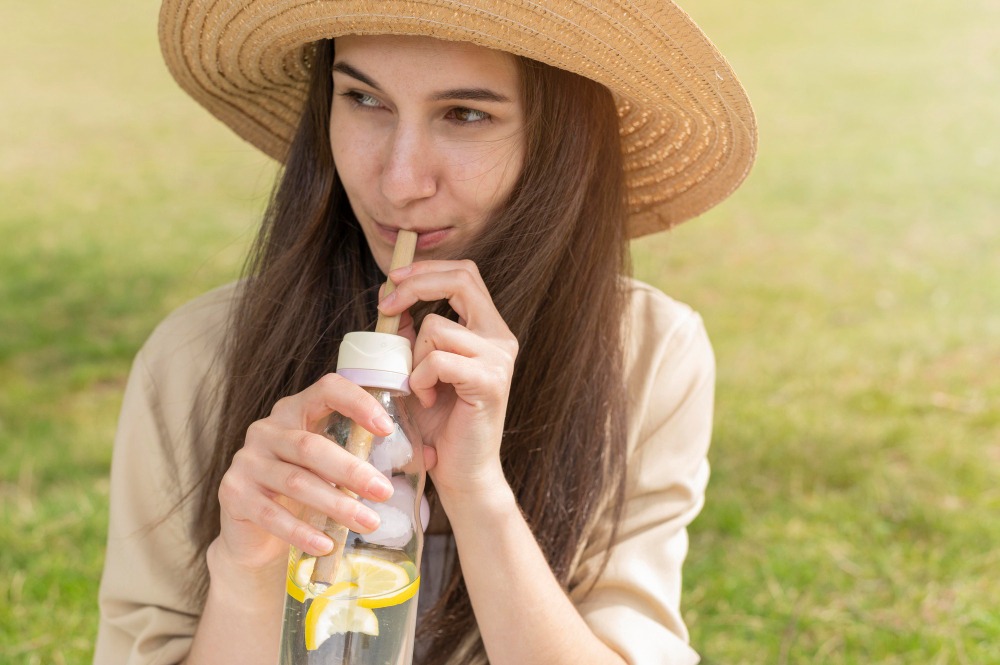
Water is still the baseline, and worth reaching for first. After prolonged sweating, an electrolyte drink or an oral rehydration solution helps replace minerals alongside fluid, and the best foods for a hangover work on the same principle.
Temper your expectations, though. Electrolyte replacement has no proven effect on hangover severity. What is better established is that losing fluid and salt in heat is what links dehydration and heat exhaustion, which is reason enough to replace both.
When Oral Hydration Is Difficult
Nausea makes drinking anything unappealing, and that is where people start looking at other options. IV fluids restore plasma volume faster than drinking does, though faster has not proven better: after dehydration in heat, IV rehydration offered no advantage over drinking fluids for heat tolerance or perceived exertion.
The mobile model suits this situation, since anyone flattened by a sun hangover should not be driving anywhere. MIVM’s IV hangover cocktail ingredients combine fluids with selected vitamins and nutrients, and a licensed clinician reviews your symptoms and health history first. Other ways to recover from a hangover still apply alongside it.
Conclusion
If you cannot keep fluids down, feel confused, faint, or run a very high temperature, seek medical care rather than treating it as a routine hangover. If your symptoms are mild, start with fluids and shade, and MIVM can send a licensed medical professional to evaluate you at home and discuss whether IV hydration is a fit.