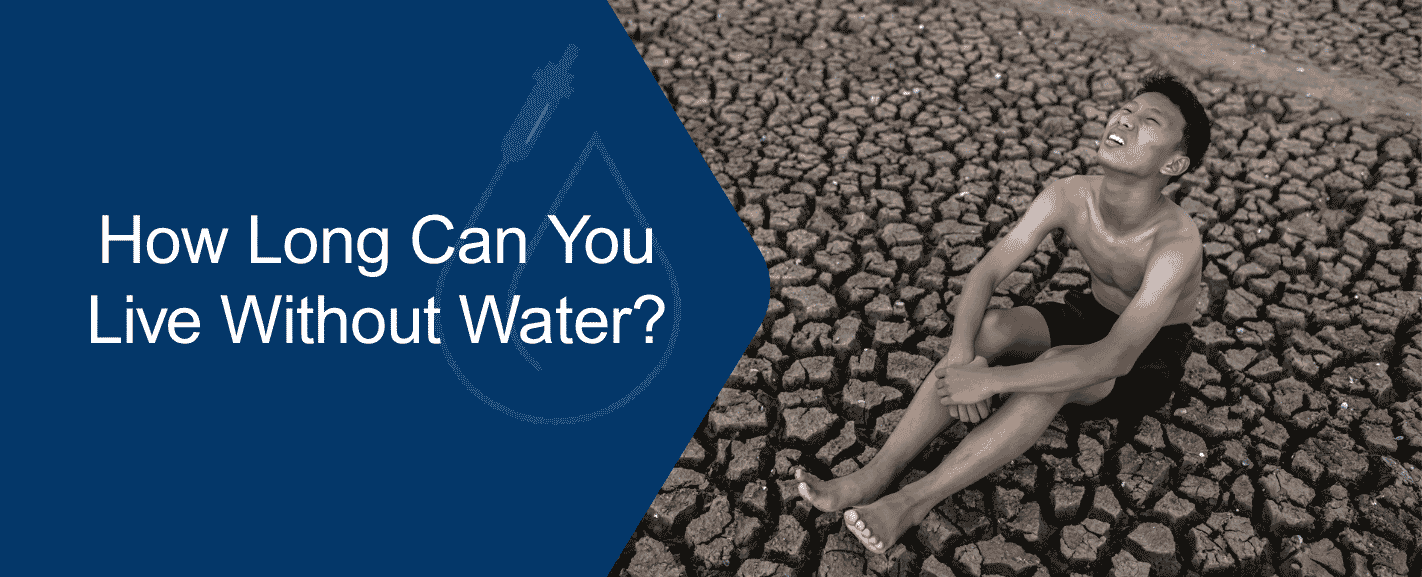
Most people repeat ‘3 days without water’ as if it’s a fixed rule. The real number swings from under 24 hours to about 10 days depending on the heat, your health, and how hard your body is working. Knowing where you actually fall on that scale is the difference between mild thirst and a medical emergency.
Key Takeaways
- Most healthy adults survive 3–5 days without water, but heat or exertion can collapse that window to under 24 hours.
- Dehydration impairs the brain and heart at just 1–2% body weight loss, well before you feel seriously thirsty.
- Severe cases above 9% body weight loss need IV fluids, not more drinking water, to recover safely.
[Introduction]
Water keeps your blood flowing, your brain firing, your kidneys filtering, and your temperature stable, with no real backup system the way your body stockpiles fat for food shortages. This guide breaks down how long can you live without water, what dehydration does to your body hour by hour, and what it takes to recover once you’ve crossed the line.
1. How long can a person survive without water?
Under mild conditions, most healthy adults can survive about 3–5 days without any water intake. The upper bound stretches to roughly 7 days only when someone is resting in cool temperatures with no physical demand on the body. That window is the source of every “3 days without water” headline you’ve ever read, and it’s accurate as a baseline but useless without context.
Heat collapses that window fast. In temperatures above 35°C, survival drops to 1–3 days. Add physical exertion or true desert conditions around 48°C, and a healthy adult can die within hours. Vulnerable groups face shorter windows even in mild settings: elderly adults around 2–4 days, infants under 48 hours in heat. Terminally ill patients in palliative care sometimes last 10–14 days, but only because their metabolism is already slowed to a near-stop.
Your body does generate a small backup supply called metabolic water, which comes from burning carbohydrates, fats, and proteins for energy. It produces roughly 250–350 mL per day. That sounds useful until you compare it to typical daily losses of 2.5–3.5 liters through urine, breath, sweat, and stool. The shortfall is why dehydration moves so fast.
| Your body produces about 250–350 mL of metabolic water per day from burning fuel, but loses 2.5–3.5 liters through urine, breath, sweat, and stool. The internal supply covers roughly 10% of daily losses, which is why no amount of metabolism can stretch the survival window meaningfully. |
The deeper reason your body can’t ride out a water shortage is structural. Every vital function depends on it:
- Circulation needs plasma volume.
- Temperature regulation needs sweat.
- Waste removal needs urine.
- Brain function depends on adequate perfusion.
The brain alone receives roughly 20% of cardiac output and is around 73–75% water. There is no reserve to draw on the way fat stores carry you through a fast.
2. What happens to your body without water hour by hour?
The dehydration timeline is staged by percentage of body weight lost as fluid, not by the clock alone. At typical loss rates, though, hours map cleanly onto stages. Clinicians use four thresholds, each with its own clinical signature:
| Severity | Fluid deficit (% body weight) | What it looks like |
| Mild | Under 3% | Thirst, dry mouth, darker urine, mild headache |
| Moderate | 3–9% | Dizziness, cramps, sunken eyes, rapid pulse, confusion |
| Severe | Above 9% | Little or no urine, seizures, organ failure risk |
| Life-threatening | Above 10–15% | Hypovolemic shock, multi-organ failure, death |
What follows is what each stage actually looks and feels like as time progresses.
Hours 1 to 6 bring the first warning signs
Within the first one to two hours of no water, your kidneys start concentrating urine to conserve fluid. The color shifts from pale yellow toward darker amber as the fluid-conservation switch flips on. You probably won’t notice yet.
By hour 2 to 4, you’re at roughly 1–2% body weight lost. That’s already enough to impair short-term memory, slow reaction time, and reduce aerobic exercise performance by up to 10%. The hypothalamus detects rising blood sodium and turns on persistent thirst. Mild headache and dry mouth follow.This is the deceptive stage because the symptoms feel manageable. fMRI studies on adolescents show altered brain activation patterns during cognitive tasks at this exact level. You’re already operating below baseline, and you don’t feel it yet.

Hours 6 to 24 force the heart to compensate
Around hour 6 to 8, blood volume starts dropping. The heart speeds up to keep circulation steady, a state clinicians call compensatory tachycardia. Headaches intensify, irritability spikes, and standing up triggers dizziness because blood pressure regulation is faltering.
Urine output drops sharply. What’s left is dark amber or brown. Muscle cramps appear as sodium and potassium levels shift out of balance. By the 24-hour mark, a typical adult has lost 2–3% of body weight in fluid.
A 2014 NIH-funded study confirmed measurable reductions in cerebral blood flow and neurovascular dysfunction in healthy subjects after just 24 hours of water deprivation. Mental clarity, reaction time, working memory, and mood are all measurably impaired by this point, even if the person feels “just thirsty.”
Days 2 to 3 push the body into moderate to severe dehydration
By the second day, you’re typically at 4–7% body weight lost. Urine output is severely reduced or has stopped completely. Core body temperature begins rising because sweating capacity is compromised, which removes one of the body’s main cooling tools.
Visible signs become hard to miss. Eyes appear sunken. Skin loses elasticity and shows the “tenting” sign when pinched. The pulse runs rapid and weak, often above 100 beats per minute, and blood pressure starts falling toward hypovolemic territory.
Confusion, delirium, and extreme fatigue set in as brain perfusion drops. MRI studies confirm the brain physically shrinks under sustained dehydration. The kidneys can no longer filter blood properly, so creatinine and blood urea nitrogen rise on lab work. That’s the early signature of acute kidney injury, and it means toxic byproducts are starting to accumulate in the bloodstream.
Days 3 to 5 move toward organ failure
At 7–10% or more body weight lost, the body enters survival triage. Blood gets shunted away from “non-essential” organs (kidneys, gut, skin) and routed toward heart and brain. The kidneys begin to fail outright. Toxic waste, including urea, creatinine, and potassium, accumulates fast enough to threaten cardiac rhythm.
In hot environments, the failure point is usually hyperthermia driving liver damage. In cool environments, acute kidney failure is the more common terminal cause. Either way, seizures can occur from electrolyte imbalance.
Death typically comes from one of two paths. The first is hypovolemic shock, where the heart cannot circulate enough volume to keep tissue alive. The second is multi-organ failure driven by toxic blood and electrolyte crisis. Most people don’t survive past 5–7 days without water, regardless of how robust they were going in.
Cognitive and cardiovascular decline run in parallel
The hour-by-hour breakdown can make dehydration sound sequential, but brain symptoms and cardiovascular symptoms actually escalate on the same clock. Confusion, slowed thinking, and mood changes move in step with rapid pulse, low blood pressure, and clot risk. They’re two faces of the same plasma volume crisis.
Even mild dehydration thickens blood enough to raise stroke and deep vein thrombosis risk. In older adults, this often goes unnoticed until something acute happens. Falls, sudden confusion, and unexplained chest discomfort can all trace back to fluid status that nobody checked.This is why dehydration symptoms feel so disorienting at moderate levels. Your body and brain are degrading simultaneously, not in sequence, and the sensation of “something is wrong” rarely points cleanly at hydration as the cause.

3. Who loses this race faster?
The 3-to-5-day baseline assumes a healthy adult in a cool room. Most readers don’t fit that profile every day, and four groups face dramatically shorter windows.
- Elderly adults are the largest risk category. A blunted thirst response, lower total body water percentage, reduced kidney concentrating ability, and frequent diuretic use combine to drop survival to 2–4 days. Worse, mild dehydration in older adults can precipitate falls, sudden confusion, and acute kidney injury well before any “danger threshold” is reached.
- Infants and young children have higher body water percentages and faster metabolism. They can lose 10–15% of body weight in under 24 hours during severe gastroenteritis, which is why pediatric diarrhea remains a leading cause of childhood mortality globally. In heat, the danger window for infants is under 48 hours.
- Athletes and outdoor workers can sweat 1–3 liters per hour during intense effort in heat, which makes a 24-hour window realistic regardless of starting hydration. Tropical and humid climates compound the problem because high humidity blocks sweat from evaporating, so the body keeps producing it without getting any cooling benefit.
Anyone with vomiting, diarrhea, or fever runs through fluid faster than the baseline 2.5–3.5 liters per day. The timeline collapses regardless of climate. A 32°C day with 80% humidity can be functionally more dangerous than a dry 38°C day, since the body cannot offload heat efficiently in either case.
For mild dehydration, the key is steady sipping rather than chugging. The gut absorbs fluid at a finite rate, so flooding it doesn’t speed anything up.
For moderate dehydration, the gold standard is a WHO-formula oral rehydration solution. It works because of the sodium-glucose cotransport mechanism, which pulls water across the gut wall significantly faster than plain water can manage alone. Expect a longer recovery if you also need to rebuild electrolyte balance.
For severe dehydration, oral rehydration is no longer fast enough. The GI tract is too compromised to absorb fluids at the rate the body needs, and trying to drink your way out can mean hours of vomiting before any fluid actually crosses into the bloodstream. IV fluids restore blood volume within 1–2 hours by going straight into circulation, which is why hospitals lead with saline or Ringer’s lactate for any patient who arrives in this state.
Mobile IV therapy fits the gap between “I can’t keep oral rehydration solution down” and “I need an emergency room.” At-home IV hydration delivers medical-grade saline plus electrolytes for moderate-to-severe cases without the wait, the bill, or the friction of an ER trip. For people recovering from heat exhaustion, food poisoning, severe hangovers, or post-illness dehydration, it’s often the difference between a long miserable recovery and being functional within a couple of hours.
| Drinking large volumes of plain water rapidly after heavy sweating can dilute blood sodium and trigger hyponatremia, which can be fatal in extreme cases. Endurance athletes are the typical victims, replacing pure fluid without replacing salt, and the imbalance can cause seizures or worse. Always pair high-volume rehydration with electrolytes. |
Some signs mean self-treatment is no longer enough. Get emergency care if you or someone you’re with shows any of these:
- No urine for 8 or more hours.
- Real confusion or fainting.
- Seizures.
- Persistent vomiting that blocks oral fluids.
- Rapid weak pulse.
- In children: sunken fontanelle (the soft spot on an infant’s head), no wet diapers for 6 hours, or extreme lethargy.
In every one of these cases, IV fluids in a clinical setting are the answer, not another glass of water.
The honest answer to how long you can live without water is shorter than the 3-day rule suggests, and the line between recoverable and dangerous is thinner than most people realize. If you’ve already crossed into moderate territory with no urine for hours, racing pulse, and real confusion, drinking more water alone won’t catch you up fast enough. Mobile IV Medics brings clinical-grade IV hydration to your door so the recovery clock starts in 1–2 hours, not 8.
References: