Key Takeaways
- A hangover is a short‑term post‑intoxication syndrome, not just dehydration, caused by overlapping brain, immune, metabolic, and sleep disruptions
- Most hangovers resolve within about 24 hours; longer “hangovers” often signal sleep debt, gastritis, or mild withdrawal—not simply a bad morning
- The best “treatment” is prevention: drinking less, pacing intake, prioritizing sleep, and respecting your personal and genetic risk.
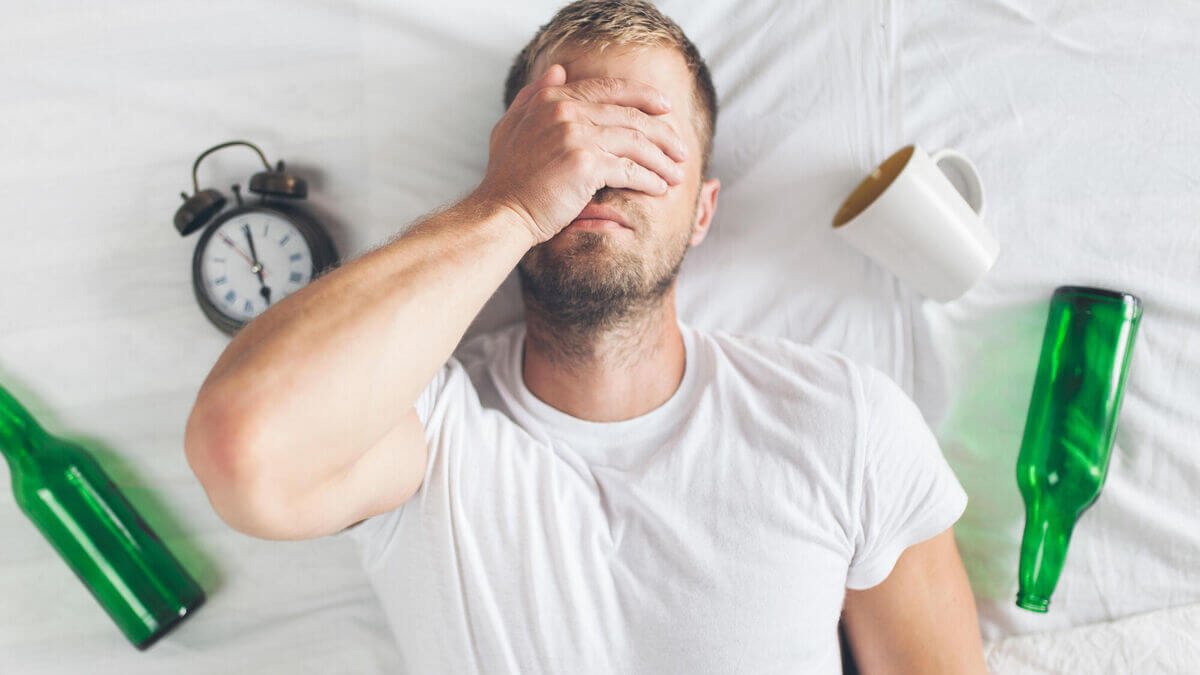
You wake up, and your head is pounding. Waves of nausea hit you. Every sound feels like someone’s shouting. Every light hurts your eyes. Your brain feels wrapped in thick fog.
About 3 out of 4 people who get drunk experience this misery. Yet scientists still don’t fully understand hangovers. Most people think hangover symptoms are just a punishment you can’t avoid. But understanding what’s actually happening inside your body can help you recover faster, spot dangerous warning signs, and maybe even predict your personal hangover risk based on your genes.
A hangover is a collection of unpleasant physical and mental symptoms that show up after drinking alcohol. This article explains what hangover symptoms are medically, the 6 ways your body malfunctions during one, how to tell normal symptoms from medical emergencies, what actually helps (and what doesn’t), and why some people suffer way more than others—even after drinking the same amount.
What Are Hangovers? – Medically Speaking
Medically, a hangover is defined as a combination of mental and physical symptoms that occurs after heavy alcohol drinking, beginning when the blood alcohol concentration (BAC) is falling and approaches zero. The medical term is veisalgia—a word created by combining the Greek word for pain (algia) and the Norwegian word kveis, meaning “uneasiness after wild behavior.”
A hangover is characterized by a constellation of symptoms rather than a single complaint. These typically include fatigue, headache, thirst, nausea, sensitivity to light and sound, muscle aches, sweating, tremor, and increased heart rate, along with cognitive and mood changes such as poor concentration, irritability, and low mood. It is a time-limited condition—symptoms emerge the next day, last several hours up to about 24 hours in most people, and then resolve on their own without specific medical treatment.
Clinically, there is just one recognized condition is alcohol hangover. But in real life, people experience very different “flavors” of hangover. You might recognize yourself in one of these patterns:
- Headache‑dominant: the classic pounding head and light sensitivity
- Gut‑dominant: nausea, vomiting, belly pain are front and center
- Fatigue/brain‑fog dominant: overwhelming tiredness and mental slowdown
- Anxiety‑dominant (“hangxiety”): worry, edginess, low mood overshadow the physical symptoms
- Mixed: a bit of everything, which is what most people get
Across a single day, symptoms can also follow different time patterns. For some, they’re brutal on waking and steadily improve; for others, they stay fairly constant; and for a smaller group, they build to a late‑morning or afternoon peak before they finally ease. These aren’t official subtypes of hangovers, but they explain why your hangover can look very different from someone else’s after a similar night.
From a pathophysiology standpoint, a hangover is your nervous system and body rebounding after alcohol’s sedative effects wear off. While you’re intoxicated, alcohol:
- Boosts inhibitory signals in the brain (mainly via GABA)
- Suppresses excitatory signals (especially glutamate)
Once the alcohol is cleared, that balance doesn’t flip back instantly. Your brain is left in a hyperexcitable state that had been masked by alcohol’s depressant effect, which helps explain symptoms like anxiety, poor sleep, and feeling “wired but tired.” At the same time, several systems are disrupted at once:
- Metabolic and hormone changes
- Oxidative stress (cell damage from reactive molecules)
- Immune activation and inflammatory cytokine release
- Dehydration and electrolyte imbalances
Together, these create the full hangover syndrome rather than a single, simple problem you can fix with one pill or one glass of water.
Hangover symptoms typically start 3-10 hours after drinking stops, as BAC falls toward zero. Most hangovers resolve completely within 24 hours. However, some people report feeling unwell for 3-4 days after heavy drinking. When symptoms persist this long, it’s often not a simple hangover anymore but rather a combination of ongoing sleep debt, gastrointestinal inflammation, mild withdrawal (if drinking occurred over multiple days), dehydration that hasn’t been corrected, or mental health effects like prolonged anxiety.
Despite affecting approximately 75% of people who drink to intoxication, hangovers remain incompletely understood scientifically. Research into hangover pathology is limited compared to other alcohol-related health conditions, leaving significant gaps in our understanding of why severity varies so dramatically between individuals.
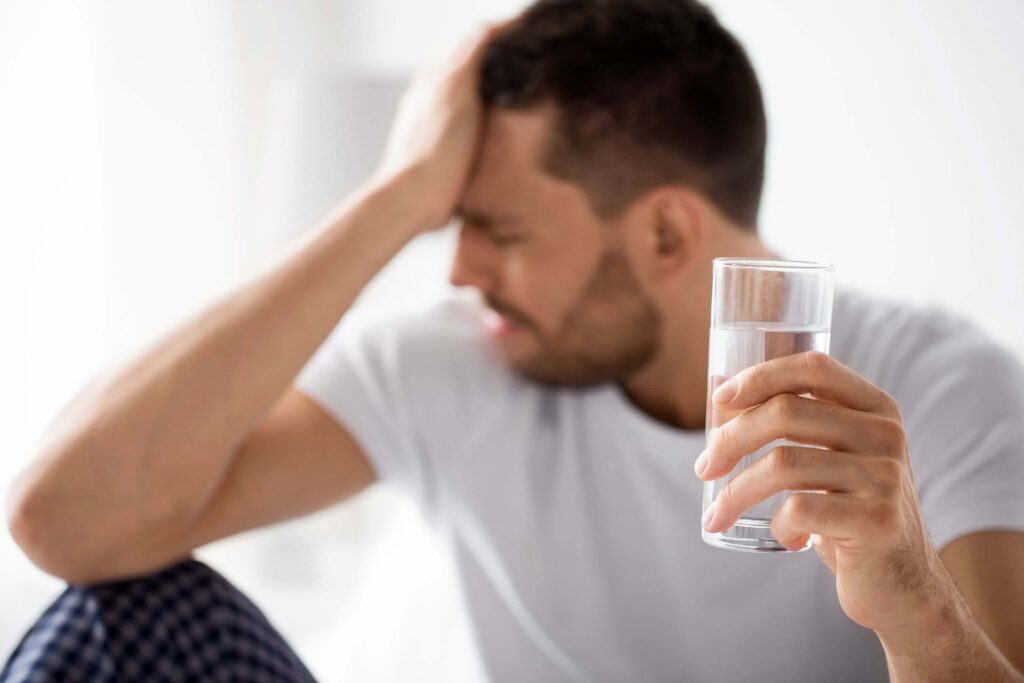
What Are The Symptoms Of A Hangover?
Hangover symptoms affect both body and mind and typically appear as a cluster of complaints rather than isolated symptoms, which is exactly what you look for when figuring out how to tell if you have a hangover. The particular set of symptoms you experience and their intensity vary considerably from person to person and from one hangover to the next.
Physical symptoms
- Fatigue and weakness – In large student and population samples, tiredness, sleepiness and weakness are among the most frequently reported and most severe hangover symptoms, and they contribute strongly to how “bad” the hangover feels overall.
- Thirst and dry mouth – Disturbed water balance (thirst, dry mouth) is also consistently reported at very high rates and is a core part of the hangover symptom cluster.
- Headache and body aches – Headache and muscle aches are classic pain symptoms, with headache in particular becoming much more common as overall hangover severity increases.
- Nausea, vomiting, and stomach pain – Gastrointestinal symptoms (nausea, vomiting, stomach or belly pain) are highlighted as common features of hangover, especially after heavier drinking.
- Dizziness or vertigo – Many people report dizziness or a spinning sensation alongside fatigue and headache, reflecting alcohol’s effects on blood pressure, inner ear function, and dehydration.
- Tremors and sweating – Shakiness, clammy or sweaty skin, and a sense of being “on edge” are thought to reflect sympathetic nervous system over‑activity in the post‑alcohol state.
- Increased heart rate and elevated blood pressure – A racing or pounding heart and transient blood pressure increases are consistent with the stress‑response activation seen after alcohol wears off.
- Sensitivity to light and sound – Low tolerance for light and noise (photophobia and phonophobia) is commonly described in symptom lists.
Cognitive & Mood symptoms
- Difficulty concentrating – Brain fog where simple thinking feels impossibly hard
- Memory problems – Trouble recalling recent events and forming new memories
- Poor sleep quality – Disruption persists even during the hangover period
- Low mood and depression – Feeling down, flat, or emotionally drained (reflects alcohol’s direct chemical effects on brain chemistry)
- Anxiety and irritability – Being on edge, nervous, or easily annoyed
- General malaise – Overall feeling of being unwell that’s hard to pinpoint but unmistakably unpleasant
Dr. Nzinga Harrison explains that alcohol initially calms you down, but as it leaves your system, your body rebounds with adrenaline surges, racing heartbeat, and intense worry. This overwhelming anxiety can happen after just one drink and may appear before physical symptoms or be your only symptom.
When Symptoms Suggest A Medical Emergency?
Hangover symptoms typically peak 6-24 hours after alcohol consumption stops and resolve within 24 hours in most people. However, intensity varies based on amount consumed, individual tolerance, age, gender, food intake, and overall health.
Seek immediate medical help (call 911) if someone exhibits:
- Severe confusion or inability to focus
- Repeated, uncontrollable vomiting
- Seizures
- Slow, shallow, or irregular breathing (fewer than 8 breaths per minute)
- Blue, gray, or very pale skin
- Cannot stay awake or be roused
- Extremely cold body temperature
These are signs of life-threatening alcohol poisoning requiring emergency treatment—not a hangover.
Factors That Affect Hangover Severity
Multiple factors determine how badly you’ll suffer:
- Alcohol type: Darker drinks with more congeners produce worse hangovers, but total alcohol consumed matters most
- Metabolism speed: Research shows faster breakdown = less severe hangovers (alcohol crosses into your brain while acetaldehyde doesn’t)
- Sleep quality: May be the most controllable factor—people who get adequate sleep have noticeably milder hangovers
- Hydration: Reduces dehydration symptoms but can’t prevent hangovers (dehydration is only 1 of 6 problems)
- Food timing: Eating before/during drinking slows absorption; eating after provides minimal benefit
- Age: Hangovers worsen as you age (less efficient metabolism, less resilience)
- Gender: Women get worse hangovers than men from equivalent drinking
- Health conditions: Liver disease, kidney disease, diabetes, migraine disorder worsen hangovers
- Medications: Many interfere with alcohol breakdown or create dangerous interactions
- Personality traits: Higher neuroticism, anger, and defensiveness correlate with worse symptoms
What Causes A Hangover?
Hangovers develop through at least 6 different mechanisms, hitting you simultaneously. Understanding these helps explain why products claiming to “cure” hangovers with one magic ingredient don’t work.
1. Dehydration and electrolyte chaos
Alcohol blocks ADH (antidiuretic hormone) that normally tells your kidneys to save water. When alcohol blocks ADH, your kidneys dump water. Drinking about 4 drinks makes your body eliminate 600-1,000 milliliters of water—up to 1 quart of fluid loss just from increased urination. Sweating, vomiting, and diarrhea flush out even more water and electrolytes (sodium, potassium, magnesium) that help your nerves and muscles work.
2. Toxic acetaldehyde buildup
Your liver breaks down alcohol in 2 steps: first converting it to acetaldehyde (highly toxic), then to harmless acetate. Acetaldehyde causes racing heart, heavy sweating, skin flushing, severe nausea, and vomiting. People with certain gene variants (like ALDH2*2, common in 40% of East Asian people) can’t break down acetaldehyde efficiently. Research shows these people get significantly worse hangovers from even small amounts of alcohol. Understanding how long alcohol stays in your system helps explain why metabolism speed affects hangover severity.
3. Immune system activation
Alcohol triggers inflammatory responses throughout your body. Your immune system releases inflammatory chemicals called cytokines—specifically interleukin-6, interleukin-10, interleukin-12, and interferon-gamma. These cause headaches, body aches, fatigue, nausea, and chills. Research examining oxidative stress found that high oxidative stress in the first hours after drinking links to less severe next-day hangovers, while high oxidative stress during the actual hangover links to more severe symptoms.
4. Blood sugar crashes
Alcohol disrupts your liver’s ability to make glucose (sugar). Your brain runs on glucose, so when levels drop, you get fatigue, trouble concentrating, shakiness, weakness, and mood problems. Alcohol metabolism causes fatty buildup in your liver, lactic acid accumulation, problems making new glucose, and depletion of stored glucose.
5. Sleep quality destruction
Alcohol cuts down REM sleep (where your brain processes memories) and increases deep slow-wave sleep in an imbalanced way. As your body breaks down alcohol, your nervous system goes into overdrive, causing insomnia and restless sleep. Alcohol also relaxes throat muscles, increasing snoring and potentially causing sleep apnea where you stop breathing temporarily.
Alcohol‑intoxicated sleep is more fragmented, with earlier awakening and disrupted circadian hormone patterns, including growth hormone and cortisol; this “jet‑lag‑like” disturbance is thought to contribute to next‑day fatigue and cognitive symptoms.
6. Circadian rhythm chaos
Alcohol scrambles your body’s normal 24-hour rhythms, creating a state similar to jet lag. During intoxication, it causes abnormally low body temperature. During a hangover, your temperature swings abnormally high. It blocks normal growth hormone release and triggers inappropriate stress hormone release.
Plus: Congeners and genetics
Different drinks affect you differently due to congeners (compounds beyond just alcohol). Research shows that whiskey, brandy, and red wine (high congeners) cause worse hangovers than vodka and gin (low congeners). Your genes also matter tremendously—twin studies show that 45-55% of hangover susceptibility is inherited.
How Long Does A Hangover Last?
For most people, hangover symptoms last a few hours up to about 24 hours after the last drink. You can think of alcohol effects in two main phases.
1. Intoxication (“drunk”). You are “drunk” as long as alcohol is still strongly acting on the brain and BAC is well above zero.
- While drinking (BAC rising), you feel tipsy or drunk—euphoria, lowered inhibitions, slowed reflexes, impaired judgment and coordination.
- 0–6 hours after last drink (BAC still elevated), “Drunk” phase. You are still intoxicated: slurred speech, unsteady gait, poor balance, slowed reaction time, possible blackouts if very high BAC.
2. Hangover. This phase is the post‑intoxication reaction—your body dealing with dehydration, inflammatory changes, hormonal and neurotransmitter rebound, and sleep disruption after the alcohol is gone.
- About 6–8 hours after last drink, the hangover begins. BAC has dropped significantly; you’re often asleep by now. As you wake, symptoms such as headache, nausea, thirst, fatigue, anxiety, and sensitivity to light/sound start to appear.
- Around 12 hours after the last drink, the hangover peaks. BAC is at or near zero, and symptoms are usually at their worst: pounding headache, brain fog, irritability, body aches, dizziness, and stomach upset.
- By ~24 hours, the resolution. In most cases, symptoms have markedly improved or resolved by this point, and cognitive and physical functioning return toward baseline, though some people feel a bit “flat” or tired for the rest of the day.
Most hangovers resolve within about 1 day, although some people—especially after very heavy or repeated drinking and as they get older—report feeling ‘hungover’ for 2-3 days. But this reflects overlapping factors:
- 2 or more nights of drinking in a row (you’re starting a new intoxication/hangover cycle before the last one ends).
- Ongoing dehydration, poor sleep, and gastritis (stomach irritation) that continue to make you feel unwell for days.
- In heavier or regular drinkers, mild alcohol withdrawal after stopping (anxiety, tremor, poor sleep, palpitations) that can last several days and is easily mislabeled as “a long hangover.”
A key conceptual line between “drunk” and “hungover” in research is timing relative to BAC, not the time of day: you’re in hangover territory once BAC is approaching zero.
Are Some People More Likely To Develop Hangovers Than Others?
Yes, dramatically so. About 25% of people who get drunk don’t experience hangovers at all. These lucky people have genetic protection. On the flip side, some people get terrible hangovers from small amounts of alcohol.
Twin studies prove that 43% of whether you’re hangover-resistant comes from genetic variation. Almost half of your hangover resistance is inherited.
The ALDH2*2 gene variant creates the most dramatic difference. People with this variant (about 40% of East Asian people) accumulate toxic acetaldehyde when they drink. Research shows they experience significantly worse hangovers, symptoms from small amounts of alcohol, and flushing plus rapid heartbeat even from one drink. If you’re of Asian descent and get violently sick from small amounts of alcohol, this gene variant is likely why. It’s not a weakness—it’s genetic protection.
The ADH1B*2 variant causes rapid conversion of alcohol to acetaldehyde. The rapid spike triggers stronger inflammatory responses and worse hangovers.
Other factors that increase hangover likelihood:
- Gender: Women suffer more than men from equivalent drinking
- Age: Hangovers progressively worsen as liver capacity decreases
- Drinking patterns: Regular heavy drinkers show conflicting results—some get fewer hangovers, while other research found 50% of alcoholic patients entering treatment reported no hangovers
- Personality: Higher scores on neuroticism, anger, and defensiveness correlate with worse symptoms
- Family history: People with alcoholic parents report worse hangovers even controlling for their own drinking
Hangover vs. Alcohol Poisoning
Understanding the difference between alcohol poisoning and hangover can literally save a life. A hangover is miserable but usually self‑limited, while alcohol poisoning is a medical emergency where the brain, breathing, and heart can shut down if you don’t act quickly. Here’s how to tell them apart:
| Factor | Hangover | Alcohol Poisoning |
| Timing | Develops 3-10 hours after stopping drinking; peaks when BAC hits zero | Symptoms appear while BAC is still dangerously high—often while still drinking |
| Consciousness | You’re awake and can be woken from sleep; can talk and make decisions | Unconscious and can’t be awakened, semi-conscious and can’t respond properly, or severely confused |
| Breathing | Regular and normal | Dangerously slow (fewer than 8 breaths/min) or irregular (10+ second gaps) |
| Physical Signs | Pale, sweaty, looking sick | Blue-tinged or pale skin around lips/fingernails; seizures; can’t control bladder/bowels |
| Trajectory | Steadily improves without intervention (though slowly) | Can worsen rapidly and become fatal without emergency treatment |
When in doubt, call 911. Never assume someone is “just sleeping it off” if they can’t be awakened, show irregular breathing, or show any signs of alcohol poisoning.
While waiting for help:
- Position them on their side to prevent choking if they vomit
- Never leave them alone
- Monitor continuously
- Don’t try to make them vomit, give coffee, put them in a cold shower, or make them walk
Common Myths About Hangovers
When you’re in the middle of an extremely bad hangover, it’s tempting to reach for any “hack” you’ve heard about—but a lot of popular advice is either misleading or outright dangerous. Clearing up these myths helps you avoid choices that can secretly make your recovery longer or your health risks higher.
Myth: All Hangovers Are The Same
Dr. Ryan Marino emphasizes that “your hangover is going to be different from everyone else you know.” Symptoms and severity depend on age, weight, gender, ethnicity, genes, nutritional status, smoking, mood, health conditions, and medications. One person might vomit after one drink, while another drinks all night heavily and wakes up just tired.
Myth: Hydration Products Prevent Hangovers
Dehydration is only 1 of 6 problems happening. Dr. Marino warns: “Don’t expect products like sports drinks, vitamin-infused patches, or hydration packets to work any miracles.” They maintain hydration but won’t address inflammation, stomach irritation, disrupted sleep, blood sugar crashes, or toxic acetaldehyde exposure.
Myth: “Hair Of The Dog” Cures Hangovers
Drinking more alcohol might offer temporary relief by re-intoxicating you, but as Dr. Marino explains, “your hangover is just going to be pushed down the road.” That morning bloody mary temporarily masks symptoms, but eventually your body must process that alcohol too. You’re adding toxicity, delaying the inevitable, and potentially establishing dangerous patterns.
Myth: “Beer Before Liquor, Never Been Sicker”
This rhyme is completely wrong. The order doesn’t determine hangover severity—total alcohol consumed does. What actually matters is the type of liquor. Research proves that dark liquors contain higher congener levels, and more congeners = worse hangovers.
Myth: Taking Painkillers Before Bed Prevents Hangovers
Drinking just one alcoholic drink daily with NSAIDs (Advil, Aleve, aspirin) increases your gastrointestinal bleeding risk by 37%. Combining Tylenol (acetaminophen) with alcohol creates liver damage—both are toxic to your liver. The FDA clearly advises against drinking when taking any medicine containing acetaminophen.
Myth: Hangover Symptoms Are Only Physical
“Hangxiety”—overwhelming anxiety after drinking—profoundly affects mental health. Dr. Nzinga Harrison explains that alcohol initially calms you, but as it leaves your system, your body rebounds with adrenaline surges and intense worry. This can happen after just one drink.
Myth: Greasy Food Helps Hangovers
Greasy food doesn’t absorb alcohol already in your system—only your liver can break it down at its fixed rate. Worse, greasy food can irritate your already inflamed stomach lining and worsen nausea. Food is most useful before drinking (slows absorption) or during hangovers when bland carbohydrates (toast, crackers, rice) help stabilize blood sugar.
Treatment Options For Hangovers
No hangover cure exists. Dr. Marino states it plainly: “I wish there was some magic drink everyone could have, but there isn’t.” Systematic reviews consistently show no over-the-counter product has proven effective in rigorous clinical trials. Time is the only thing that truly resolves a hangover.
Supportive treatments can relieve specific symptoms:
- Fluids: Water restores fluid balance, but drinks with electrolytes (salts like sodium, potassium, magnesium) work better. Take small, frequent sips rather than large amounts at once. A study in the Journal of Clinical Medicine found people whose food and drink contained more zinc and B vitamins before/after drinking had less severe hangovers.
- Pain relief: NSAIDs (ibuprofen, naproxen, aspirin) can reduce headaches and muscle aches but may irritate your stomach. Take with food. Avoid Tylenol (acetaminophen)—alcohol makes it more toxic to your liver. Harvard Health warns it can increase acetaminophen’s toxic effects if alcohol is still in your system.
- Food: Bland carbohydrates (toast, crackers, rice, plain pasta) provide the glucose your brain needs without grease that worsens nausea. Avoid greasy, heavy, or spicy foods. For more detailed guidance, explore the best foods to prevent and treat a hangover.
- Rest: Create a dark, quiet, comfortable environment. Even if you can’t achieve deep sleep, rest helps your body recover.
- Coffee: May help with grogginess, but is a diuretic that worsens dehydration. Never mix caffeine and alcohol while drinking—caffeine masks alcohol’s effects, potentially leading to dangerous overconsumption. Limit to one cup and drink extra water.
- Ginger: Has legitimate anti-nausea properties. Worth trying as tea, real ginger ale, or supplements.
These supportive treatments typically produce noticeable improvement within 4-8 hours. The fundamental problem: hangovers result from 6 simultaneous problems. Single interventions can’t address the full syndrome.
IV Therapy For Hangover Recovery
IV (intravenous) therapy takes a different approach—directly addressing dehydration (one of the primary problems) with immediate, complete absorption.
What’s in a typical hangover IV?
- Isotonic saline or lactated Ringer’s solution (restores fluid volume)
- Electrolytes (sodium, potassium, magnesium)
- B-complex vitamins (supports metabolism)
- Vitamin C (antioxidant protection)
- Optional: Anti-nausea medication, anti-inflammatory medication, additional antioxidants
The bioavailability advantage: When you drink water or take supplements during a hangover, your inflamed stomach and intestines must absorb them (slow and inefficient, especially when nauseated). IV therapy delivers fluids and nutrients directly into your bloodstream with 100% absorption—nothing goes through your upset digestive system. Learn more about IV hydration and how long the benefits last.
Recovery timeline:
- Oral rehydration: 4-8 hours for full effect
- IV therapy: 30-60 minutes for noticeable improvement
When IV therapy makes sense:
- Moderate to severe hangovers
- Nausea preventing you from keeping down fluids
- Vomiting has caused significant fluid loss
- Need rapid recovery for work or obligations
- Traditional home remedies haven’t worked
For mild hangovers when you can keep down fluids and have time to rest slowly, oral rehydration remains reasonable.
Mobile IV Medics brings professional hangover treatment to your home, hotel, or office. When you’re experiencing debilitating symptoms, traveling to a medical facility feels impossible. Licensed medical professionals come to you, allowing treatment in a comfortable setting where you can begin recovery immediately.

How To Prevent Future Hangovers
The only guaranteed prevention is not drinking alcohol. But if you choose to drink, evidence-based strategies can reduce risk and severity. For comprehensive prevention strategies, review our guide on how to prevent a hangover.
Moderate your drinking: The Department of Health and Human Services recommends 1 drink/day or less for women, 2 drinks/day or less for men. One drink = 12 oz beer (5% alcohol), 5 oz wine (12% alcohol), or 1.5 oz hard liquor (80 proof).
Hydrate strategically (1:1 rule): Alternate each alcoholic drink with a glass of water. Critical times: before bed and upon waking.
Eat strategically: Substantial meal before drinking (protein, healthy fats, complex carbohydrates) slows absorption. Continue eating during drinking. Eating after doesn’t help much.
Pace your drinking: Your liver processes about 1 drink/hour. Drinking faster causes alcohol to accumulate. Set a phone timer.
Choose lower-congener beverages: Vodka, gin, white wine over whiskey, brandy, red wine, tequila. Research shows higher congeners = worse hangovers. But total amount matters most.
Prioritize sleep: Stop drinking earlier, allow metabolism time before sleep, create comfortable environment, plan for adequate hours. May be the single most controllable factor.
Track your patterns: Notice which alcohol types, drinking pace, foods, situations, and stop times worsen your hangovers. Individual responses vary dramatically. Personalize based on experience.
Review medications: Many interact with alcohol. Don’t assume it’s safe without checking with your healthcare provider.
Understand your genetic risk: If you’re of Asian descent and consistently get severe hangovers from small amounts (especially with face flushing, rapid heartbeat, nausea), the ALDH2*2 variant is likely why. This isn’t weakness—it’s genetic protection telling you alcohol is particularly harmful for you.
While time remains the only true cure as your body eliminates alcohol and repairs damage, evidence-based supportive care helps: proper rehydration with electrolytes, bland carbohydrates for blood sugar, appropriate pain relief (never Tylenol), and adequate rest. For rapid relief when you need to function or if you need to recover from a weekend of drinking, IV therapy addresses dehydration with 100% absorption, typically producing noticeable improvement within 30-60 minutes.