IV delivery bypasses your digestive system, sending each ingredient directly into your bloodstream. That is exactly why the formula itself deserves a close read. “Immune boost” is a wellness-industry label rather than a standardized medical recipe, so two drips sold under the same name can contain different fluids, different nutrients, and very different doses.
Key Takeaways
- Mobile IV Medics publicly lists six components: IV fluids, Vitamin C, zinc, Vitamin B12, B-complex vitamins, and glutathione.
- Several of these nutrients have documented roles in normal immune function, but that does not mean additional amounts improve immunity in someone who is already adequately nourished.
- Ask for the fluid type, volume, and dose of each ingredient before booking. An ingredient list on its own does not tell you how much of anything you’re receiving.
The Immune Boost IV is Mobile IV Medics’ immune-focused drip, built around six components: IV fluids, Vitamin C, zinc, Vitamin B12, B-complex vitamins, and glutathione. That list tells you what’s in the formula. It does not, by itself, tell you the dose of each component, what each one does in the body, how strong the evidence behind it is, or whether IV delivery changes the clinical outcome. Knowing all four helps patients make an informed decision before booking.
What Are the Immune Boost IV Ingredients?
Six components, each doing something different. The useful way to read the list is by function rather than by marketing category, because the fluid base and the antioxidants are solving completely different problems.
| Ingredient | Role in the body | What to verify before booking |
| IV fluids | Restores intravascular volume, carries every other ingredient | Solution type, volume, infusion rate |
| Vitamin C | Antioxidant, cofactor in collagen synthesis | Dose, and your kidney and G6PD status |
| Zinc | Supports lymphocyte formation, activation, maturation | Dose against your total daily intake |
| B-complex | Coenzymes in energy metabolism | Which B vitamins the complex actually contains |
| Vitamin B12 | DNA synthesis, red blood cell formation, neurologic function | Whether you have a diagnosed deficiency |
| Glutathione | Intracellular antioxidant, cellular redox balance | Dose, infusion speed, and the source pharmacy |
Six components, each doing something different. As with any IV therapy ingredient list, the useful way to read it is by function rather than by marketing category, because the fluid base and the antioxidants solve completely different problems.
IV Fluids Form the Hydration Base
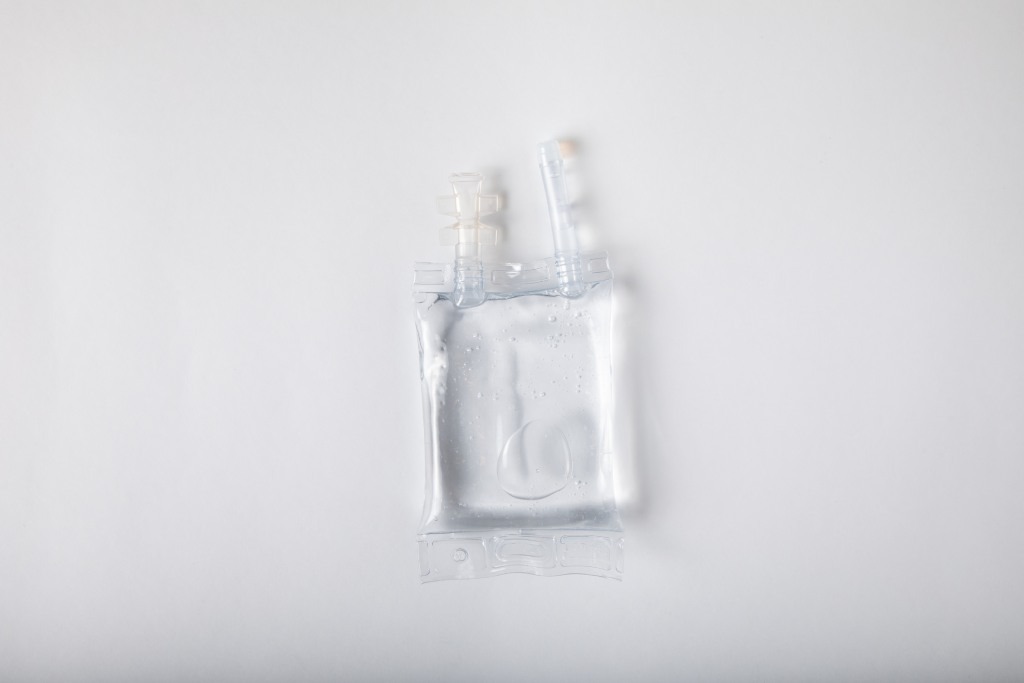
Every other ingredient rides in on the fluid. Sterile solution restores intravascular volume and carries nutrients into circulation, which is why fluid type, volume, and infusion rate all matter to how a session actually feels.
Mobile IV Medics lists “IV fluids” without specifying which solution, how much, or how fast. That’s worth asking about rather than assuming.
Hydration supports normal physiology: circulation, perfusion, and temperature regulation. Those are baseline body functions, not immune mechanisms, and IV fluids are not an immune-boosting ingredient. Treating genuine dehydration with IV hydration therapy is established medical care. Adding fluid to someone who is already adequately hydrated has no demonstrated immune payoff.
Fluid volume also carries its own considerations. Heart failure, clinically significant kidney disease, and prescribed fluid restrictions don’t automatically rule out IV therapy, but they do make it a decision that needs clinician evaluation rather than a menu selection.
Vitamin C Reaches Higher Blood Levels Intravenously
This is the one route difference with hard pharmacokinetic data behind it. A 1.25 g dose produces a mean peak plasma concentration of about 135 µmol/L taken orally, against about 885 µmol/L delivered intravenously.
Read that carefully, because it’s the sentence most IV marketing overstates. Those numbers describe blood concentration. They say nothing about whether anyone got sick less often, recovered faster, or felt better.
In the body, Vitamin C works as an antioxidant and a cofactor in collagen synthesis, with documented involvement in both innate and adaptive immune function. The clinical picture is more restrained. Across 11,306 participants, regular oral supplementation did not reduce cold incidence in the general population, with a pooled risk ratio of 0.97. It did shorten cold duration modestly, by about 8% in adults. That’s oral evidence, and it should not be presented as evidence for an IV.
High-dose Vitamin C also carries specific precautions. Kidney disease, a history of oxalate stones, G6PD deficiency, and hemochromatosis all warrant a clinician conversation first.
Zinc Is Essential for Normal Immune Cell Function
Deficiency is where the evidence is strongest. Low zinc impairs lymphocyte formation, activation, and maturation, so correcting a real shortfall restores something measurable.
The cold research is murkier. Pooled across 34 randomized trials, zinc showed little or no preventive effect, with a risk ratio of 0.93 on low-certainty evidence. For an infection already underway, it may cut duration by around 2 days, alongside a probable increase in non-serious side effects.
Here’s the part that gets skipped in most articles: much of the treatment evidence comes from oral zinc lozenges, with other studies using oral or intranasal preparations. None of it establishes the same benefit for IV zinc, because route, dose, and timing all differ.
The adult tolerable upper intake level of 40 mg per day describes ongoing total intake, not a per-infusion limit. Route, frequency, indication, and supervision are what matter clinically, and chronic excess can interfere with copper absorption. Mobile IV Medics doesn’t publish its zinc dose, so ask.
B-Complex and B12 Support Cellular Energy Metabolism
“B-complex” isn’t a single ingredient. Formulations commonly mix some combination of B1, B2, B3, B5, B6, and sometimes folate. Mobile IV Medics lists B-complex and B12 as separate line items without naming the full set inside the complex, which means the exact vitamins you receive depend on the actual compounded formula.
B6 has the clearest immune connection of the group, through its role in lymphocyte and interleukin-2 production. B12 covers DNA synthesis, red blood cell formation, and neurologic function.
B12 also shows where parenteral administration has a legitimate clinical role. When severe deficiency or malabsorption is present, prescription Vitamin B12 by injection may be used, which bypasses impaired gastrointestinal absorption when that’s medically appropriate. Note the boundary carefully: that’s a case for parenteral delivery in a deficient person, most often by intramuscular injection. There is no evidence that IV B12 improves immunity in someone whose B12 status is already adequate.
One caution on how this gets marketed. B vitamins participate in energy metabolism, which is a cellular process. It isn’t a promise that you’ll feel energized, and it isn’t an immune claim.
Glutathione Acts as the Body’s Intracellular Antioxidant
Your body already makes glutathione. It’s a tripeptide built from glutamate, cysteine, and glycine, and it helps maintain cellular redox balance while immune cells draw on it directly.
The mechanism is real. The clinical translation isn’t there yet. Lymphocytes in healthy people already appear to sit at an optimal glutathione level, and there’s no indication that administering more improves resistance to infection or response to vaccines. Human research on glutathione IV therapy sits mostly in disease-specific settings such as Parkinson’s and liver conditions, not immune wellness. Mechanistic antioxidant activity, on its own, does not establish a meaningful clinical immune benefit.
| In August 2026, the FDA warned compounders after at least 30 patients experienced adverse events associated with injectable glutathione prepared from dietary-supplement-grade material. |
The marketing language deserves separate scrutiny. In wellness copy, “detox” is often used without identifying a specific toxin or a measurable clinical endpoint, which makes the claim difficult to evaluate or verify.
How Does an Immunity IV Drip Work?
Mechanically, how IV therapy works is straightforward. Nutrients enter circulation directly and skip the absorption ceiling the gut imposes on oral doses.
IV delivery can be clinically useful when oral intake is inadequate, gastrointestinal absorption is impaired, or rapid fluid replacement is medically indicated. In otherwise healthy, nutrient-replete adults, higher bioavailability alone does not establish a meaningful clinical benefit.
The reframe worth holding onto is that bioavailability is a pharmacokinetic concept, not a clinical outcome. Route changes how much of a nutrient reaches your blood. It does not automatically change how often you get sick or how quickly you recover. IV therapy for the immune system also carries procedural risk that oral supplements don’t — infiltration, phlebitis, local and rarely bloodstream infection, and sterile-compounding failures documented in office, clinic, and med-spa settings.

Does IV Therapy Really Boost Your Immunity?
The honest answer separates two questions that marketing tends to blur: whether these nutrients matter to how to boost your immune system, and whether extra amounts delivered intravenously improve outcomes.
Correcting a clinically meaningful deficiency can produce real benefit for maintaining a strong immune system. Raising nutrient levels above adequacy is a different proposition, and the evidence does not carry over. That gap is where most immune-boost marketing lives.
One small trial illustrates it. Healthy adults aged 55 and older, 42 participants in total, took a multivitamin and mineral supplement or placebo for 12 weeks. Blood Vitamin C and zinc status improved. Measured immune-function outcomes did not.
We did not identify a randomized controlled trial or systematic review testing this exact combination of IV fluids, Vitamin C, zinc, B-complex, B12, and glutathione in generally healthy adults. That’s an absence of direct evidence, not proof that the formula does nothing — and it explains why the components can’t be borrowed as substitutes for proof:
- Oral zinc lozenge trials are not IV zinc trials.
- B12 deficiency treatment is not evidence for immune enhancement in people who aren’t deficient.
- Appropriate rehydration of a dehydrated person says nothing about someone who is already hydrated.
- Research in hospitalized or severely ill patients does not transfer to wellness IV use.
Questions to Ask Before Booking an Immune IV
Ask for the specifics in writing:
- Fluid type and total volume
- Every ingredient in the bag, and the chemical form of each
- The dose per ingredient
- Total infusion time
- The source pharmacy
- Who provides clinical oversight
A provider that publishes its ingredient list, as Mobile IV Medics does for its Immune Boost IV therapy, gives you a starting point. Dosing is confirmed at the point of care when you book an IV therapy appointment.
Some conditions warrant a clinician conversation before any immune support IV:
- Kidney disease or a history of stones
- Heart failure or a prescribed fluid restriction
- G6PD deficiency or hemochromatosis
- Pregnancy or breastfeeding
- Current prescriptions that interact with zinc or individual B vitamins
- Any previous infusion reaction
There’s also a category of symptoms where a wellness drip is the wrong destination entirely. Trouble breathing, chest pain, confusion, an inability to keep fluids down, or illness that’s worsening quickly all call for in-person medical care.
Conclusion
The most useful shift you can make is to stop judging a drip by its name and start judging it by its disclosed formula. Get the full ingredient and dose list, weigh it against your own health history, and decide from there.