You’re nauseated, dehydrated, and the last thing you want to do is get in a car. You know an IV drip would help you feel better within the hour. This is exactly the moment when the choice between mobile IV therapy vs. in-clinic delivery matters as much as the treatment itself.
Key Takeaways
- IV therapy delivers the same treatment whether you visit a clinic or book a home visit — the setting changes, not the standard of care.
- At-home IV is built for people who are symptomatic, short on time, or can’t travel safely.
- Provider credentials and physician oversight matter more than where the treatment happens.
IV therapy is no longer limited to hospitals. Today it comes in 2 formats: physical IV lounges where you travel to a facility, and mobile or at-home IV services where a licensed clinician comes to you. This article maps both options so you can match the right delivery format to your actual situation.
How At-Home and Mobile IV Therapy Works?
When you feel unwell, leaving the house makes everything harder. At-home IV therapy was built around exactly that reality, bringing licensed clinical care to wherever you already are.
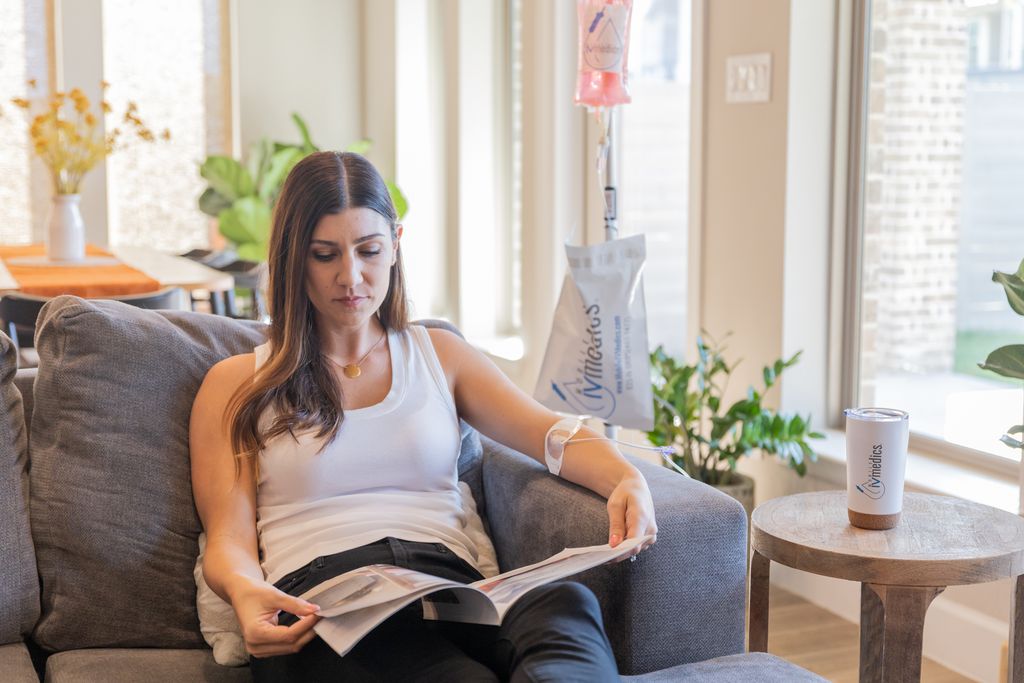
You book online or by phone, and a licensed registered nurse or paramedic is dispatched to your home, hotel, office, or event venue. No commute, no waiting room, no facility schedule to plan around. On arrival, the clinician completes a health intake, places the IV line, and monitors the infusion for the full session, typically 30–60 minutes, before cleaning up and leaving. The entire clinical process happens at your location, delivered by the same class of professionals you’d find in any lounge or clinic. Throughout the visit, you receive 1-on-1 care with no shared space and no other patients.
This format serves a wide range of situations well:
- Hangover recovery at home
- Immune support during active illness
- Pregnancy-related nausea, including hyperemesis gravidarum
- Post-travel fatigue at a hotel or home
- Mobility limitations or caregiver responsibilities that make leaving impractical
What an IV Lounge or IV Bar Experience Looks Like?
An IV lounge, sometimes called an IV bar or infusion suite, delivers the same core treatment in a fixed physical space. Understanding the IV bar vs. mobile IV distinction starts here: the therapy is identical, but the experience around it is quite different.
You arrive at a facility, check in, and take a seat in a recliner or spa-style treatment bay. A nurse reviews your intake, places the IV line, and monitors the infusion for typically 30–60 minutes. Many lounges offer a curated drip menu with optional add-ons, and the atmosphere is designed to feel intentional. Some patients book as a group, turning the visit into a social wellness outing.

The trade-offs are logistical. You need transportation, facility hours dictate availability, and wait times are possible at busier locations. Other patients share the treatment space. Worth clarifying as well: IV lounges are not the same as hospital infusion centers or home infusion programs. Understanding the difference between home infusion vs. infusion center care matters, since the latter handles medically prescribed treatments for chronic conditions, which is an entirely separate category of care.
Mobile IV Therapy vs. In-Clinic IV Therapy Explained
Every dimension of this decision, from safety and cost to scheduling and situational fit, is covered below. Neither format is universally better. The right one depends on where you are and what you need right now.
Same Treatment, Different Delivery
Whether you’re comparing an IV lounge vs. home IV drip or weighing in-clinic vs. at-home IV hydration, the contents of the IV bag are largely identical. The clinician works from a saline or lactated Ringer’s base, adding vitamins, electrolytes, or medications based on your needs and the provider’s formulation menu.
What changes is where care reaches you, who else is in the room, and how much planning the appointment requires. Clinical standards don’t shift with location. Licensed clinicians, physician-approved protocols, and intake screening apply in both settings when the provider operates correctly. Keep that frame in mind for everything that follows: this is a logistics and situational fit comparison, not a quality comparison.
Convenience and Access
An IV drip clinic visit requires transportation, appointment windows, and the flexibility to work around a facility’s hours. When you’re feeling well and the lounge is nearby, that’s a minor consideration. When you’re already symptomatic, the gap widens quickly.
Mobile IV hydration at home removes that friction entirely. A nurse arrives within a booking window at your chosen location, and same-day availability is standard with most providers. That difference is most pronounced when you’re already unwell. Driving while nauseated or dehydrated isn’t just uncomfortable; it’s a real risk that staying home eliminates. For caregivers, remote workers, or anyone whose day can’t bend around a clinic schedule, IV drip therapy at home is a practical solution, not an upgrade.
Environment, Privacy, and Comfort
In a lounge, you’re in a shared space. Other patients are present, the environment is curated, and the visit is designed around wellness as a destination. For patients booking as a group or wanting to step away from their usual surroundings with intention, that’s genuinely appealing.
At home, every dimension changes. You’re 1-on-1 with a single clinician, in your own space, with no strangers nearby and no expectation that you be well enough to be out. For patients managing a bad hangover, early pregnancy nausea, or visible illness, privacy often matters more than any other factor. Resting flat during a drip is also meaningfully different from sitting upright in a treatment bay. When you’re symptomatic, staying horizontal reduces physical effort and supports a more comfortable recovery.
Is At-Home IV Safe?
Safety in IV therapy depends on the clinician and the protocol, not the room they’re standing in. Both settings can be safe or unsafe depending entirely on provider quality.
Common IV therapy risks and side effects apply equally across both models: vein irritation or bruising at the insertion site, rare fluid overload with excessive infusion volumes, and possible allergic reactions to additive vitamins or medications. The CDC maintains that sterile technique during any intravenous procedure is essential for patient safety, a standard that applies equally to clinic-based and mobile IV services.
Regardless of where you receive treatment, these are the things that determine whether an IV service is genuinely safe:
- A licensed RN or paramedic administering the treatment
- A physician-developed intake screening process completed before every session
- A transparent, disclosed ingredient list
- A clear emergency protocol in place
Red flags exist equally in both settings: no formal health intake, no licensed clinician on-site, and no physician oversight behind the service. Absolute contraindications regardless of format include uncontrolled cardiac or kidney conditions, signs of severe dehydration requiring emergency intervention, and complicated pregnancies without OB-GYN clearance. At-home IV therapy doesn’t compromise safety, but it does place more responsibility on the patient to vet the provider carefully before booking.
Cost of At-Home IV Therapy vs. Clinic Pricing
At-home IV therapy typically costs more than a lounge visit. That difference is worth understanding, because it reflects the structure of the service, not the quality of the treatment.
Home IV therapy cost runs higher because of the travel component, the dedicated 1-on-1 clinician ratio, and the logistics of on-demand scheduling. Lounge pricing benefits from scale, since 1 clinician serves multiple patients per hour and fixed facility overhead spreads across higher volume. At-home cost drivers include the base fluid bag, any vitamin or medication add-ons, a travel or dispatch fee, and in some cases a same-day or after-hours premium.
For a symptomatic patient, that additional cost buys no driving, no waiting, and care delivered while you stay horizontal. In practice, that’s often a medical necessity rather than a comfort upgrade. Neither setting is typically covered by insurance for elective wellness drips. Medically prescribed infusions follow a completely separate billing pathway.
Side-by-Side Summary
Every situation is different, but the practical trade-offs between these 2 formats are consistent. The table below captures them at a glance.
| Factor | IV Lounge / IV Bar | At-Home / Mobile IV |
| Travel required | Yes | No |
| Setting | Shared facility | Your location |
| Best when feeling | Well enough to go out | Too unwell to travel |
| Privacy | Shared space | One-on-one |
| Wait time | Possible | Scheduled arrival window |
| Scheduling flexibility | Facility hours | Same-day, on-demand |
| Cost | Lower on average | Higher (travel + 1:1 ratio) |
| Clinical standard | Licensed clinicians | Licensed clinicians |
| Insurance (wellness drips) | Not typically covered | Not typically covered |
How to Choose and What to Look for in a Provider?
Whether you’ve been searching for mobile IV therapy near me or browsing for an IV drip lounge near me, 3 quick questions can point you in the right direction. Can you comfortably travel right now? If not, at-home IV is the clearer fit. Do you want a social or curated wellness environment? A lounge visit makes sense. Are you managing a pregnancy, a chronic condition, or complex symptoms? Consult your physician first, then book with a provider using physician-approved protocols.
Regardless of format, confirm these before any booking:
- A licensed clinician will administer the treatment
- Physician oversight sits behind the protocols
- A clear health intake process is completed before your drip begins
- The ingredient list is fully disclosed upfront
These aren’t optional. They’re the baseline for any reputable IV service in either setting, and knowing how to choose a mobile IV therapy provider before you book is the single best thing you can do to protect yourself.
Mobile IV Medics offers same-day at-home IV therapy with licensed registered nurses and physician-developed protocols. Whether you’re recovering from a hangover, managing early pregnancy symptoms, or exploring IV home treatments without leaving the house, the service comes to you at your home, hotel, or office. Browse the drip menu by condition or goal, book online, or call with any questions.
Mobile IV therapy and IV lounge visits deliver the same core treatment. The difference comes down to logistics, comfort, and situational fit. If in-clinic vs. at-home IV hydration feels like a close call, let your current situation decide. When traveling is a barrier because you’re symptomatic, short on time, or shouldn’t be driving, Mobile IV Medics’ at-home service brings the same standard of care directly to you.