You wake up after a night of drinking feeling like you caught a virus overnight. Your head pounds, your body aches, your stomach is unsettled, and even thinking feels like work. Dehydration explains some of it — but science increasingly points to another culprit: the inflammatory response alcohol sets off inside your body, and how deeply it drives the symptoms you feel the next morning.
Key Takeaways
- Alcohol triggers a measurable inflammatory response, raising immune markers like IL-6, TNF-α, and CRP during and after drinking.
- This inflammation starts in your gut and liver, where alcohol damages protective barriers and generates toxic byproducts.
- Symptoms like headache, muscle aches, brain fog, nausea, and swelling are directly tied to this inflammatory cascade.
- How hard inflammation hits you depends on your genetics, gut health, lifestyle, and the type of alcohol you drink.
Alcohol-induced inflammation is the low‑grade, body‑wide immune reaction your system mounts in response to drinking alcohol: as alcohol irritates your gut and stresses your liver, it makes your intestinal lining “leakier,” lets bacterial toxins slip into your bloodstream, and triggers immune cells to release inflammatory chemicals like cytokines. Those signals don’t just stay in one place—they circulate throughout your body and reach your brain, blood vessels, joints, and muscles, creating the flu‑like cocktail of headache, body aches, swelling, fatigue, brain fog, and low mood that so many people mistake for “just dehydration” after a night of drinking.
1. Does Alcohol Really Cause Inflammation in Your Body?
Yes. When you drink, your immune system treats alcohol and its byproducts like a threat, responding the same way it would to an infection: by flooding your body with inflammatory proteins called cytokines. Blood levels of IL-6, TNF-α, IL-10, IL-12, IFN-γ, and C-reactive protein (CRP) all rise significantly after drinking and stay elevated well into the hangover window, according to research published in PMC. The worse the inflammation, the worse you feel — it is that direct.
Researchers call this “sickness behavior.” It is the same combination of fatigue, body aches, mental slowness, and appetite loss your body produces when fighting a mild illness — which is exactly why a bad hangover can feel indistinguishable from the early stages of the flu.
2 types of alcohol-related inflammation are worth knowing:
- Acute inflammation appears within hours of heavy drinking, peaks as blood alcohol drops, and typically resolves within 24 hours.
- Chronic low-grade inflammation develops with long-term heavy drinking through persistent gut disruption, liver stress, and ongoing immune activation — and is linked to higher risks of infection, organ damage, and age-related disease.
This article focuses on the acute hangover window. That said, repeated heavy episodes can gradually raise your inflammatory baseline over time, making each subsequent hangover hit a little harder.
Dose matters significantly too. Binge drinking — large amounts over a short window — produces sharper cytokine responses and more oxidative stress than the same total amount spread out. Even a single night of heavy drinking in otherwise healthy people can measurably raise endotoxin levels and trigger systemic inflammation.
2. How Alcohol Sets Off Inflammation Inside Your Gut and Liver
Alcohol does not simply irritate the stomach lining and move on. It triggers a chain reaction across your gut barrier, your liver, and your immune system — and each stage amplifies the next. To understand why inflammation caused by alcohol produces such wide-ranging effects, you need to see where the signal originates.
Alcohol Damages Your Gut Lining and Lets Toxins Leak Through
Your intestinal lining acts as a selective barrier, letting nutrients through while blocking harmful substances. Alcohol breaks that barrier down. When your gut cells metabolize ethanol, they produce acetaldehyde — a toxic compound that damages the tight junctions holding intestinal cells together, making the wall leaky.
Once those junctions are compromised, bacterial components — particularly a molecule called lipopolysaccharide (LPS), or endotoxin — can cross from the gut into the bloodstream. A trial of healthy adults who underwent acute binge drinking found that serum endotoxin and bacterial DNA levels rose significantly within hours, confirming that microbial material was entering circulation directly, as documented in the study. Alcohol also disrupts the gut microbiome, cutting levels of beneficial bacteria that produce short-chain fatty acids — compounds that normally keep the gut wall strong. The result is what researchers call “leaky gut,” and it feeds directly into systemic inflammation.
A single heavy drinking episode is enough to drive bacterial toxins into the bloodstream — and in some people, that effect persists for a full 24 hours.
Your Liver Turns Alcohol Into Inflammatory Stress Signals
Your liver processes most of the alcohol you drink, and understanding how long alcohol stays in your system helps explain why inflammation can linger well after your last drink. The liver converts ethanol into acetaldehyde, then into acetate — but during heavy drinking, acetaldehyde accumulates faster than the liver can clear it. This generates excess reactive oxygen species (unstable molecules that damage cells) and drives oxidative stress that overwhelms your antioxidant defenses.
At the same time, endotoxin arriving from the gut via the portal vein binds to receptors on Kupffer cells — the liver’s resident immune cells. That binding triggers a release of TNF-α and other cytokines that cause local liver injury and spill into the general circulation, according to the research. The liver is not just a casualty of heavy drinking — it becomes a second active source of the inflammatory signal spreading through your body.
Heavy or Binge Drinking Makes This Inflammation Much Worse
The intensity of this entire cascade scales with how much you drink and how fast. When it comes to how inflammatory alcohol is for your body, dose and pattern matter as much as frequency. Binge drinking produces sharper spikes in endotoxin, oxidative stress, and cytokine release than moderate consumption. Drinking on an empty stomach accelerates absorption, pushes peak blood alcohol higher, and amplifies gut barrier damage. Together, leaky gut, acetaldehyde toxicity, and oxidative stress create the systemic inflammatory state that makes a big night out feel like a small illness the next morning.
| Research on healthy adults found that a single binge episode significantly raised serum endotoxin and bacterial DNA levels within 1 hour — and those levels remained elevated for up to 24 hours, per PLOS ONE. This gut-to-bloodstream leak is not a sign of a pre-existing health problem. It happens in healthy people after a single heavy night. Women in the same study showed a slower decline in blood alcohol and higher circulating endotoxin levels than men after the same binge protocol — a biological difference that may help explain why some people are hit harder by the same amount of alcohol. |
3. How Alcohol-Driven Inflammation Turns Into Hangover Symptoms
Once that inflammatory signal enters your bloodstream, it does not stay contained. Cytokines travel through the body and interact with tissues, nerves, and the brain — which is why a hangover feels full-body rather than localized. Every major symptom has a direct line back to how alcohol affects inflammation inside you.
Data from a large survey of drinkers using Hangover Severity Scale scores (PMC). Concentration problems and headache top the list — both map directly to what happens when cytokines cross the blood-brain barrier and trigger neuroinflammatory sickness behavior.
Your Head Pounds After Drinking
Headache is the most reported hangover symptom after cognitive fog, and inflammation is a bigger driver of it than most people expect. Cytokines like IL-6 and TNF-α can sensitize pain receptors and alter vascular tone — the same mechanisms implicated in migraines and other inflammatory headaches. Elevated IL-6 and CRP during the hangover period correlate with higher self-reported pain severity, according to the research from Northumbria University. Dehydration and vasodilation contribute too, but the immune component explains why the pain often feels flu-like and disproportionate to fluid loss alone.
Your Joints and Muscles Hurt the Morning After
The aching body you feel after a heavy night is not just fatigue — it is inflammation actively lowering your pain threshold. Cytokines like IL-6 and TNF-α are well-established amplifiers of musculoskeletal pain, and they behave the same way after heavy drinking as they do in other inflammatory conditions. Joint pain after drinking alcohol is particularly pronounced for people who already live with joint disease like arthritis, where the cytokine surge adds directly to existing inflammation and can trigger a flare. This also explains the leg pain after drinking alcohol that many people report the following morning — a symptom that is often dismissed but has a clear inflammatory basis.
Your Hands, Face, or Feet Look Swollen After Drinking
The puffiness many people notice after drinking — tight rings in the morning, a swollen face, fluid pooling in the extremities — is a direct sign that alcohol can cause swelling through inflammatory vascular changes, not just water retention. Inflammation increases vascular permeability, causing fluid and proteins to leak out of blood vessels and into surrounding tissue. Alcohol also disrupts the hormones that regulate salt and water balance, compounding the effect. Both factors clear as the inflammatory response resolves, which is why the swelling typically improves within 24 hours.
Your Brain Feels Foggy and You Feel Drained
Difficulty concentrating tops the symptom list for a reason. Pro-inflammatory cytokines — including IL-6, IL-1β, and TNF-α — can cross or signal through the blood-brain barrier, activate the brain’s immune cells (called microglia), and disrupt the neurotransmitter systems that keep you alert and focused. Researchers describe the result as “sickness behavior”: the same slowed, low-mood, mentally foggy state your brain produces when your body is fighting an infection. If the anxiety and low mood feel especially hard to shake, that experience has its own name — hangxiety, and the immune system’s role in it is more significant than most people realize. Alcohol-disrupted sleep compounds this further — it fragments sleep architecture and suppresses REM sleep, so your brain arrives at morning already under-recovered, even after a full 8 hours in bed.
Your Stomach Feels Upset During a Hangover
Nausea, cramping, and appetite loss each have both direct and inflammatory causes. Alcohol increases gastric acid production, slows gastric emptying, and irritates the stomach lining on contact. The inflammatory layer adds a second mechanism: elevated intestinal permeability and endotoxemia sensitize visceral nerve endings, amplifying your perception of nausea and abdominal discomfort. Disrupted gut-brain axis signaling during inflammation further suppresses appetite, which is why food can feel intolerable hours into a hangover. Low blood sugar after heavy drinking compounds the misery by stacking on top of those immune-driven sickness signals.
4. Why Alcohol-Induced Inflammation Hits Some People Harder Than Others
The same night of drinking can leave 1 person functional and another flat in bed. The difference is not willpower — it is biology. Several intersecting factors determine how severely inflammation after drinking alcohol affects you, and most of them are invisible until you understand them:
- Genetics. Variants in the enzymes alcohol dehydrogenase (ADH) and aldehyde dehydrogenase (ALDH) affect how efficiently your body clears acetaldehyde — alcohol’s toxic byproduct. In people with slower ALDH activity, acetaldehyde accumulates, prolonging oxidative stress and amplifying the inflammatory response. This is why some people react strongly to 2 drinks while others feel fine after significantly more.
- Gut microbiome health. Alcohol reduces beneficial gut bacteria that produce short-chain fatty acids, the compounds that keep the intestinal wall intact. People with an already-disrupted microbiome — from prior drinking, diet, antibiotics, or a preexisting gut condition — are more vulnerable to endotoxin leakage and the systemic inflammation that follows.
- Baseline inflammatory state. Obesity, metabolic syndrome, smoking, chronic stress, and poor sleep all elevate resting inflammatory markers before you take a single drink. When alcohol-induced cytokine surges stack on top of an already-activated immune system, symptoms escalate faster and hit harder. Keeping your immune system strong is not just general wellness advice — it directly shapes how your body handles alcohol’s inflammatory load. People with autoimmune or inflammatory diseases like rheumatoid arthritis or inflammatory bowel disease are especially vulnerable for this reason.
- Drink type. Beyond ethanol, alcoholic beverages contain congeners — compounds like methanol and fusel alcohols — along with histamine, tannins, and sulfites. Darker spirits and certain wines carry higher congener loads, which observational data consistently link to worse hangovers. Alcohol proof also matters. Higher-proof drinks deliver more ethanol per serving, which directly increases the inflammatory load on your gut and liver. High-sugar mixers add blood glucose swings that compound fatigue and mood symptoms on top of the immune-driven effects.
5. How to Get Rid of Inflammation From Alcohol?
The most direct way to reduce alcohol-induced inflammation is to drink less — the evidence on that is unambiguous. But beyond the obvious, there are practical, research-informed steps at each stage of a drinking occasion that can meaningfully limit how much inflammation you generate and how quickly you recover.
Preparation is more protective than most people expect. What you eat and drink before your first glass directly affects how much inflammatory damage your gut sustains that night:
- Eat a balanced meal with protein, fat, and complex carbohydrates. Food slows alcohol absorption and may limit early gut barrier damage.
- Stock up on the best foods to eat, like zinc and glutamine show promise for reducing endotoxin translocation.
- Arrive well-hydrated. Fluid shifts during drinking hit harder when you start depleted.
Once you are drinking, the inflammatory cascade your body goes through scales almost directly with peak blood alcohol — which means pacing is not just a moderation tip, it is a biological lever:
- Alternate alcoholic drinks with water. This directly lowers peak blood alcohol and reduces the inflammatory response that follows.
- Keep total intake lower. Higher doses drive stronger cytokine release — that relationship is consistent across the research.
- Choose lighter spirits and wines over darker, high-congener options.
- Eat throughout the night, not just before. Food in your stomach limits absorption speed the entire time you drink.
The morning after, your body is still actively working through the inflammatory response — clearing cytokines, repairing tissue, and restoring immune balance. What you do in those first hours either supports that process or fights against it.
- Prioritize sleep above everything else. Your body clears cytokines and repairs tissue during sleep. Alcohol fragments this process, so genuine recovery sleep shortens how long symptoms last.
- Rehydrate with water and electrolytes to correct the imbalances driving headache, dizziness, and fatigue. Understanding the difference between IV hydration and drinking water can help you choose the right recovery approach.
- Eat light, easy-to-digest meals with some protein to stabilize blood sugar and ease mood instability.
- Gentle movement and fresh air support recovery without adding physical stress.
When rest and hydration alone are not moving the needle, IV therapy offers a faster route back. Because alcohol-induced inflammation is driven in part by fluid and electrolyte depletion, delivering fluids, vitamins, and anti-nausea support directly into the bloodstream bypasses the digestive system entirely — which matters when your gut is already compromised and struggling to absorb what you take by mouth. Mobile IV Medics’ hangover IV therapy brings that recovery directly to you, whether you are at home, at a hotel, or anywhere else you need it — no waiting room, no forcing fluids down when your stomach is not cooperating.
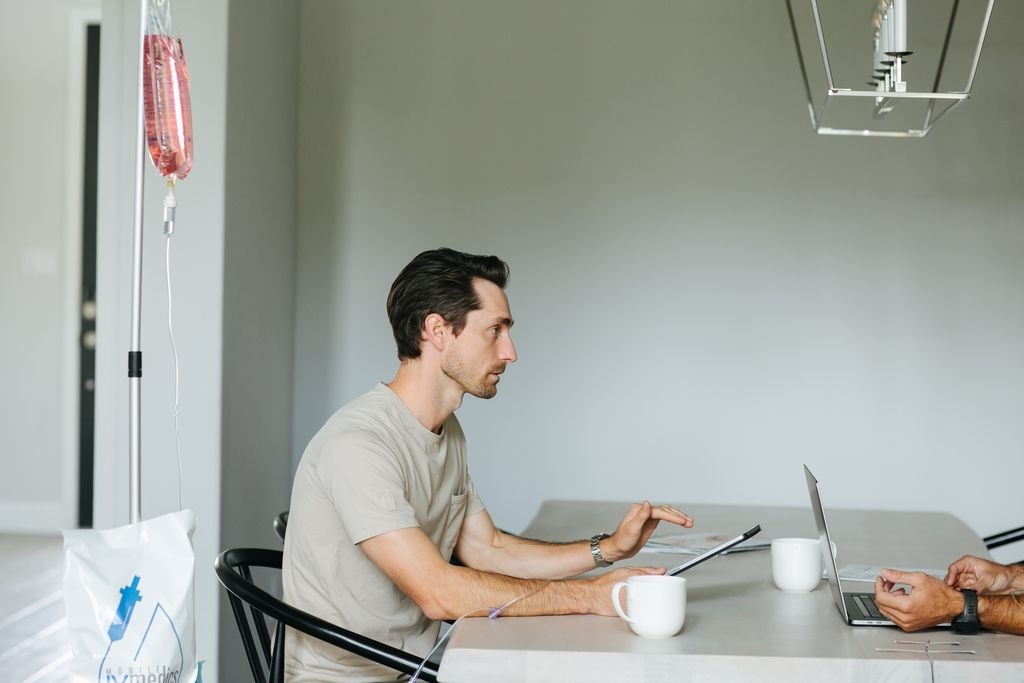
Inflammation and alcohol are more deeply connected than most people realize. Understanding how alcohol causes inflammation gives you real tools: drink less and more slowly, eat beforehand, stay hydrated, rest afterward, and be honest about your personal risk factors. When recovery feels severe or takes longer than a day, hangover IV therapy can deliver targeted rehydration and symptom relief directly to you — no waiting room required.