
IV therapy is the delivery of fluids, vitamins, minerals, or medications directly into a vein, bypassing digestion for immediate absorption. It ranges from hospital-grade infusion therapy for serious conditions like cancer or severe dehydration, to elective wellness drips offered by mobile IV services and IV lounges. If you are considering your first session, questions about safety, effectiveness, pain, and cost are completely normal.
This guide answers the most common questions first-timers ask, in the order they usually ask them. Use it as a starting point for an informed conversation with a qualified provider. This is not a substitute for medical advice.
1. General Questions About IV Therapy
Most people arrive at IV therapy with a vague picture — a drip bag, a needle, something celebrities do — but not a clear sense of how it works or who it is actually designed for. These answers start from the beginning.
What Is IV Therapy?
IV therapy delivers fluids, vitamins, medications, or nutrients directly into a vein, bypassing digestion entirely. This means the body receives the full dose almost instantly, with near-100% absorption — far higher than anything taken by mouth.
In hospitals, it treats serious conditions like severe dehydration, infections, anemia, and cancer. In wellness settings, it typically means hydration and vitamin drips — saline with B vitamins, vitamin C, magnesium, or blended formulas like Myers’ Cocktail — used to support recovery, energy, or symptom relief.
Does IV Therapy Work?
Yes — for specific medical indications. IV therapy is the standard of care for severe dehydration, malabsorption, and many clinical conditions, with strong evidence in those contexts. For healthy people using wellness drips, evidence is more limited and major medical centers remain cautious.
The most accurate framing: IV therapy clearly works when it is solving a specific, identifiable problem. It is less proven as a routine shortcut for people who are otherwise healthy, well-nourished, and not deficient in anything.
What Are the Benefits of IV Therapy?
For clear medical needs — severe dehydration, nutrient deficiencies, or conditions like Crohn’s disease — IV therapy is proven and effective. For general wellness use in healthy adults, benefits are real but more individual, and large clinical trials are limited.
On the medical side, IV fluids correct dehydration faster than oral intake, and IV delivery is the only viable route for many antibiotics, chemotherapy agents, and medications that need rapid, reliable blood levels. For patients who cannot absorb nutrition through the gut, IV nutrition support is lifesaving.
On the wellness side, people who are genuinely dehydrated often feel faster relief from fatigue, headache, and lightheadedness. When IV vitamins correct documented low stores of B12, magnesium, or B vitamins in people with absorption issues, meaningful energy and recovery improvements are possible. Short-term support during intense physical stress — heavy training, travel, or hangover recovery — is another common use case.
Who Can Benefit from IV Therapy?
People most likely to benefit are those with a clear reason to use the IV route: moderate to severe dehydration, documented nutrient deficiencies, malabsorption conditions, or medically necessary infusion treatments. Athletes, frequent travelers, and people recovering from acute illness may also experience faster relief under medical supervision.
For everyone else, IV therapy can be a useful occasional tool — but it is not a substitute for consistent hydration, balanced nutrition, and adequate rest.
Who Should Not Get IV Therapy?
People with severe kidney disease, serious heart disease, or severely uncontrolled high blood pressure (above 180/110) should avoid elective IV drips or get specialist clearance first. Known allergies to any IV ingredients must be disclosed before any session.
Additional groups that need a physician’s clearance before any elective drip:
- People with G6PD deficiency or a history of kidney stones (high-dose vitamin C is contraindicated)
- Anyone who is pregnant or breastfeeding, unless IV therapy is clearly medically indicated
- Those with moderate kidney or heart disease, complex cardiac medications, or serious chronic illness
Reputable providers screen for all of these during intake. If a service skips this step, walk away.
2. Is IV Therapy Safe — and What Are the Risks?
Safety is the question most people need answered before anything else. IV therapy has a strong safety record in the right hands — but it is not risk-free, and the answers below cover exactly what to watch for.
Is IV Therapy Safe?
Yes, IV therapy is generally safe when medically appropriate, correctly dosed, and given by licensed clinicians using sterile technique. In clinical settings it is a routine procedure. For elective wellness drips, major medical centers note real risks exist and evidence of benefit in healthy adults remains limited.Safety depends on 3 factors working together: the right patient, the right formula and dose, and the right provider. Understanding what makes IV therapy medically safe — including the standards reputable providers follow — is worth reviewing before you book any session.

Are There Any Side Effects of IV Therapy?
Most people experience only minor, temporary side effects — bruising or soreness at the insertion site, mild flushing, or a brief metallic taste during the infusion. These typically resolve within a day or 2.
More serious but less common risks include:
- Infection from poor sterile technique, ranging from a skin infection to sepsis in rare cases
- Fluid overload straining the heart and kidneys, especially in people with underlying conditions
- Electrolyte imbalance from incorrect mineral dosing, which can affect heart rhythm
- Vitamin toxicity from high doses of fat-soluble vitamins or excess vitamin C
- Allergic reactions, from a mild rash to anaphylaxis
Go to an emergency room immediately if you experience sudden difficulty breathing, chest pain, facial or throat swelling, a widespread rash, severe headache, confusion, sudden weakness, or rapid weight gain and leg swelling after the session.
Does IV Therapy Hurt?
For most people, insertion feels like a brief pinch — similar to a blood draw. The drip itself is typically painless.
Many services use topical numbing sprays or creams that reduce insertion discomfort significantly. Once the catheter is in place, most patients report little to no pain for the rest of the session. Persistent burning, intense pain, or swelling at the site are warning signs — not normal sensations — and your nurse should reassess the IV immediately if any of these occur.
How Do You Ensure the Safety of IV Treatments?
A well-run IV service builds safety across 4 layers: thorough pre-treatment screening, sterile pharmacy compounding, appropriate dosing, and active monitoring with emergency readiness on-site.
Specifically, this means:
- A licensed clinician reviews your health history, medications, allergies, and goals before approving treatment
- IV fluids and vitamin therapy ingredients come from licensed pharmacies following United States Pharmacopeia compounding standards
- Doses are calculated based on weight, kidney function, and individual health factors
- Staff monitor vital signs and the IV site throughout, and carry epinephrine, antihistamines, and oxygen with EMS protocols in place
Before booking, ask: Are your nurses licensed RNs or paramedics? Where are formulas compounded? What does screening include? What emergency equipment is on-site?
Who Administers IV Therapy?
IV therapy should always be given by licensed, IV-trained medical professionals — usually registered nurses (RNs) or paramedics — with a prescribing physician, nurse practitioner, or physician assistant overseeing care.
In mobile IV and wellness settings, reputable services follow the same standard as hospitals: licensed RNs or paramedics handle placement and monitoring, with physician or NP oversight for protocols. Pharmacists often compound IV formulas, adding an additional safety layer. Any service using unlicensed staff or offering IV drips without medical review is a red flag.
| Most people evaluating an IV provider focus on price and convenience — but the questions that actually protect you are about credentials and protocols. A reputable service will answer all 4 of these without hesitation: (1) Who holds the medical license behind the protocol? (2) Are formulas compounded by a licensed pharmacy? (3) What screening happens before a drip is approved? (4) What emergency equipment is on-site? If a provider is vague or dismissive on any of these, that is the answer. |
3. Treatment Process
Knowing what actually happens during a session — from intake to removal — takes most of the uncertainty out of booking a first appointment.
What Is the Process of Getting IV Therapy?
Getting IV therapy starts with a short health intake, a clinician review, and a nurse-administered session at your chosen location — typically 45–90 minutes from check-in to completion.
The process step by step:
- Book online or by phone and complete a medical intake covering symptoms, health history, medications, and allergies
- A clinician reviews your information, confirms you are a good candidate, and helps select the right IV package
- Your nurse verifies your identity, checks vital signs, and answers any questions before placing the IV
- The drip runs for 30–60 minutes while your nurse monitors you throughout
- The IV is removed, the site is checked, and you receive aftercare instructions before the nurse takes all supplies
What Should I Expect During an IV Therapy Session?
You will sit or lie comfortably while your nurse places a small catheter into a vein in your hand or arm. Once the drip starts, most people feel mild coolness in the arm and light pressure at the site — then not much else for the rest of the session.
Your nurse checks blood pressure, pulse, and the IV site periodically and adjusts the drip rate if needed. Most people read, watch something, or nap. If you notice burning, swelling, dizziness, or nausea at any point, tell your nurse immediately — they can slow or stop the infusion and reassess on the spot.
How Long Does IV Therapy Take?
Most standard sessions take about 30–60 minutes of actual infusion time. Including check-in, screening, insertion, and post-removal checks, the full visit typically runs 45–90 minutes.
Specialty infusions like NAD+ are administered more slowly and can take 2–4 hours depending on dose and individual tolerance. Wear short sleeves or loose layers for easy catheter access, and have a light snack beforehand if you tend toward lightheadedness.
How Soon Will I Feel the Effects?
Most people notice benefits within 15–60 minutes — during or shortly after the drip. Hydration-focused drips tend to work fastest, with headache, dizziness, and nausea often improving within the first hour.
For vitamin-focused drips, energy and mental clarity changes typically develop over the rest of the day and into the next 24–48 hours as cells absorb and use the delivered nutrients. Someone severely dehydrated from illness will generally feel relief faster and more dramatically than someone using a wellness drip for routine maintenance.
How Long Do the Effects of IV Therapy Last?
Hydration effects from a typical 500–1,000 mL bag last about 1–3 days. Vitamin-based drip benefits — improved energy, reduced fatigue, clearer focus — commonly last 3–7 days, with some people reporting up to around 2 weeks of better stamina after certain formulations.
Duration is highly individual. People who are very depleted tend to feel a bigger but shorter-lived response. Staying hydrated and eating well after the session helps sustain the benefit — IV therapy starts the recovery, but good habits carry it forward.
What Equipment Is Used for IV Therapy?
IV therapy uses a sterile IV fluid bag, a small IV catheter in a vein, clear plastic tubing with a drip chamber and clamp, and either a gravity setup or an infusion pump to control flow. Staff also use basic supplies like gloves, antiseptic wipes, tape, and dressings to keep the site clean and secure.
| The part most people dread — the needle — is typically the shortest part of the visit. What actually takes time is the pre-treatment check-in: vital signs, intake review, and answering any questions before the drip starts. The infusion itself is quiet. Most people say the 45–60 minutes passes faster than expected, and the most common reaction afterward is wishing they had done it sooner. Knowing this in advance takes most of the anxiety out of the first visit. |
4. Choosing the Right Treatment
Choosing the right IV therapy is less about picking from a menu and more about matching a formula to a specific, clinician-confirmed goal.
How Do I Choose the Right IV Therapy Treatment?
Start with medical screening, not the menu. A clinician should confirm whether IV therapy is appropriate and which formula fits your specific situation before you book anything.
From there:
- Match the formula to a clear goal — dehydration, migraine, fatigue, jet lag, immune support — not whatever sounds strongest
- Avoid drips with dozens of ingredients when a targeted formula addressing a specific symptom would serve you better
- Ask your provider why each ingredient is included, what it does, and why the dose fits your health profile
- Treat marketing names like “Glow Drip” or “Immunity Boost” as a prompt for questions — not a clinical prescription
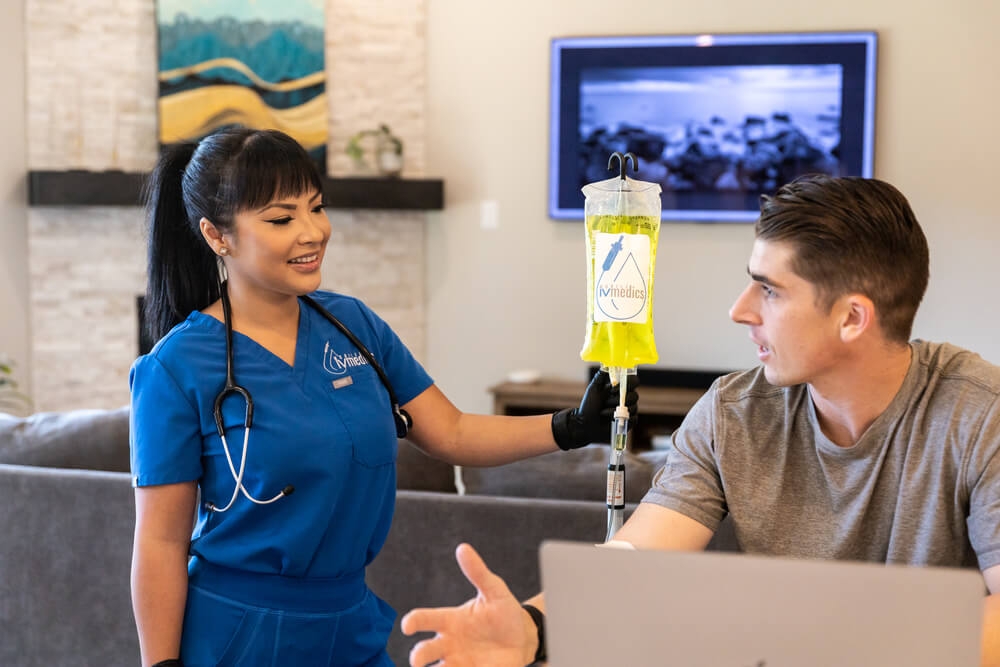
When Do I Need IV Therapy?
IV therapy becomes the right call when you cannot keep fluids down, show warning signs of significant dehydration, or cannot absorb oral treatment due to illness. If you can drink and keep fluids down, oral hydration is almost always the right first step.
Signs that IV may be needed include:
- Inability to keep fluids down due to repeated vomiting or diarrhea
- Very dark or minimal urine output
- Dizziness on standing, rapid heartbeat, or confusion
- Signs of heat exhaustion or heat stroke
For wellness use — fatigue, jet lag, athletic performance — IV is usually optional. Knowing the full range of dehydration treatments and when each applies helps you make that call with confidence. A qualified clinician, not a booking widget, should make the final assessment.
5. Preparation & Aftercare
A small amount of preparation before your session — and the right habits after — makes a meaningful difference in how you feel and how well the treatment holds.
Should You Eat Before IV Therapy?
Yes — have a light meal or snack about 1–2 hours before your session. Fasting is not required and not recommended. Arriving on an empty stomach raises the risk of lightheadedness or nausea, especially with higher-dose vitamin or energy drips.
Good pre-session options: yogurt with fruit, a small smoothie with protein, toast with avocado, or nuts with a banana. Avoid heavy or greasy meals. Sip water before your appointment too — arriving well hydrated makes IV placement easier and reduces the chance of feeling faint.
What Are the Aftercare Guidelines After IV Therapy?
Keep hydrating, protect the insertion site, rest if you are unwell, and watch for any warning signs of infection or unusual symptoms in the hours after your session.
Key aftercare steps:
- Drink water through the rest of the day to maintain hydration and help circulate delivered nutrients
- Avoid scrubbing the puncture area; mild bruising is normal — a cool pack helps if needed
- Rest and eat balanced meals with protein if you were ill or run-down; skip heavy alcohol and intense exercise immediately after
- Get medical advice if you notice increasing redness, warmth, severe pain, pus, streaking up the arm, shortness of breath, chest pain, or feeling generally unwell
Most people feel the full benefit within 2–4 hours, with improved energy and reduced symptoms lasting several days.
6. Cost & Insurance
Cost is one of the most common reasons people hesitate before a first session — and insurance coverage is almost always the follow-up question.
How Much Does IV Therapy Cost?
Most wellness IV sessions in the US range from $100–$500, with basic hydration starting around $199. A full breakdown of IV drip treatments and current pricing is worth reviewing before your first booking.
| IV Therapy Type | Typical Cost Range |
| Basic hydration drip | Around $199 |
| Symptom-specific packages (hangover, immunity, fatigue) | About $239–$449 |
| Premium or NAD+ infusions | $600–$1,000+ |
| Add-on ingredients (per add-on) | About $20–$25 |
| Group discount (varies by provider) | About 10–20% off |
Is IV Therapy Covered by Insurance?
Elective wellness IV drips are almost never covered by insurance and are paid fully out of pocket. Hospital-based IV therapy for a documented medical reason is often billable to insurance when ordered by a physician — but mobile and wellness services typically operate outside commercial health plans entirely.
Mobile IV Medics does not participate in any commercial health plans or government programs; services are private pay. Even when IV therapy treats a real deficiency, insurers may require diagnosis codes, lab results, and medical necessity documentation — and may still decline. Contact your insurer before booking if you are unsure.
Is IV Therapy HSA Eligible?
HSA funds can generally be used for IV therapy when it is medically necessary and ordered by a licensed clinician for a documented condition. Elective wellness drips typically do not qualify under IRS rules.
If you plan to use your HSA:
- Keep a Letter of Medical Necessity from your provider
- Save detailed receipts showing date, type of IV, and diagnosis
- Confirm eligibility with your HSA administrator before paying
Using HSA funds for purely elective wellness drips can result in the expense being reclassified as taxable income — with a potential 20% penalty for those under 65.
Is IV Therapy FSA Eligible?
FSA funds follow the same IRS medical expense rules as HSAs — the treatment must primarily diagnose, treat, mitigate, or prevent a specific medical condition. Elective wellness drips generally do not meet that standard.
One key difference worth noting: FSAs are use-it-or-lose-it accounts with annual deadlines, so timing your IV treatment within the plan year matters if you intend to use these funds. Some mobile IV providers accept FSA cards directly for medically oriented packages, but the burden remains on you to confirm the expense qualifies. Check with your FSA plan administrator before paying — not after.
7. Medical Use
Understanding where IV therapy fits within the broader medical landscape helps set realistic expectations — especially for anyone weighing it against other treatment options.
What Conditions Can Be Treated With Infusion Therapy?
At the medical level, infusion therapy is standard care for a wide range of serious conditions. At the wellness level, mobile IV services focus on symptomatic relief and short-term support — not disease treatment.
Medical conditions commonly treated with infusion therapy include:
- Serious infections that do not respond to oral antibiotics
- Severe dehydration from illness, burns, or surgery
- Cancer treatment with IV chemotherapy and immunotherapy
- Autoimmune diseases like Crohn’s disease, rheumatoid arthritis, and multiple sclerosis
- Anemia requiring IV iron infusion
- Neurologic conditions such as POTS
Common wellness IV applications include acute dehydration and hangover recovery, migraine relief using fluids and magnesium, morning sickness under OB-approved protocols, and post-workout recovery supported by B vitamins, vitamin C, and zinc. Wellness drips support hydration and symptoms — they do not replace standard medical care.
8. Frequency & Effectiveness
Two questions that often come together once someone has already decided IV therapy is worth trying: how often should they do it, and how does it actually compare to just taking supplements?
How Often Should You Get IV Therapy?
There is no universal schedule. Frequency should be set by a clinician based on your goals, symptoms, and lab values — not a membership model built around repeat visits.
- For wellness maintenance: every 2–4 weeks, since nutrient levels tend to stay elevated for about 1–3 weeks after a drip
- For active recovery — illness, intense training, or a B12 or iron repletion series: weekly sessions for a short period before tapering
- Without a clinical rationale: over-frequent drips add unnecessary cost and carry small but real medical risks
Is IV Infusion Better Than Oral Supplements?
For most healthy people with normal digestion: no. Oral supplements are sufficient, more practical, and far more affordable for everyday nutrient maintenance. IV delivery has a real advantage only in specific situations.
- Absorption rate: near-100% versus roughly 20–50% for typical oral vitamins
- Peak concentration: IV reaches higher blood levels, which matters for high-dose vitamin C, rapid B12 repletion, or magnesium for migraine
- Malabsorption: for people whose gut cannot absorb nutrients reliably — due to inflammatory bowel disease, bariatric surgery, or short bowel syndrome — IV is often the only effective option
Understanding how IV hydration compares to drinking water helps clarify when the delivery method actually changes the clinical outcome.
| Feature | IV Therapy | Oral Supplements |
| Absorption rate | Near-100% | About 20–50% (varies by nutrient) |
| Onset of effect | Within 15–60 minutes | Hours to days |
| Best use case | Deficiency, malabsorption, acute illness | Everyday maintenance |
| Cost per session | About $100–$500 | Typically a few dollars per day |
| Requires clinical oversight | Yes | No |
| Available at home | Yes (mobile services) | Yes |
Where Can I Get IV Therapy Near Me?
You can receive IV therapy in hospital infusion centers for medical conditions, or through reputable mobile IV services that come to you. Mobile IV Medics operates in multiple U.S. regions, sending licensed nurses to homes, offices, and hotels so you can be treated in a familiar, comfortable setting.
Where Can I Learn More About IV Therapy?
You can learn more about IV therapy by combining reputable medical sources—such as major hospital systems’ infusion therapy pages and evidence‑based articles on IV vitamin therapy—with clear educational content from trustworthy IV providers that explain ingredients, indications, benefits, and risks in plain language.IV therapy works best as a complement to adequate sleep, balanced nutrition, and consistent hydration — not a replacement for any of them. Used thoughtfully and under qualified medical oversight, it is a practical, efficient tool for recovery and relief when your body genuinely needs it. If you are ready to explore your options, Mobile IV Medics connects you with licensed nurses and physician-overseen care, wherever you are.